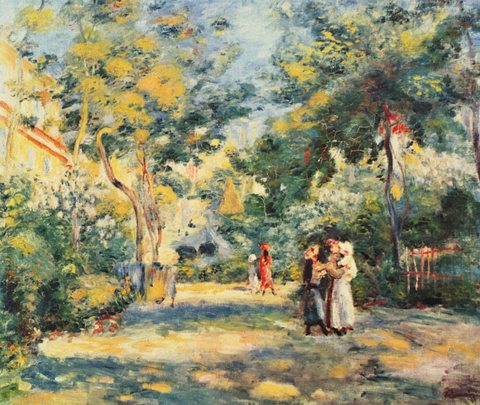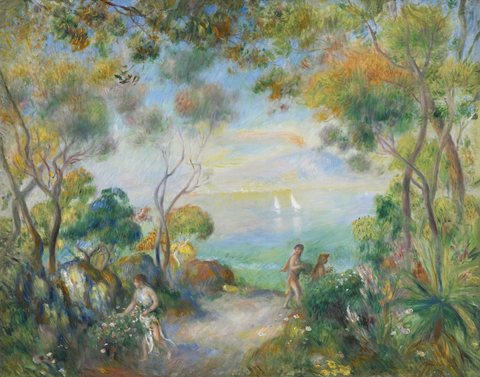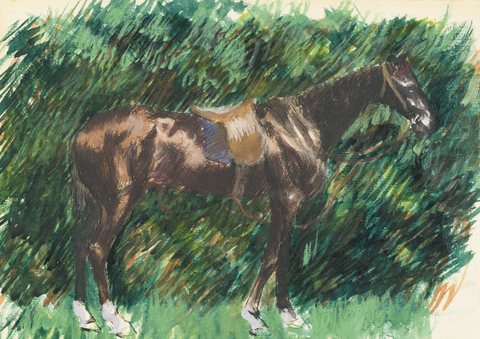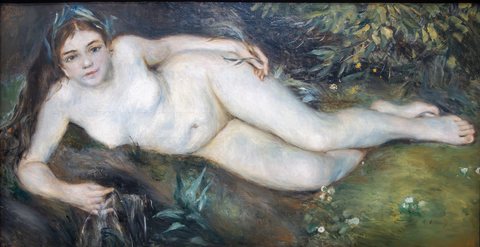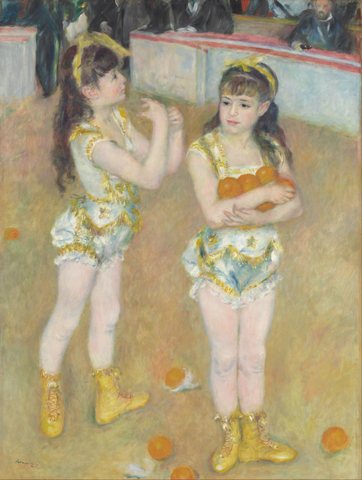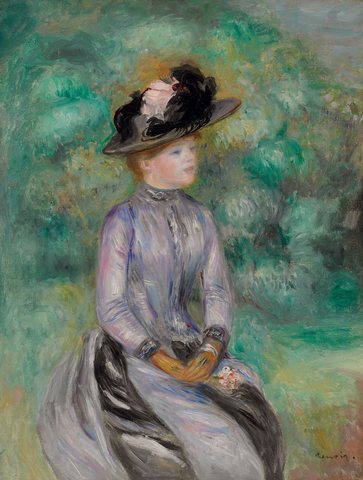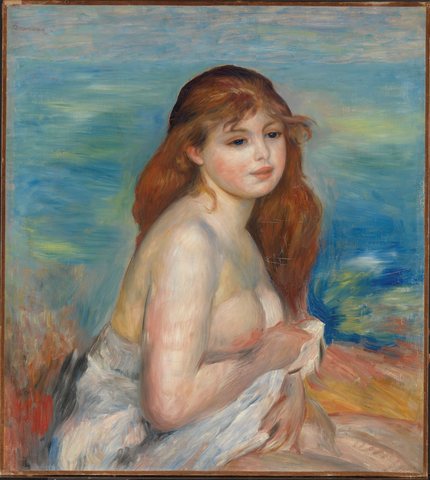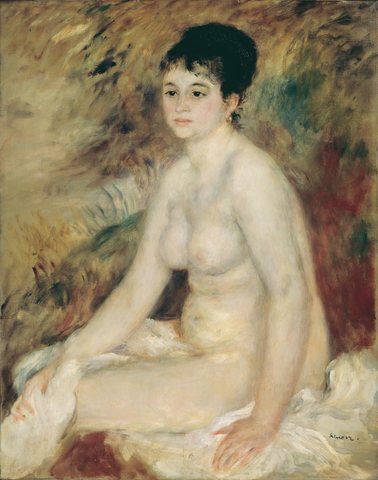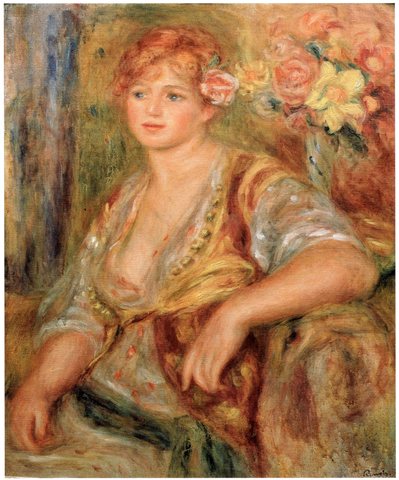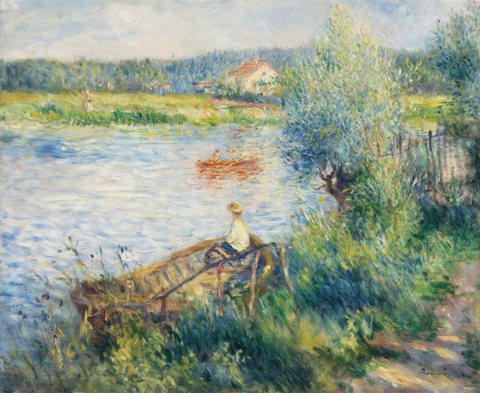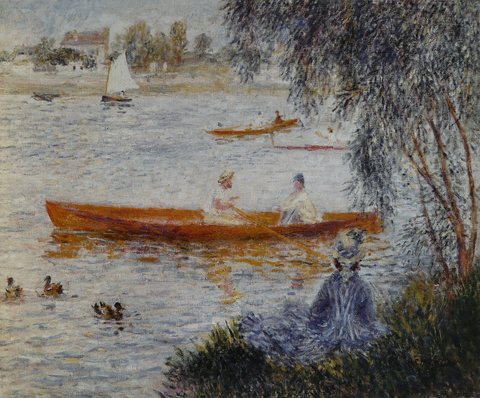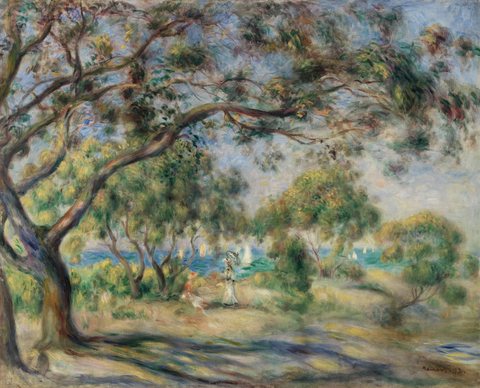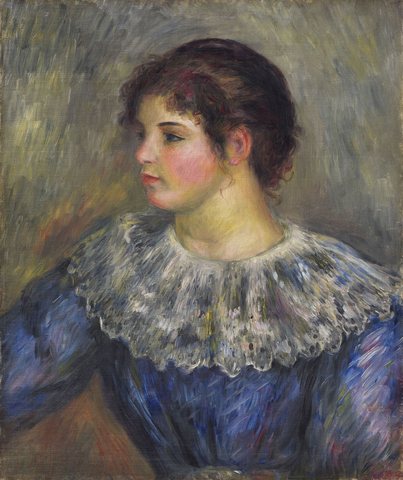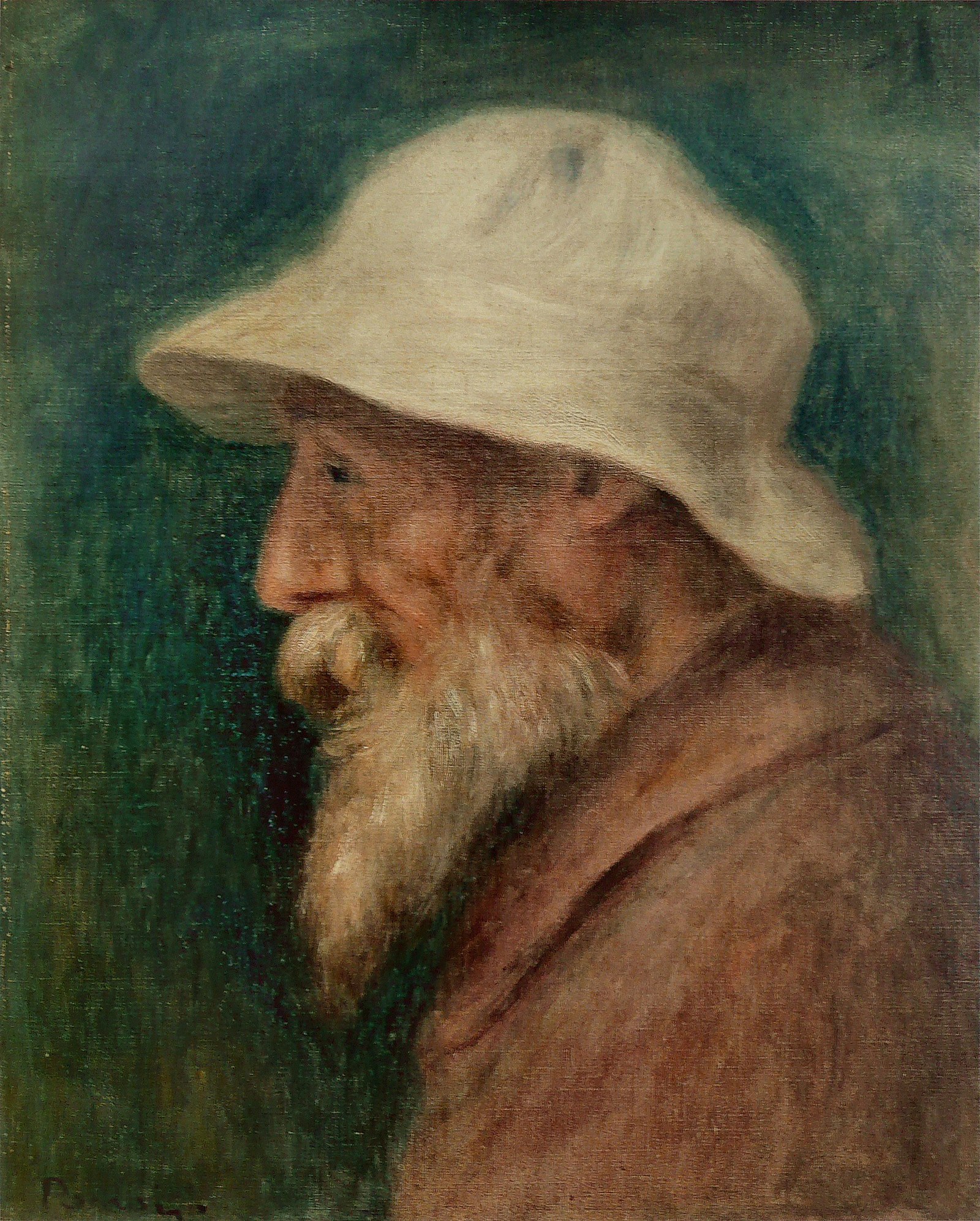
Pierre-Auguste Renoir
French, 1841–1919
Life story
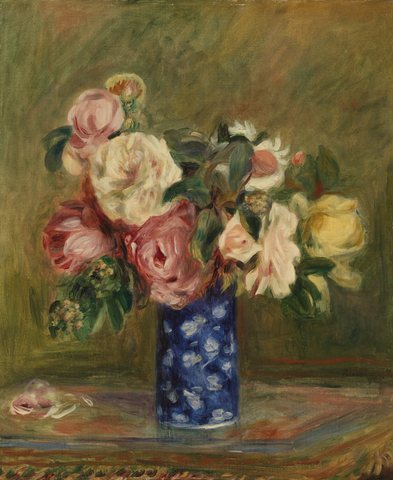
Pierre-Auguste Renoir begins his life in art bent over a white plate. Paris, the middle of the nineteenth century. A narrow workshop smells of turpentine and wet clay, and on the long table hundreds of white plates are waiting. Over one of them bends a thirteen-year-old boy with a fine brush in his hand. With a few quick strokes a rose blooms on the porcelain: pink, fresh, as if it had just been picked. He is paid by the piece, so young Renoir learns to paint fast, lightly and without a single mistake. That hand will go on to paint some of the happiest pictures in the history of art.
Pierre-Auguste Renoir was born on 25 February 1841 in Limoges, into the family of a poor tailor. When he was three, the family moved to Paris, and the boy grew up among the narrow streets around the Louvre. He had a fine voice and sang in a church choir led by the composer Charles Gounod, who advised his parents to make him a singer. But young Pierre-Auguste had already chosen. He did not want to sing about beauty. He wanted to paint it.
One day machines began printing the designs onto porcelain, and handwork was no longer needed. Young Renoir painted fans, blinds and decorations on café walls, and spent his free hours in the Louvre, in front of Rubens, Watteau and Fragonard. In 1862 he entered the École des Beaux-Arts and the studio of Charles Gleyre. There he met three young men who would change his life: Claude Monet, Alfred Sisley and Frédéric Bazille. Their teacher looked at their bright colours with suspicion. The story goes that Gleyre once asked Renoir whether he painted for his own amusement. "Of course," he replied. "If it didn't amuse me, I wouldn't paint."
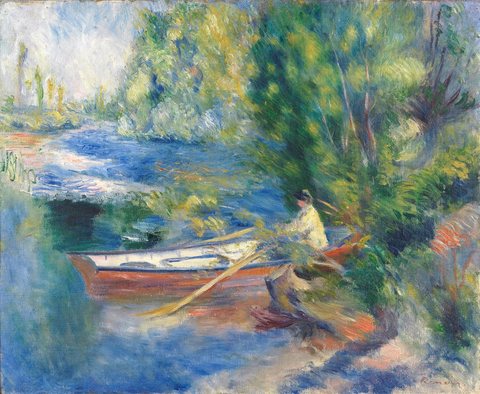
The friends fled the dusty studios for the forest of Fontainebleau, for the riverbank, for the open sky. They wanted to catch real light, just as it is for one moment, before a cloud hides it. They were desperately poor. In the summer of 1869 Renoir carried bread from his parents' home so that Monet's family would not go hungry. The two had no money for paint, but they had the river. They stood side by side on the bank of the Seine and painted La Grenouillère, a bathing place where boats rocked and the sun scattered into a thousand pieces on the water. In those quick, flickering strokes something new was born.
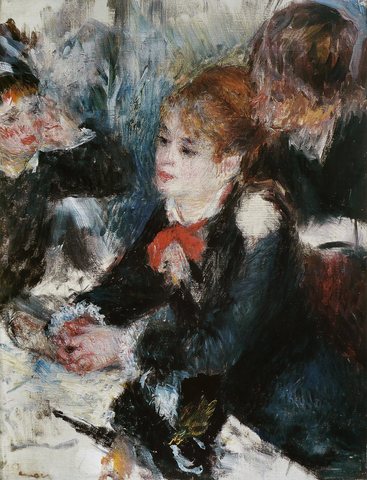
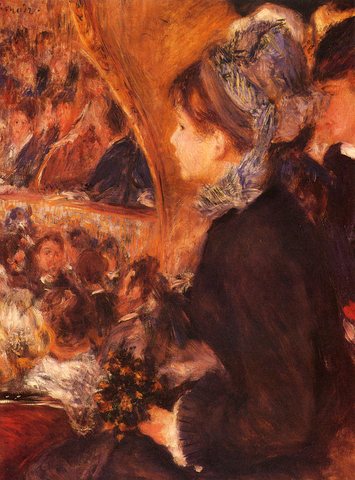
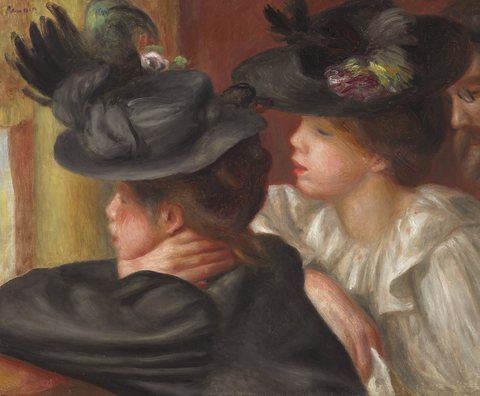
Then came the war. In 1870 Renoir was called up, and kind, tall Bazille was killed at the front, only twenty-nine years old. When the guns fell silent, the surviving friends decided to stop begging the official Salon for mercy. In the spring of 1874 they hung their pictures in the former studio of the photographer Nadar. Renoir showed La Loge, an evening at the theatre, velvet, pearls and a gaze that seems to have noticed you, and La Parisienne, a young woman in a blue dress who rises out of nothing. The public laughed, and one critic mockingly called them "Impressionists". The name stuck forever.
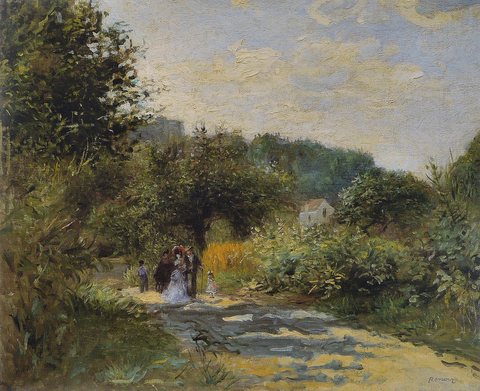
The years that followed were all of Pierre-Auguste Renoir's sunshine. He painted A Girl with a Watering Can, a little girl with a ribbon in a garden full of flowers, and Path Leading through Tall Grass, where red poppies burn in the grass. He painted his friend too, in Claude Monet Painting in His Garden at Argenteuil. And in 1876, day after day, he hauled a large canvas up the slope of Montmartre to a dance garden under the acacias. There, on Sunday afternoons, seamstresses, artists and young workers danced, laughed and drank sweet wine. His friends posed for him. So Bal du moulin de la Galette was born: light falls through the leaves in patches, onto straw hats and bare shoulders, and the whole picture trembles like music. It may be the happiest painting of the nineteenth century.
Fame came slowly, then all at once. The portrait Madame Georges Charpentier and Her Children shone at the Salon of 1879, and wealthy Parisians began knocking at his door. He painted the actress Jeanne Samary, with a pink glow around her, as if she were made of air. On the terrace of a riverside restaurant, among flowering shrubs, he painted Two Sisters. Around the same time, in a little dairy café in Montmartre, he met Aline Charigot, a young seamstress from the provinces with a round face and a ringing laugh. She would become his model, his wife and the mother of his sons.
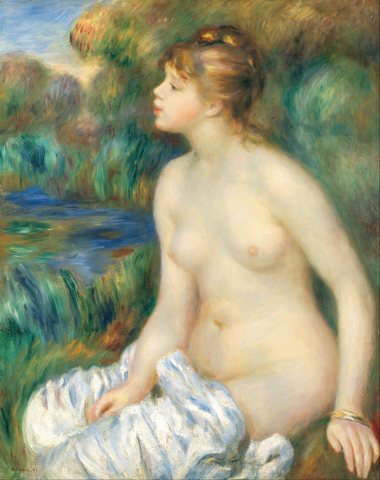
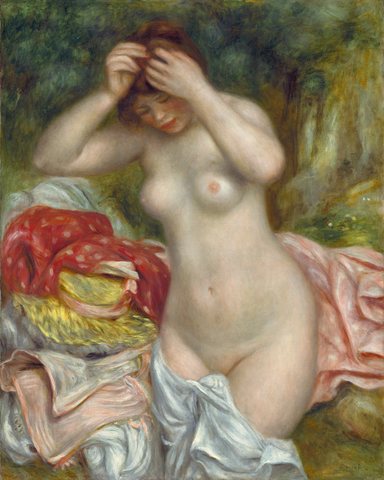
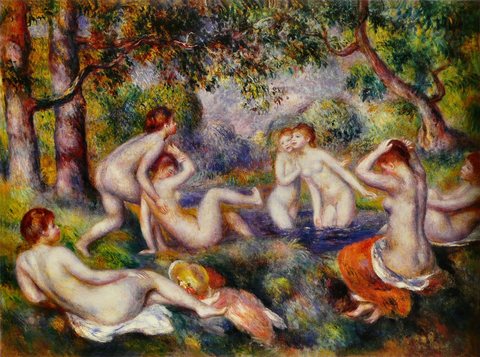
But at the height of his success Pierre-Auguste Renoir took fright. In 1881 he travelled to Italy, and before Raphael's frescoes and the ancient wall paintings of Pompeii he felt he had come to the end of the road. He admitted that he no longer knew how to paint or how to draw. Years of doubt followed. His line grew hard and clean as porcelain, and his colour cooled. All of this can be seen in a single picture: The Umbrellas, begun in soft, trembling Impressionism and finished years later in a strict, clear style, two handwritings on one canvas. These years also gave birth to the three dances: Dance in the City, Dance in the Country, where a happy Aline is dancing, and Dance at Bougival. For three years he struggled with The Large Bathers, until he found his new language.
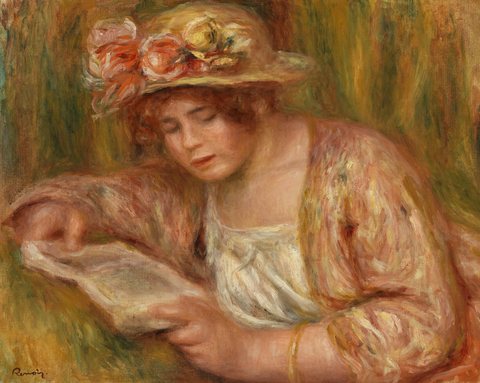
And he found it. By the 1890s his colour warmed again: pink, amber, peach. His brushstroke became as free as breathing. The French state bought Girls at the Piano, two girls bent over the music in a room full of soft light. By now his sons Pierre and Jean ran through the house, and later little Claude. Looking after them was Gabrielle Renard, Aline's cousin, cheerful and rosy-cheeked. She posed for dozens of pictures, among them Gabrielle Reading.
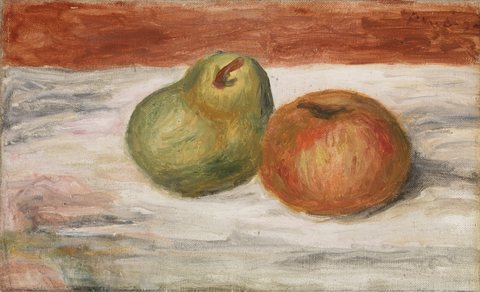
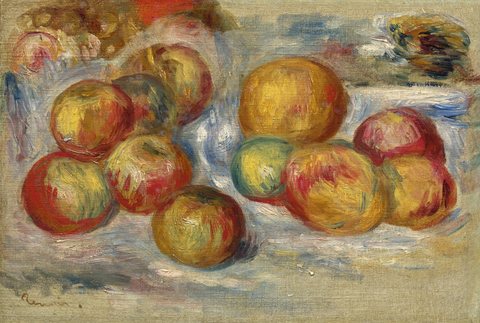
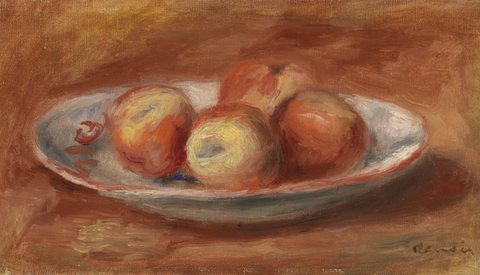
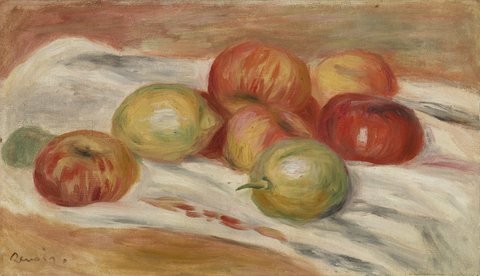
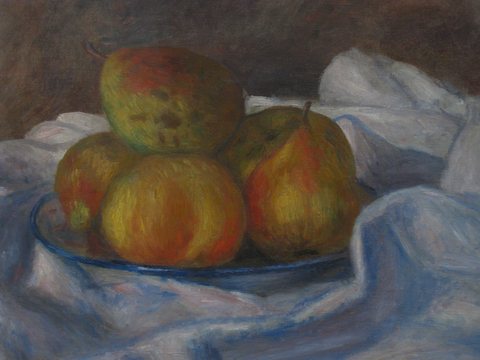
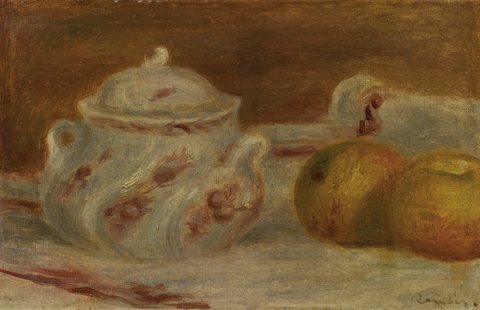
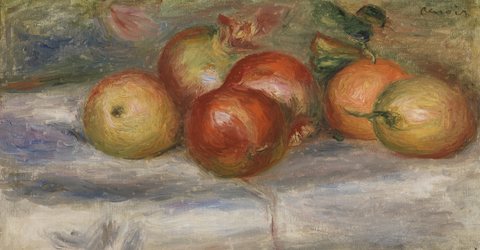
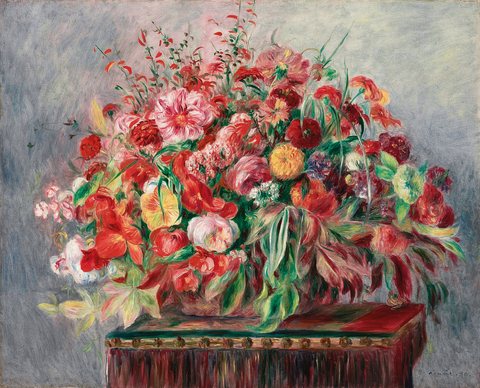
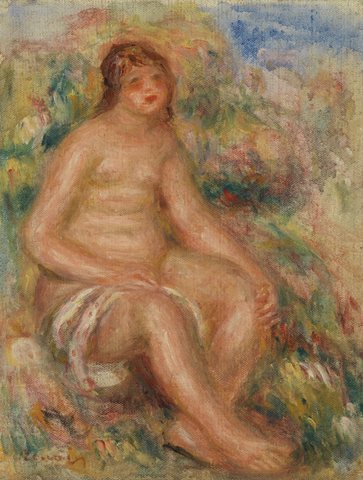
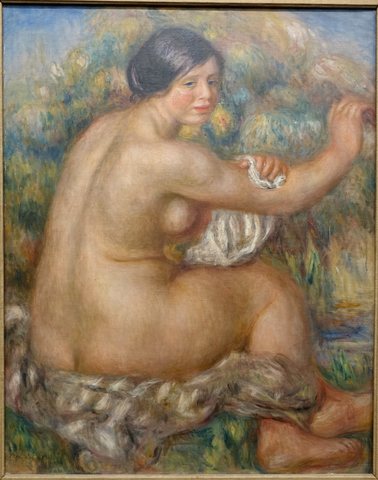
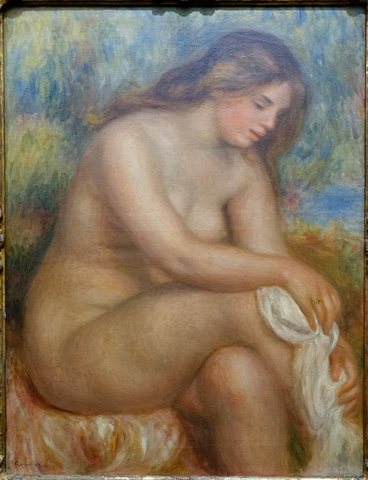
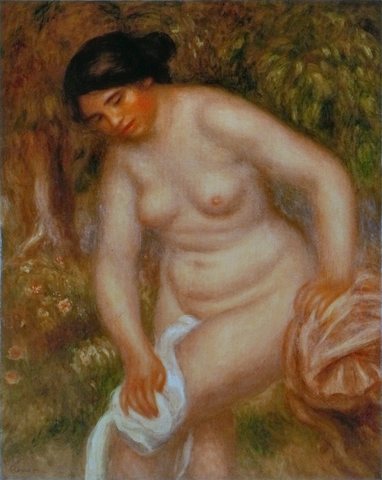
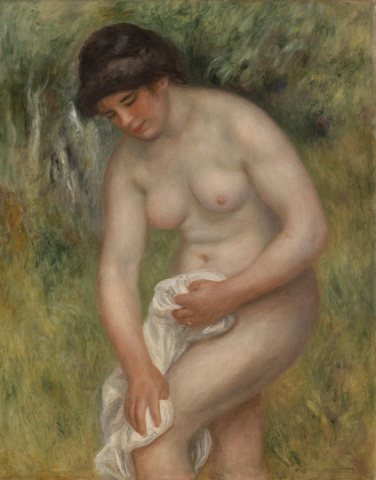
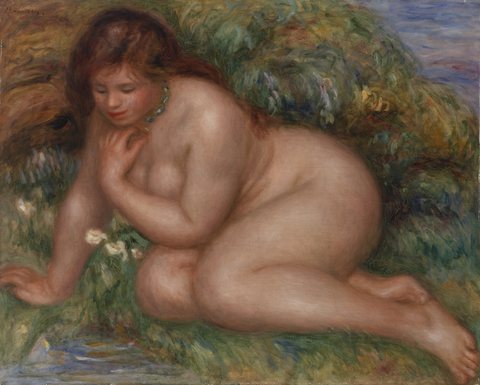
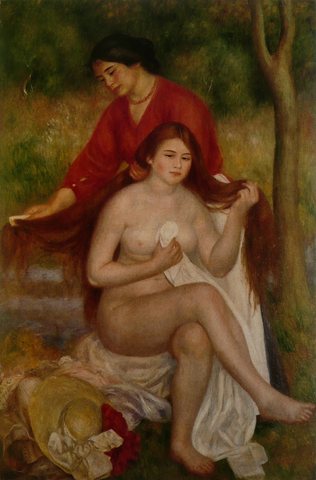
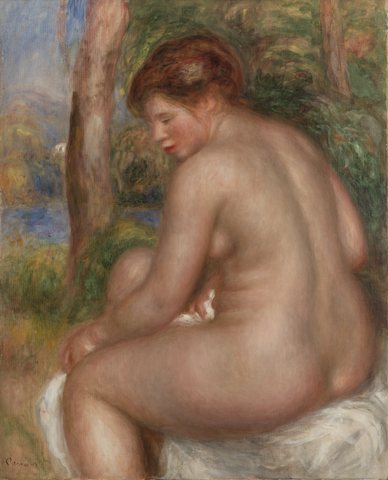
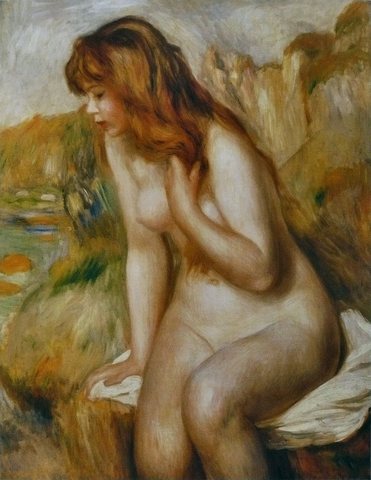
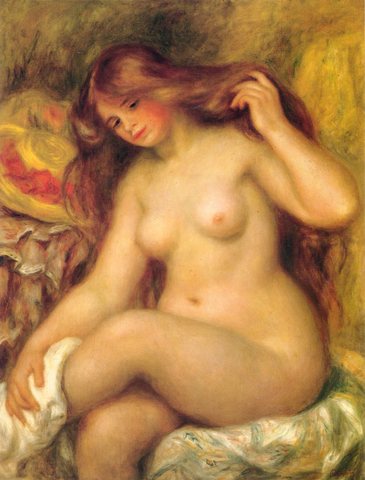
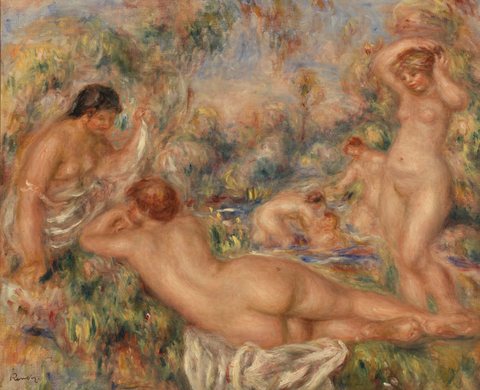
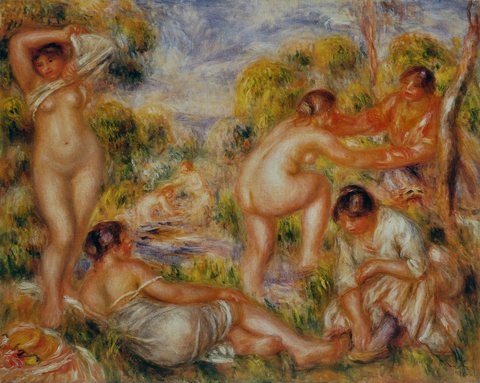
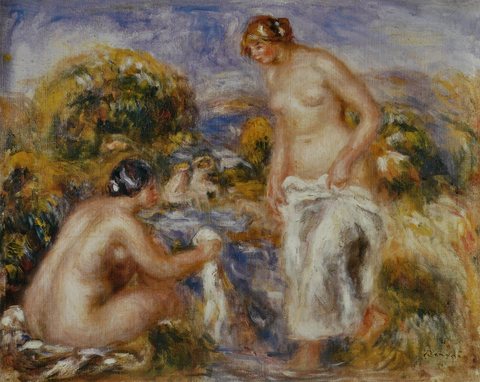
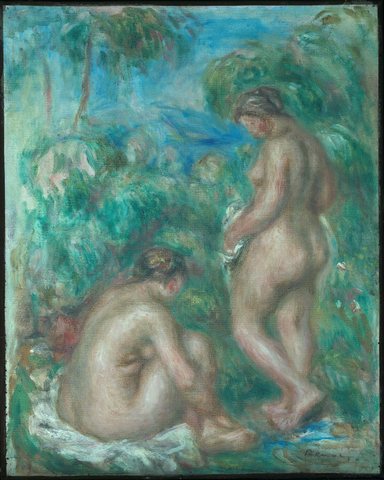
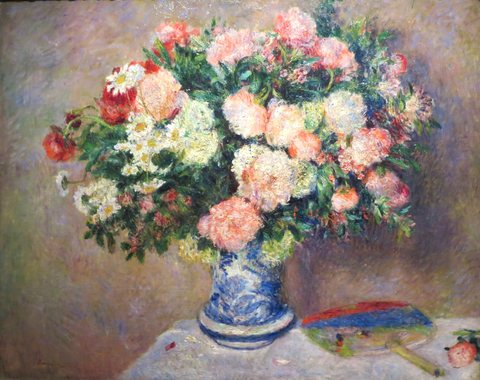
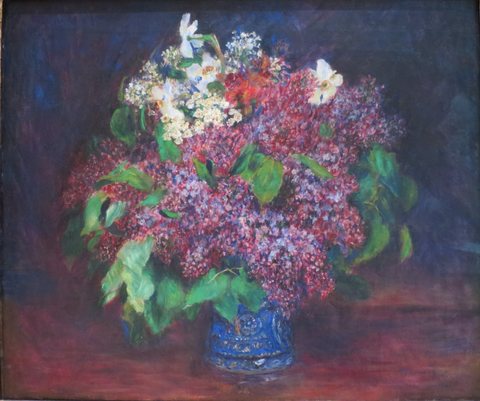
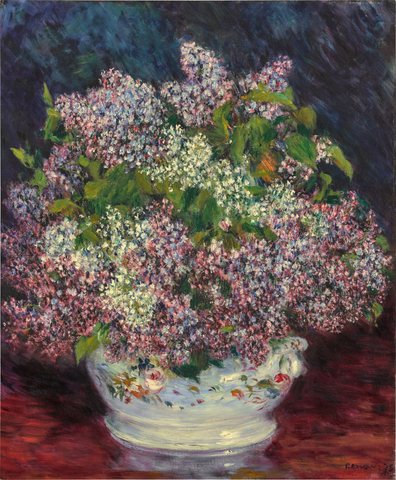
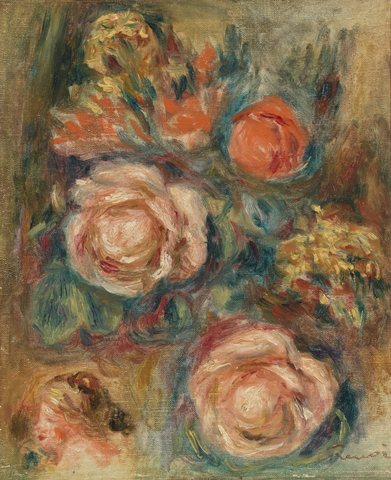
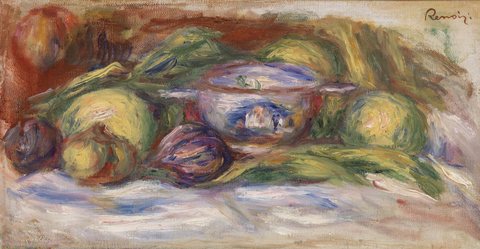
Then came the illness. Rheumatoid arthritis slowly twisted his fingers until his hands looked like roots. He could no longer hold a brush, so it was placed between his fingers, and he went on, day after day, from his wheelchair. In 1907 he bought Les Collettes, an old farm among olive trees above Cagnes-sur-Mer, looking out to the sea. There, in the light of the south, he painted roses, fruit and women bathing in gold. The story goes that Matisse, who often visited him, once asked why he kept painting when it caused him so much pain. "The pain passes," Renoir answered. "The beauty remains."
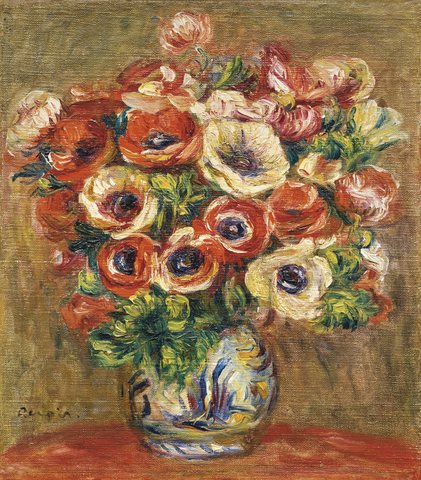
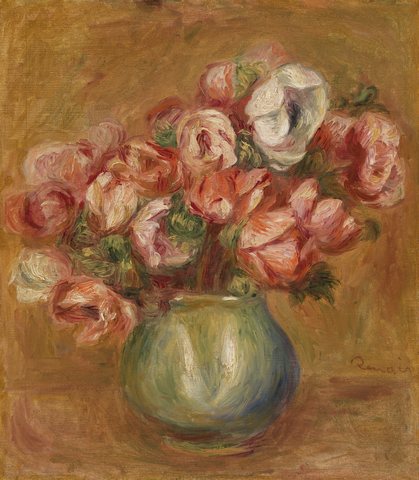
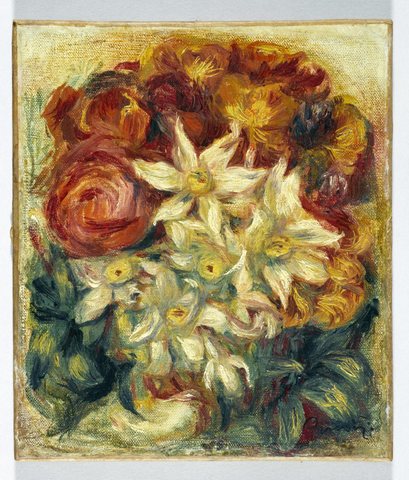
At the end of the summer of 1919 he was wheeled through the halls of the Louvre to see his own painting hanging there, beside the old masters he had copied as a poor young man. A few months later, on 3 December 1919, he died at Les Collettes. It is said that on his last day he painted a bunch of anemones and whispered that only now was he beginning to understand something.
Pierre-Auguste Renoir left several thousand paintings and one simple promise: that there is enough light in the world for everyone, if only you look at it.
Most famous works
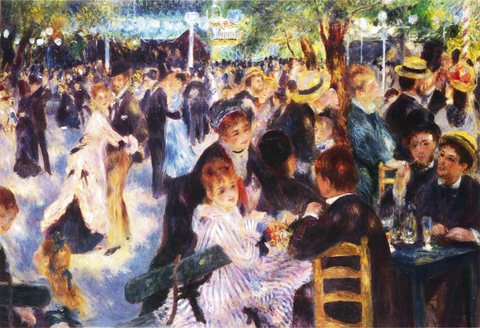 Bal du moulin de la GaletteA Sunday dance in Montmartre, where sunlight falls in patches across the faces. Musée d'Orsay, Paris.
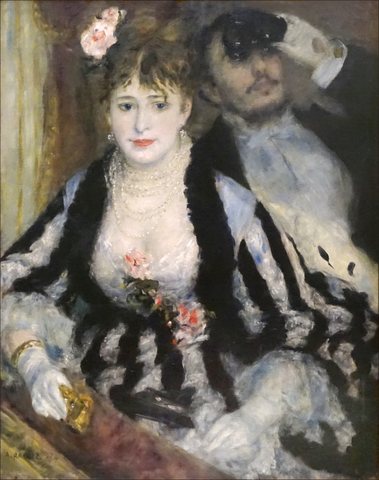 La LogeShown at the first Impressionist exhibition in 1874. Courtauld Gallery, London.
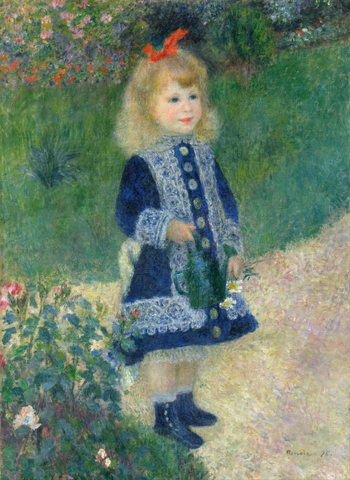 A Girl with a Watering CanA little girl among the flowers, painted in soft, feathery strokes. National Gallery of Art, Washington.
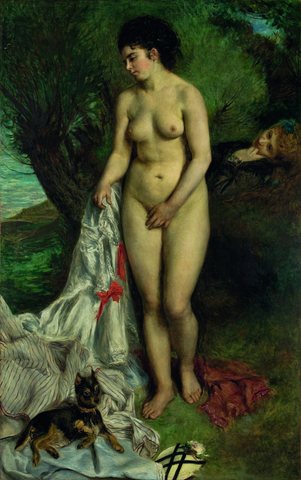
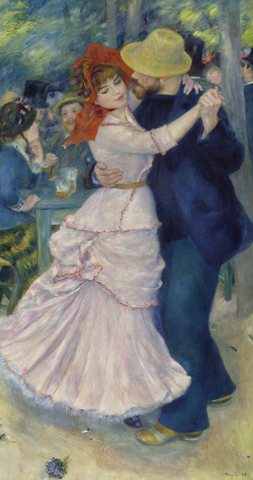 Dance at BougivalA couple dancing. The woman's model was the painter Suzanne Valadon. Museum of Fine Arts, Boston.
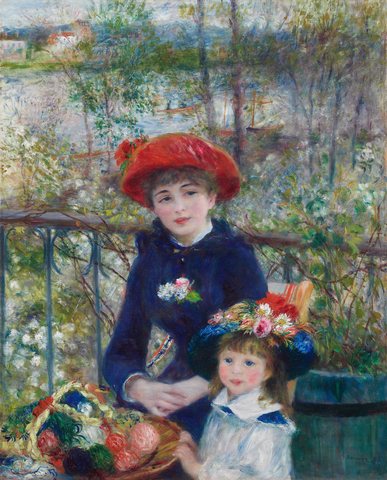 Two SistersTwo girls on a terrace by the Seine, among flowers and greenery. Art Institute of Chicago.
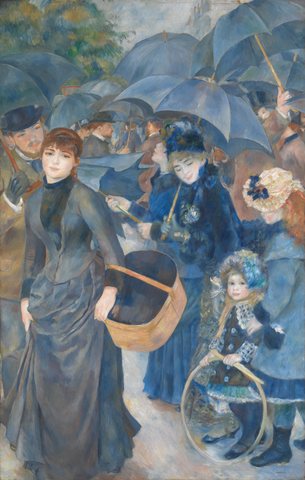 The UmbrellasTwo styles in one picture: begun soft, finished strict. National Gallery, London.
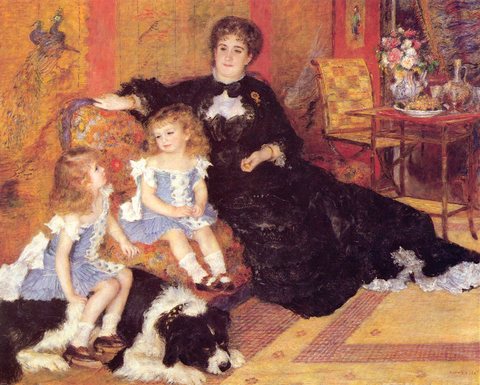 Madame Georges Charpentier and Her ChildrenThe portrait that brought him success at the Salon of 1879. Metropolitan Museum of Art, New York.
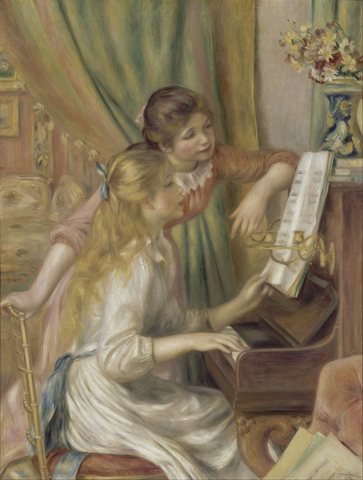 Girls at the PianoBought by the French state in 1892. Musée d'Orsay, Paris.
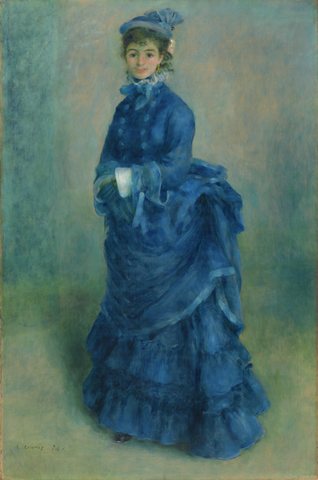 La ParisienneA young woman in a blue dress, almost without a background. National Museum Cardiff.
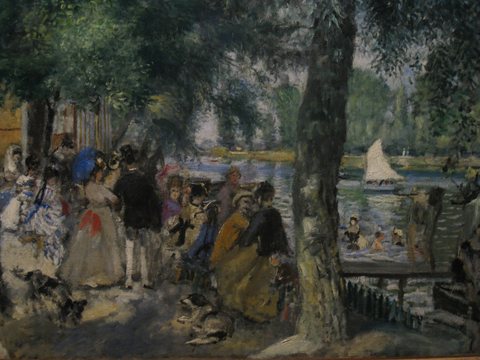 La GrenouillèrePainted shoulder to shoulder with Monet on the bank of the Seine in 1869.
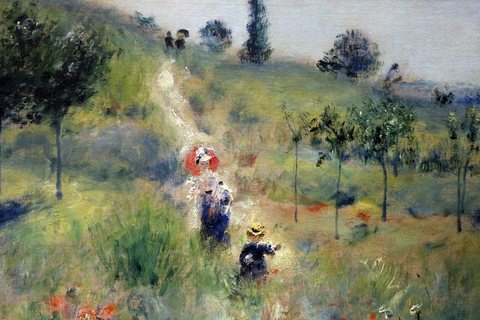 Path Leading through Tall GrassA summer afternoon, red poppies and a parasol in the tall grass. Musée d'Orsay, Paris.
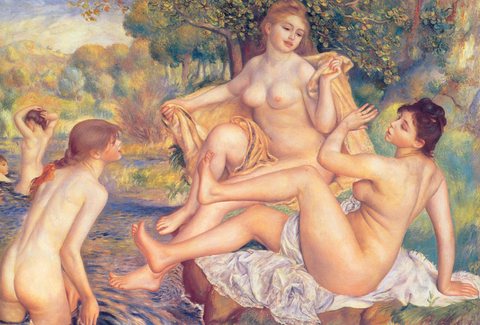 The Large BathersThe peak of his "harsh" period after Italy. Philadelphia Museum of Art.
Timeline
- 1841Born in Limoges
- 1854Apprentice in a porcelain workshop in Paris
- 1862École des Beaux-Arts, studio of Charles Gleyre
- 1868The Salon accepts Lise with an Umbrella
- 1869Paints with Monet at La Grenouillère
- 1874The first Impressionist exhibition
- 1876Bal du moulin de la Galette
- 1879Success at the Salon with Madame Georges Charpentier and Her Children
- 1881Journey to Italy
- 1892The French state buys Girls at the Piano
- 1907Buys the Les Collettes estate in Cagnes-sur-Mer
- 1919Dies in Cagnes-sur-Mer
Where to see them
Interesting facts
Renoir's loved ones are everywhere in his pictures. In Luncheon of the Boating Party (1881), Aline Charigot, his future wife, sits on the left playing with a little dog. The painting is in the Phillips Collection in Washington.
In January 1882, in Palermo, Renoir painted a portrait of the composer Richard Wagner. Wagner sat for him for only about half an hour.
In 1990 the smaller version of Bal du moulin de la Galette was sold at auction in New York for 78 million dollars. At the time it was one of the most expensive paintings ever sold.
When his hands could no longer manage long work, Renoir began making sculptures with the help of a young sculptor who shaped the clay according to his instructions.
The Les Collettes estate in Cagnes-sur-Mer is a museum today. His studio, his wheelchair and the olive trees he painted are still there.