Bal du moulin de la Galette
The story
Bal du moulin de la Galette was born on a hill where the sails of old windmills were still turning. Montmartre, the summer of 1876. Beside the mills lay a dance garden. On Sunday afternoons seamstresses, artists, young workers and girls from the neighbourhood came here. An orchestra played, cheap wine was poured, and the owners sold small round sweet cakes, "galettes". That is where the place got its name.
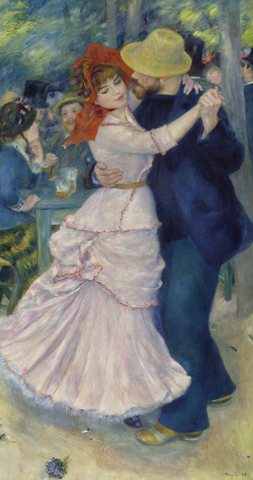
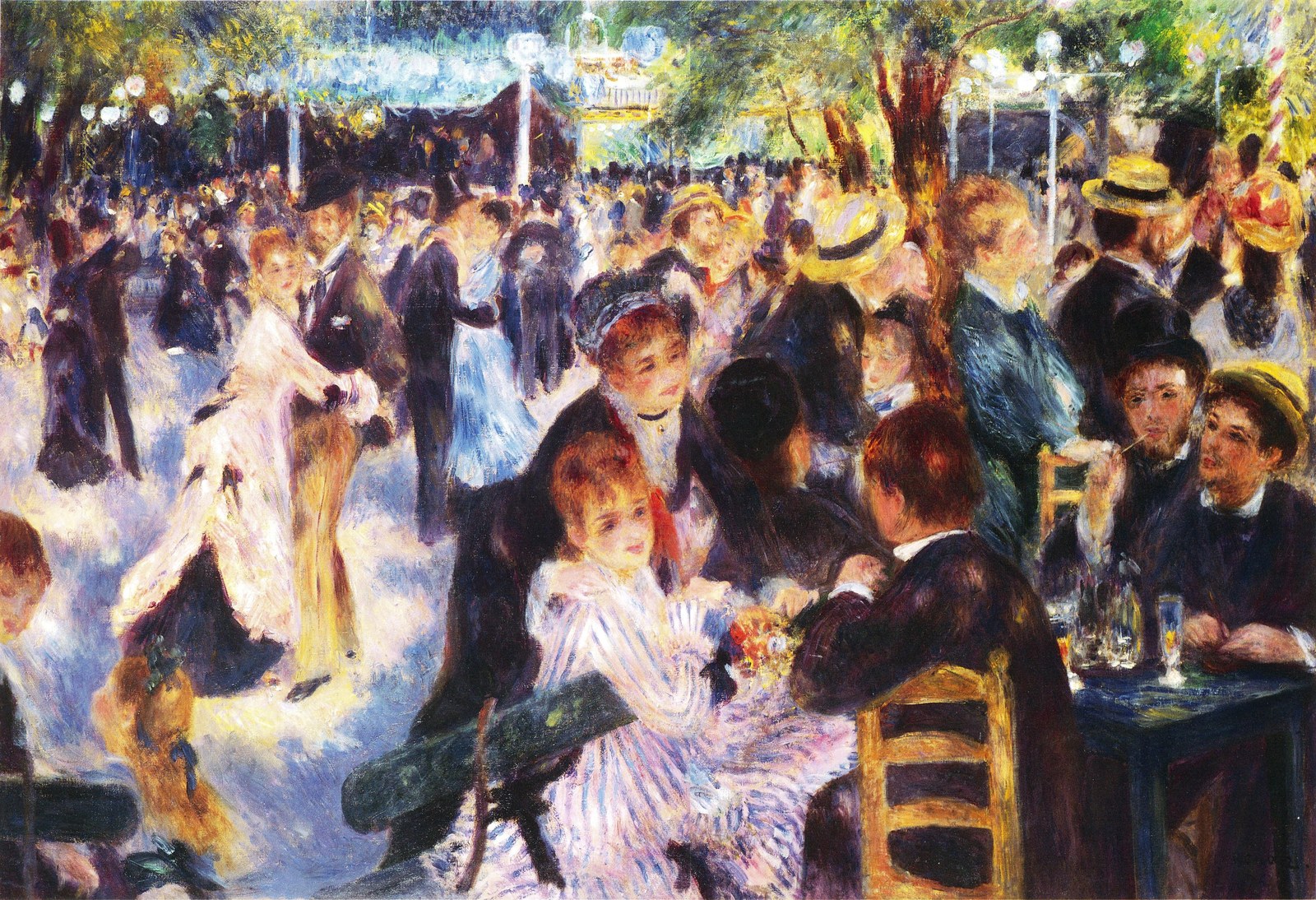
Pierre-Auguste Renoir rented a studio nearby, on rue Cortot, with a large overgrown garden. Every day he and his friends carried the huge canvas up the slope to the dance garden and back again. He did not paint from memory or invent the scene in the studio. He painted it right there, alive, amid the music and the noise. His friends sat on the benches and posed. Some talk at the table in front, others dance in the background, and the local girls laugh, never suspecting that they are stepping into the history of art.
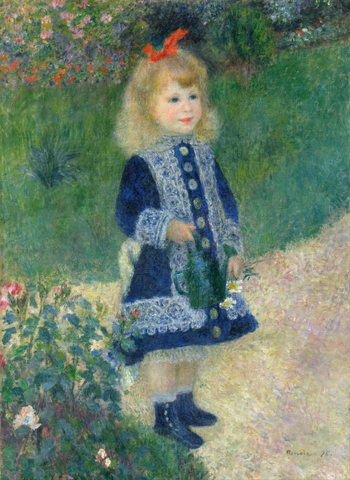
Look closely at Bal du moulin de la Galette and you will see its real hero: the light. It falls through the leaves of the acacias in round patches onto straw hats, striped dresses, shoulders and sand. Nothing stands still. The shadows are blue and violet, not black. Faces fade and surface again. The whole picture trembles like a warm afternoon that is a little noisy, a little hot and very lovely. That same summer Renoir also painted A Girl with a Watering Can, where the light falls in the same way, through leaves and flowers.
In 1877 Pierre-Auguste Renoir showed Bal du moulin de la Galette at the third Impressionist exhibition. Some critics were irritated by the "spots" and thought the people looked as if they were sitting under a rain of light. Others saw exactly what Renoir wanted: life as it is, in one happy moment.
The painting was bought by his friend, the painter Gustave Caillebotte. He left his collection to the French state, and so Bal du moulin de la Galette reached the museum. Today it hangs in the Musée d'Orsay in Paris, one of the best-loved canvases by Pierre-Auguste Renoir. People stand in front of it for a long time, as if hoping to hear the music.
Interesting facts
The painting is large, about 131 × 175 cm. Renoir painted it outdoors, so every day he carried the canvas to the dance garden and back.
There is also a smaller version of the same scene. In 1990 it was sold at auction in New York for 78 million dollars. At the time it was one of the most expensive paintings ever sold.
Among the people in the picture are Renoir's friends: artists, writers and girls from Montmartre who posed for him.