La Grenouillère
The story
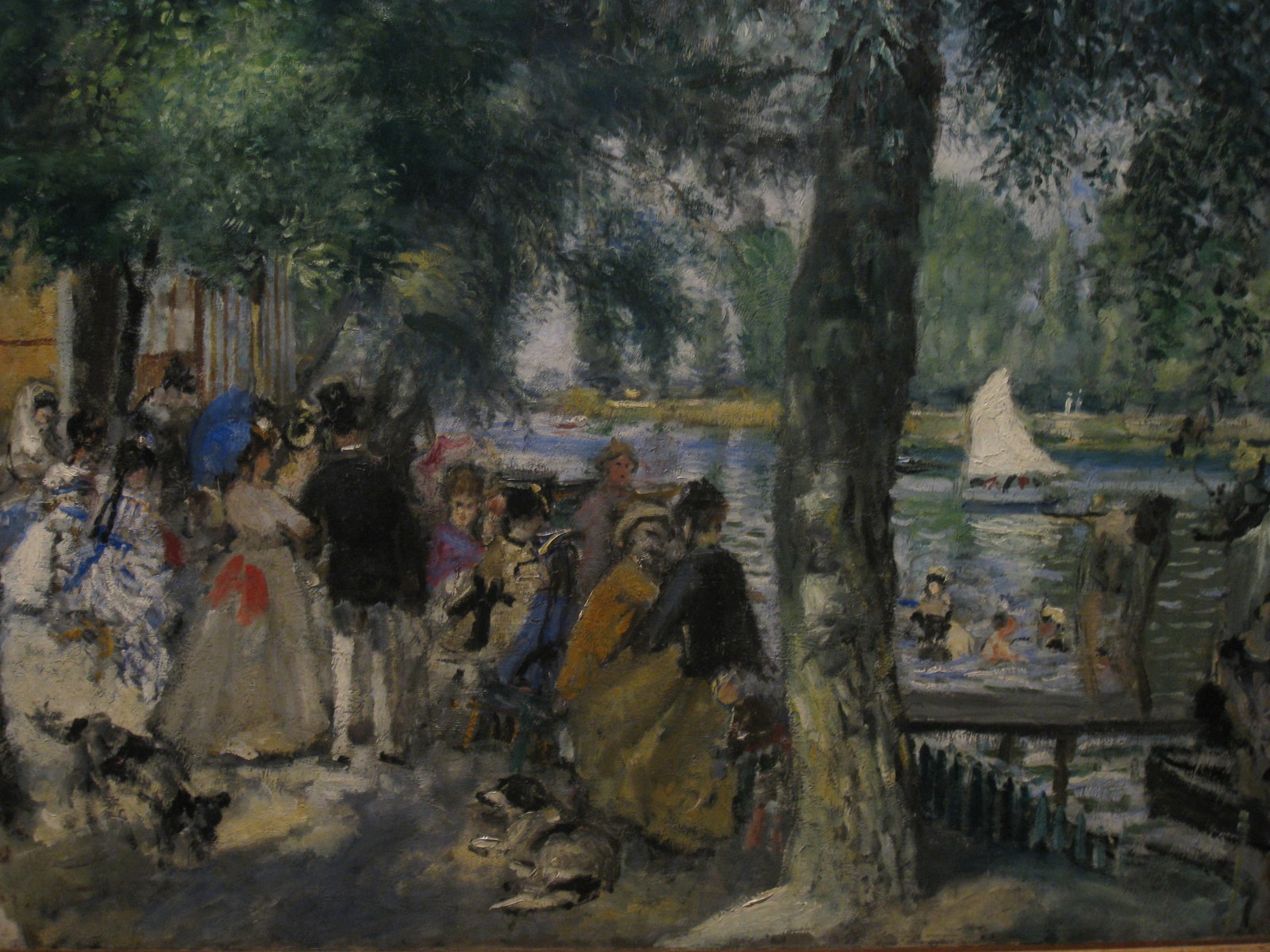
La Grenouillère is the place where Impressionism was born. It was a lively spot for bathing and boating on the Seine, near Paris. There was a floating café, wooden walkways and a small round islet with a single tree, which Parisians jokingly called "the Camembert". On Sundays it was crowded with young people who swam, rowed, flirted and drank lemonade.
In the summer of 1869 Pierre-Auguste Renoir and his friend Claude Monet stood side by side on the bank and painted La Grenouillère. Both were desperately poor. Monet wrote to a friend that if Renoir had not brought bread from his parents' home, his family would have gone hungry. They had no money for paint, but they had the river, the light and each other.
Here the two discovered something important. Water cannot be painted with smooth lines, because it constantly moves and reflects. So they painted it with quick, broken strokes, patches of light and colour side by side. Up close these are only patches; from a distance they are a sparkling river on a summer day. Pierre-Auguste Renoir painted the people in more detail than Monet. In his version the boats, the dresses and the figures are livelier, and the light is warmer.
Renoir's La Grenouillère exists in several versions, now in different museums, and Monet's painting of the same place is in the Metropolitan Museum of Art in New York. Seen side by side, they show two friends who saw the same place in two different ways.
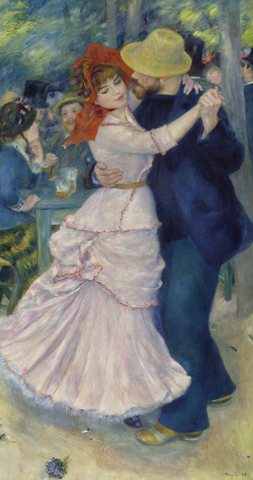
Years later Renoir returned to the same river to paint Dance at Bougival. But that first summer at La Grenouillère remains in history as a beginning. From those patches of light on the water the whole art of Impressionism set out.
Interesting facts
Parisians jokingly called the small round islet with a single tree "the Camembert".
Monet and Renoir painted La Grenouillère side by side in the summer of 1869.
Renoir painted several versions of La Grenouillère, now in different museums.