The Gare Saint-Lazare
National Gallery, London
The story
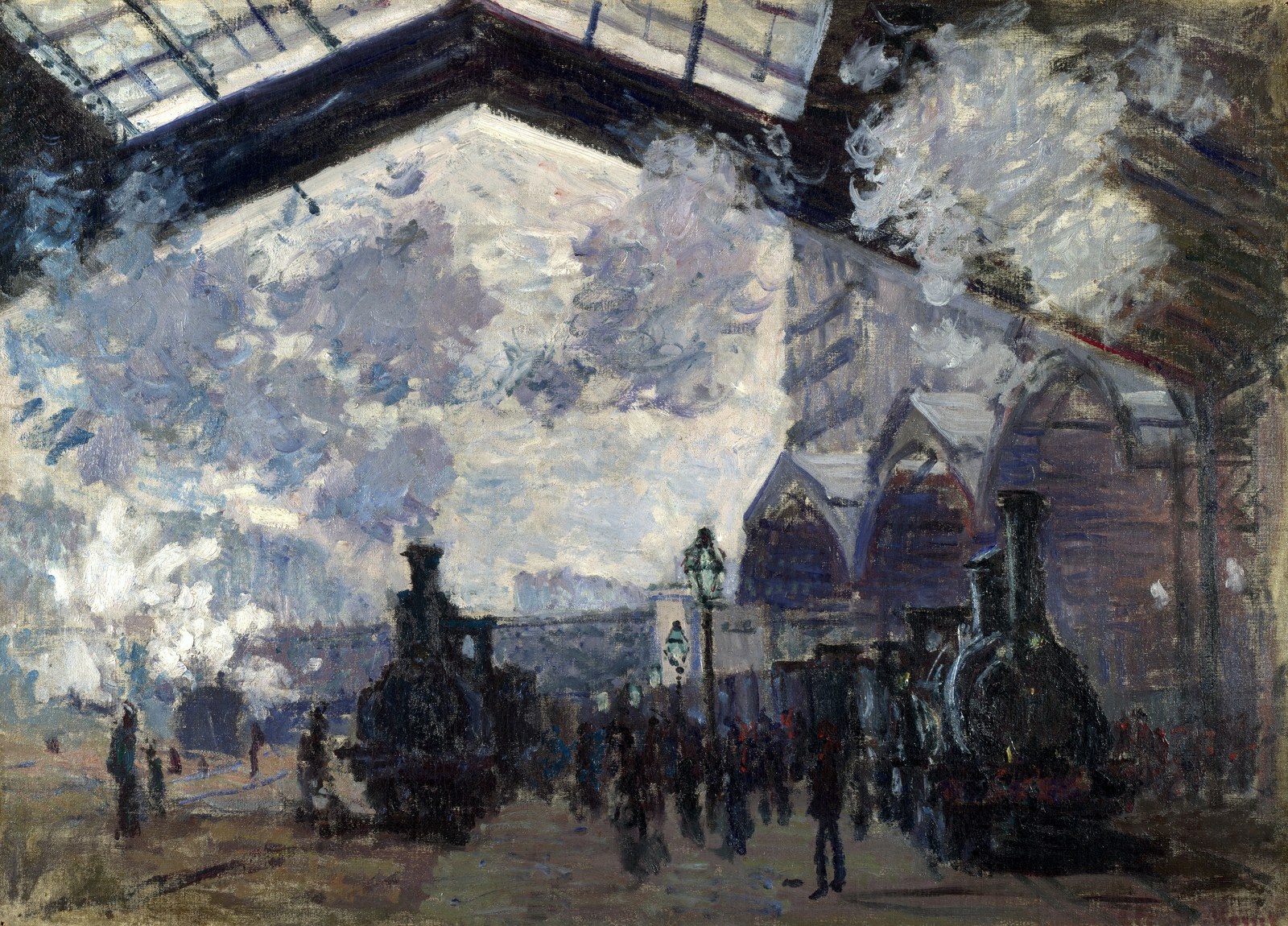
“The Gare Saint-Lazare” was painted in 1877 in Paris. Claude Monet rented a small flat near the station, and the rent was paid by his friend, the painter Gustave Caillebotte. Monet received permission to paint inside, under the great glass roof, among the trains, the people and the steam.
In “The Gare Saint-Lazare” a roof of glass and iron rises above the platform like a huge triangle. Beneath it a locomotive releases clouds of steam, white and blue, which mix with the sunlight. The people are only dark silhouettes. Everything is in motion: the smoke rises, the light trembles, the train arrives.
They say that Claude Monet put on his best clothes and introduced himself to the station master as a famous painter. The station master was so impressed that he ordered the trains to be stopped and the engines stoked so that there would be more steam. The story may be embellished, but the paintings show that Monet stood there for a long time and looked carefully.
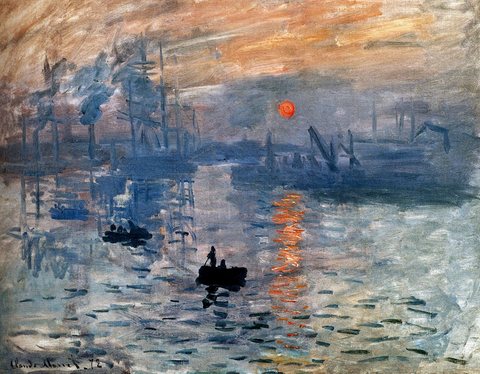
Claude Monet painted the station about 12 times, from different places and in different light. Several of these paintings were shown at the third Impressionist exhibition in April 1877. Five years earlier the harbour of Le Havre in mist had given him Impression, Sunrise. Here the mist is steam from machines, the new world of the 19th century.
The painting was bought by Caillebotte himself. After his death it passed to the French state together with his collection. Today “The Gare Saint-Lazare” is in the Musée d'Orsay in Paris. Claude Monet shows that the city, the machine and the smoke can also be as beautiful as the sea and a sunset.
Interesting facts
The canvas measures 75 × 104 cm, oil.
Monet painted the station about 12 times in 1877.
The rent of the flat near the station was paid by the painter Gustave Caillebotte.