Paint "Young Girl Reading" Yourself
~1769Oil on canvas81.1 × 64.8 cmNational Gallery of Art, Washington
Five steps from a blank canvas to the finished painting. For each step you see how far you should get, which brush to use and where to begin. Drag the line across the painting to compare the step with the original.
"Young Girl Reading" is one of the best-loved paintings of the Rococo, painted by Jean-Honoré Fragonard around 1769. This oil painting lesson is for beginners and for anyone who wants to understand how the picture was made: from the warm ground and the gridded sketch to the quick, bold strokes with which Fragonard finished the dress and the collar. You need a canvas, eight paints and four brushes.
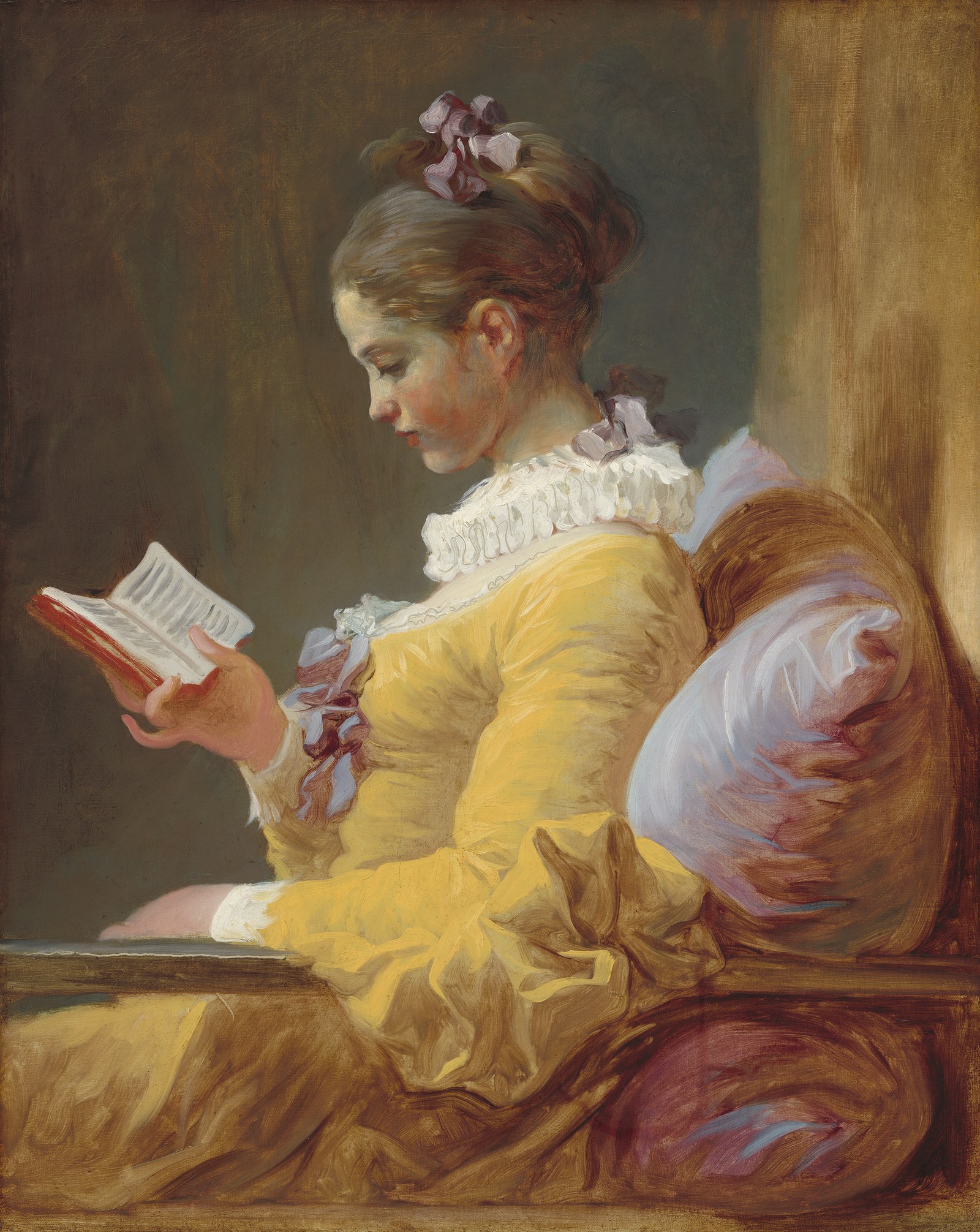
 Young Girl Reading
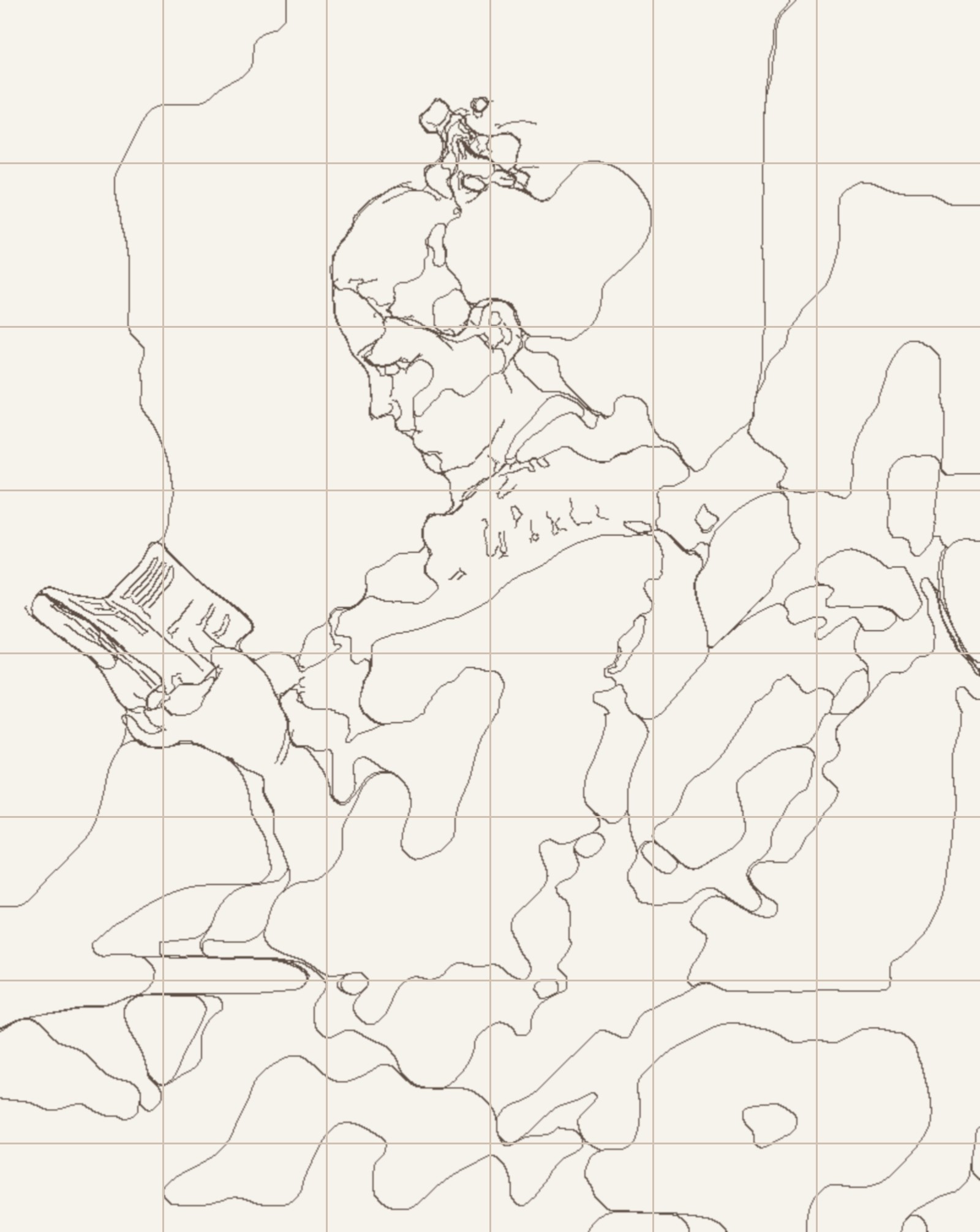
Sketch
about 1 hour
Sketching "Young Girl Reading" on a warm ground
Cover the whole canvas with a thin, warm layer of heavily thinned burnt sienna. Wipe it with a rag until it turns honey-brown. Values are hard to judge on white canvas, and Fragonard also worked on a warm ground.
Draw a pencil grid: 6 squares across and 7½ down. On a 40 × 50 cm canvas each square is 6.7 cm. Transfer the sketch square by square. Start with the big lines: the backrest, the back, the line of the ledge. Only then the head, the hand and the book.
- Draw the head as an oval tilted down towards the book. The whole tilt of the painting comes from it.
- The cushion behind her back is one big rounded volume. Don't draw it in detail.
The sketch is only a map. Anything slightly off can be fixed with paint. Even Fragonard changed the head: research has found a different face under the present one, turned towards the viewer.
about 1 hour
Light and dark in the painting
Using only burnt umber and thinner, paint the four values you see in the picture. The darkest is the background behind the girl and the shadow under the ledge; the lightest are the collar, the bodice of the dress and the cushion.
Work with a No. 10 flat and broad movements. Don't paint the light areas: leave them clean or wipe them out with a rag.
Squint at the original. The details disappear and only the big values remain. Those are what you paint now.
about 2 hours
The big colour masses: background, dress, cushion
Begin with the background, because it is the darkest and largest area. Mix raw umber with a little ultramarine and yellow ochre and cover it with a No. 16 flat. Then the wall on the right and the ledge in warm browns, then the dress in yellow ochre, the cushion in greyish lilac and finally the face and hands.
- Put one single colour in each mass. No transitions and no details.
- The paint is still lean: more thinner, little oil.
If your canvas looks like the picture after this step, you are on the right track. All the difficult decisions have already been made.
2–3 hours
Form and light in the dress and face
The light comes from the upper left. Where the dress turns towards us, add Naples yellow and a little white. Where it turns away, add ochre with a touch of umber. Don't darken with black: it makes the dress muddy.
Model the face softly with a No. 6 round. Cheek and nose are white with a touch of cadmium red. The shadows under the chin are ochre with sienna. Here you may soften the stroke slightly with a clean, dry brush.
- The paint is now thicker, with more oil. The rule is fat over lean, never the other way round.
about 1 hour
Fragonard's bold final strokes
This is the best part, because Fragonard painted fast and boldly. The sleeve is built from a few long diagonal strokes. Load a No. 10 flat with plenty of paint and make each stroke in one movement. Don't go back to correct it.
- The collar: short, curly movements in pure white. Fragonard also scratched lines into the wet paint with the handle of his brush.
- The ribbons: lilac from white, alizarin and a little ultramarine, 3–4 strokes and no more.
- The book: a red edge of burnt sienna and cadmium red, the pages in near-white.
- Finally, place the lightest highlights on the collar, dress and cushion with a No. 2 round.
Stop before you feel the urge to "finish" everything. The strength of this painting is that it looks painted in a single breath.
What you need
Canvas — 40 × 50 cm, primed
Brushes — flats No. 16 and No. 10, rounds No. 6 and No. 2
Thinner — odourless
Oil — linseed
Palette and rag — cotton
Time — about 7–8 hours, in 2–3 sessions
Paints
Titanium white — plenty
Yellow ochre — plenty
Naples yellow — or cadmium yellow light
Burnt sienna
Burnt umber · Raw umber
Cadmium red light — a little
Alizarin crimson — a little
Ultramarine — a little
The painting's colours
#534736#4A352B#815F39#C9A03C#E6C45A#E9C2A0#C7B3CF#9A6B85#ECE6D6