Tahitian Women on the Beach
The story
“Tahitian Women on the Beach” was painted in 1891, in the first months of Paul Gauguin on Tahiti. He arrived on the island in June 1891 and began to paint the people around him: the women, their clothes, their movements and their silence.
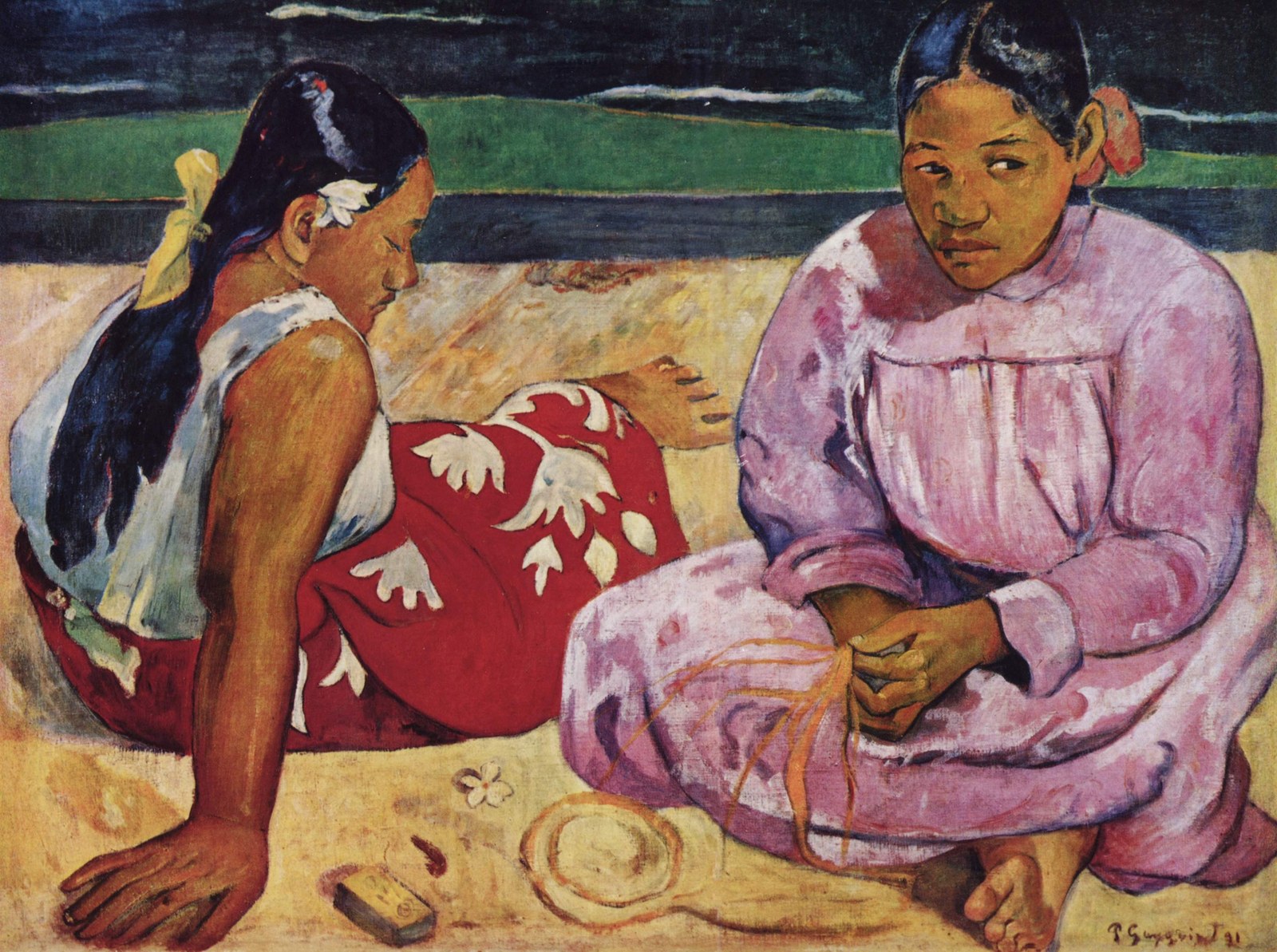
In “Tahitian Women on the Beach” two women sit on the sand. One wears a pareo, a bright red cloth with white flowers, and looks down. The other is in a pink dress, of the kind the missionaries brought to the island, and looks aside. Behind them the sea is dark green, with a white strip of waves.
Paul Gauguin paints with large, calm areas of colour, without shadows and without details. The women are heavy and still, as if carved. They do not pose, but simply sit, think and rest, as on a hot afternoon.
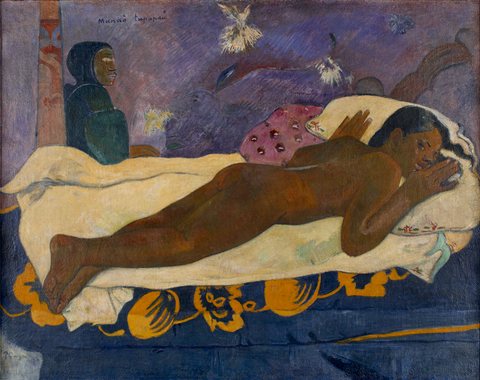
Already in Europe Gauguin dreamed of a world far from cities and money. Here he searched for it. A year later he painted Manaò tupapaú (Spirit of the Dead Watching), where he entered the world of local beliefs and fears.
Today “Tahitian Women on the Beach” is in the Musée d'Orsay in Paris. It is one of the best-known paintings by Paul Gauguin from Tahiti, a quiet moment on the shore where the old and the new world of the island meet.
Interesting facts
The canvas measures 69 × 91.5 cm, oil.
It was painted in 1891, soon after his arrival on Tahiti.
The pink dress is a missionary dress, and the red cloth is a Tahitian pareo.