The Consequences of War
The story
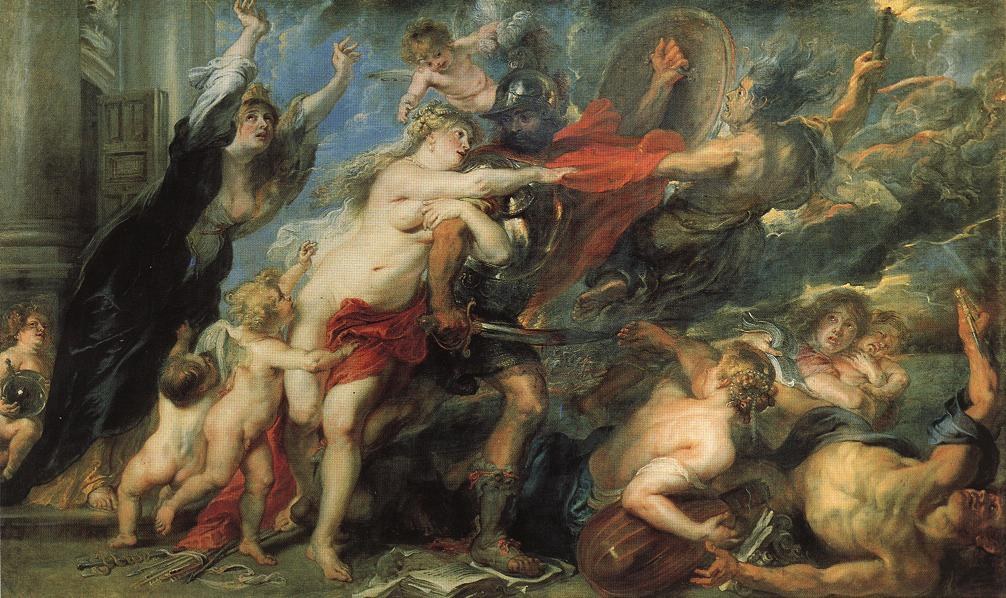
“The Consequences of War” was painted in 1637–1638 for the Grand Duke of Tuscany. At that time the Thirty Years' War had been raging in Europe for years. Peter Paul Rubens saw the destruction and sincerely hated it.
In “The Consequences of War” Mars, the god of war, strides out with shield and sword. Venus, the goddess of love, tries to hold him back, but a Fury with a torch pulls him forward. Under his feet lie people, books and musical instruments. On the left a woman in black raises her arms to the sky.
Peter Paul Rubens explained the painting in a letter to a friend in Florence. He wrote that the woman in black is unhappy Europe, who for so many years has suffered plunder and destruction. The books and instruments under Mars's feet show that war destroys art and knowledge.
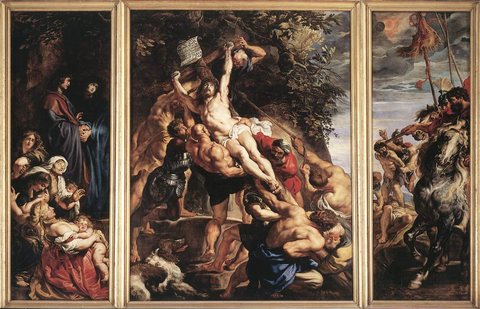
Rubens knew from experience how hard it is to achieve peace. Earlier, in 1630, as a diplomat he had given the English king a painting about peace. A similar powerful movement can be seen in The Raising of the Cross.
Today “The Consequences of War” is in the Palazzo Pitti in Florence. In it Peter Paul Rubens left one of the strongest calls for peace in the history of art.
Interesting facts
The canvas measures about 206 × 342 cm, oil.
Rubens explained the meaning of the painting in a letter of 1638.
The woman in black is Europe, suffering from the war.