Vincent van Gogh
Hollandalı, 1853–1890, Dışavurumculuk, Post-Empresyonizm
Yaşam öyküsü
Vincent van Gogh was born into a house that already had a Vincent. On 30 March 1853, in the small Dutch village of Groot-Zundert, the pastor's wife gave birth to a boy and named him after his brother, who had been stillborn exactly one year earlier, on the same day. Every Sunday, on the way to church, little Vincent walked past a grave with his own name on it. He grew up quiet, serious and lonely, and loved to wander the fields, looking at beetles and birds' nests.
At sixteen Vincent van Gogh joined a large firm of art dealers and worked in its branches in The Hague, London and Paris. All day long he was surrounded by prints and canvases, but he could not sell art he did not love. He was dismissed. He tried to be a teacher, then a preacher. In 1879 he went to the Borinage, a coal-mining region in Belgium, gave his clothes and food to the miners and slept on straw. The church found him too strange and let him go. At twenty-seven, with no money and no profession, he decided: he would be an artist.
From then on there was always one person beside him, his younger brother Theo. Theo worked as an art dealer in Paris and every month sent Vincent money for food, canvas and paint. The two wrote to each other all their lives. More than 800 of the artist's letters survive, most of them to Theo. In them he describes every painting, every colour, his hunger and his hope. Thanks to them we know how Van Gogh thought better than almost any other artist.
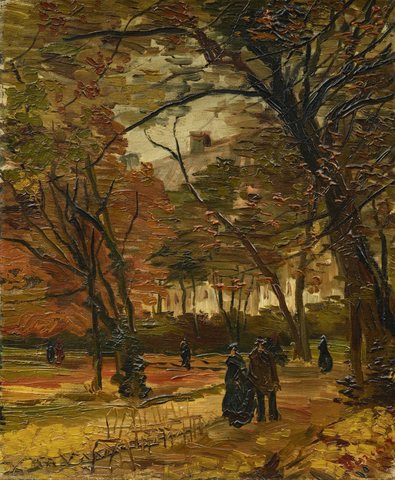
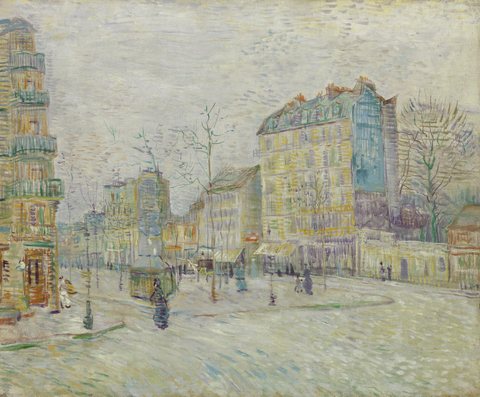
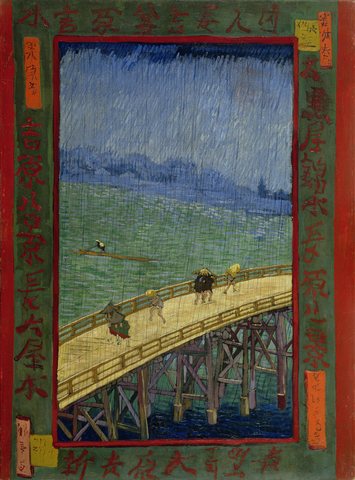
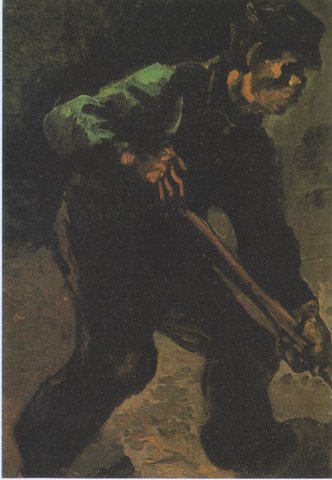
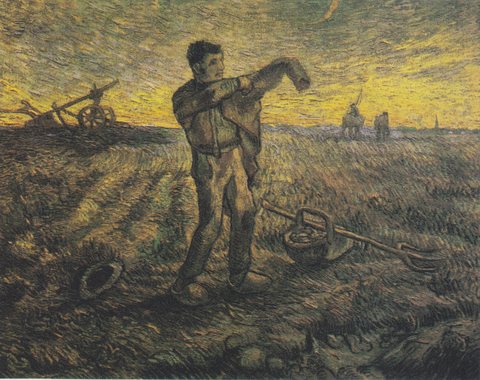
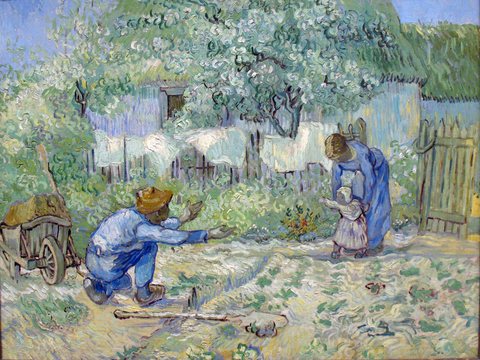
His first paintings are as dark as the earth the peasants worked in Nuenen. The largest of them is The Potato Eaters (1885): a family around a lamp, with hands that dug the very potatoes they are eating. He admired Jean-François Millet, the painter of peasants, and later painted many of his own versions of his pictures. In 1886 Vincent joined Theo in Paris, and there he saw the Impressionists and Japanese prints. In the studio of the painter Cormon he became friends with the young Henri de Toulouse-Lautrec. His palette lit up. Brown gave way to blue, yellow and red, and his brushstroke became short and lively.
In February 1888 Vincent van Gogh went south to Arles in search of light. He rented four rooms in a house on a square and painted it yellow outside. This is The Yellow House, where he dreamed of creating a "studio of the south" for artist friends. At night he took his canvas out to the square and painted Café Terrace at Night, a night without any black. He spent three nights in a café and painted The Night Café with its blood-red walls. He stood on the riverbank under the stars and painted Starry Night Over the Rhône. And for the room of his awaited guest, Paul Gauguin, he painted Still Life: Vase with Fifteen Sunflowers, yellow on yellow, like small suns in the room.
Gauguin arrived in October. The two painted together, argued and quarrelled. On 23 December 1888, after another quarrel, Vincent suffered a severe crisis and cut off part of his left ear. Soon afterwards he painted Self-Portrait with Bandaged Ear, calm, in a fur cap, with a Japanese print on the wall behind him.
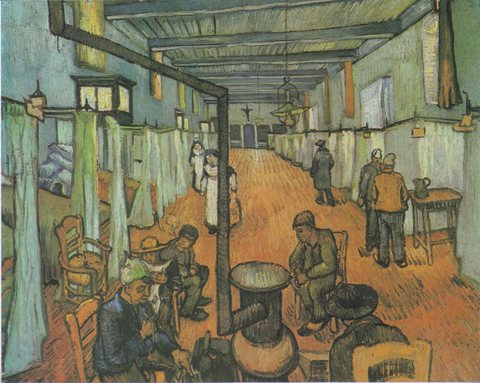
In May 1889 he admitted himself to the asylum at Saint-Rémy. There, behind the bars of his window, he went on painting the garden, the olive trees and the cypresses. In June came The Starry Night: the village sleeps while the sky above it seethes, the stars whirl, and a cypress rises towards them like a black flame. Today it is one of the best-known paintings in the world. Van Gogh himself did not consider it a success. A year later, just before leaving the asylum, he painted Irises: a bouquet of blue flowers in a vase against a light background.
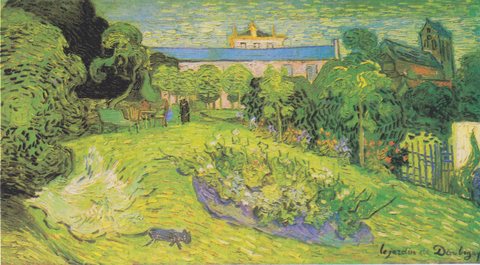
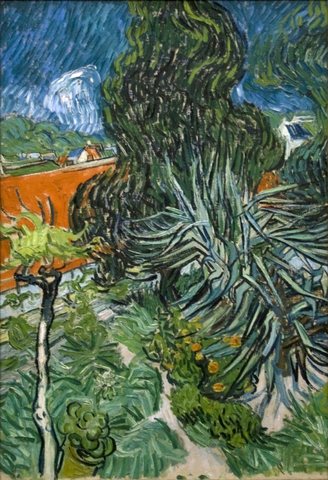
In May 1890 Vincent van Gogh moved to Auvers-sur-Oise, a small village near Paris, in the care of Doctor Paul Gachet, who loved art. He painted Portrait of Dr Gachet with sad eyes and a hand resting against his cheek. He painted The Church at Auvers under a deep blue sky. In seventy days he made about seventy paintings, as if he were in a hurry. Among the last is Wheatfield with Crows: a stormy sky, three paths that lead nowhere, and black birds over the golden wheat.
On 27 July 1890 Van Gogh shot himself in the fields and died two days later, on 29 July, at the age of thirty-seven. Theo was with him. Six months later Theo died too. Today the two brothers lie side by side in the cemetery at Auvers.
In his lifetime Vincent van Gogh sold almost nothing. In ten years he made about 860 oil paintings, most of them in the last two years of his life. Theo's widow, Johanna van Gogh-Bonger, kept the paintings and letters, organised exhibitions and published the letters. Little by little the world began to see what Vincent had seen all along: that yellow can be joy, blue can be comfort, and one starry night can be a whole life.
En ünlü eserler
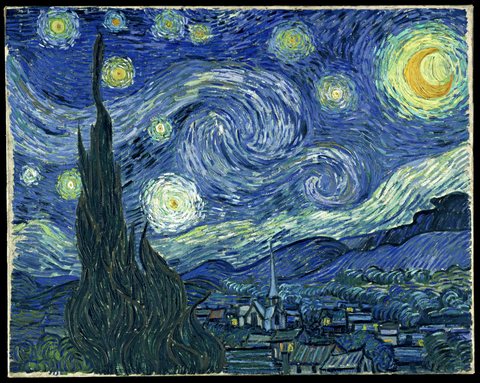 Yıldızlı GeceThe night sky over Saint-Rémy, June 1889. Museum of Modern Art, New York.
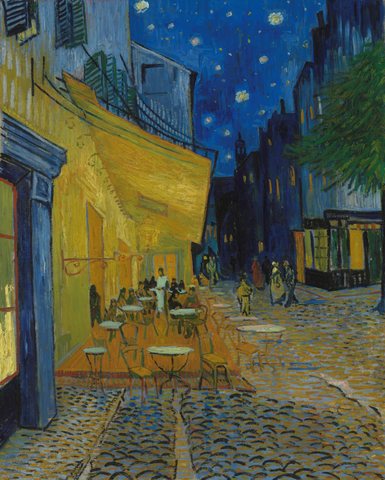 Gece Kafe TerasıA night painting without a drop of black, Arles, 1888. Kröller-Müller Museum, Otterlo.
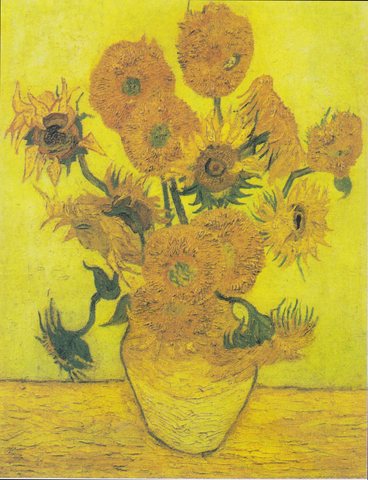 Natürmort: On Beş Ayçiçekli VazoOne of the famous vases of sunflowers from Arles, painted for Gauguin's room.
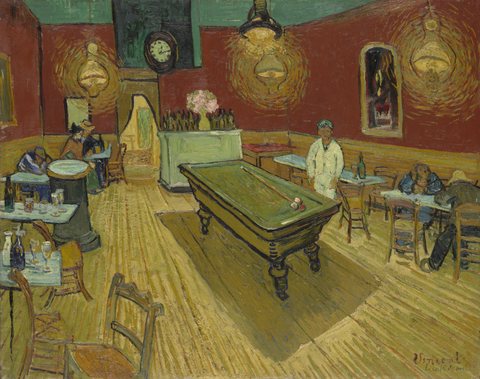 Gece KafesiA café with blood-red walls and a green billiard table, 1888. Yale University Art Gallery, New Haven.
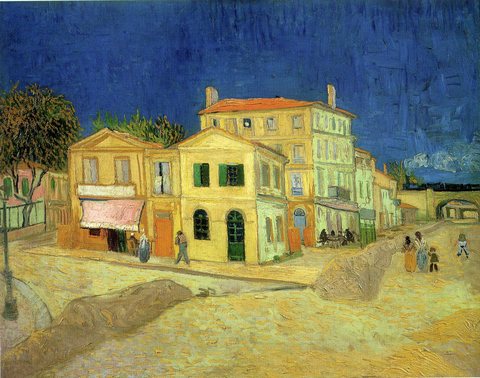 Sarı Ev1888The house in Arles where he dreamed of a "studio of the south". Van Gogh Museum, Amsterdam.Van Gogh Museum, Amsterdam, Netherlands
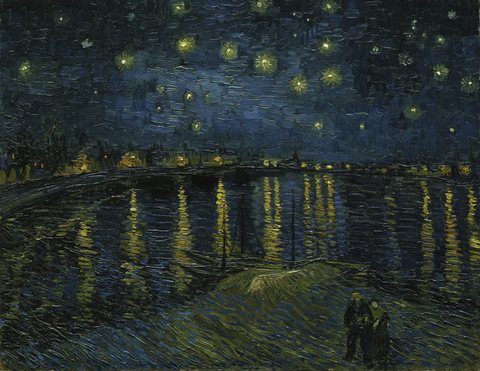 Rhône Üzerinde Yıldızlı GeceThe stars over the river at Arles, 1888. Musée d'Orsay, Paris.
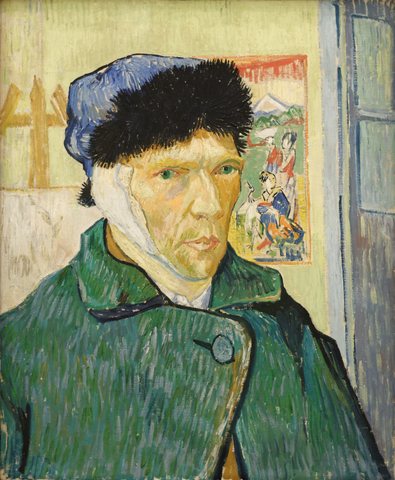 Sargılı Kulaklı OtoportreSelf-portrait after the crisis of December 1888. Courtauld Gallery, London.
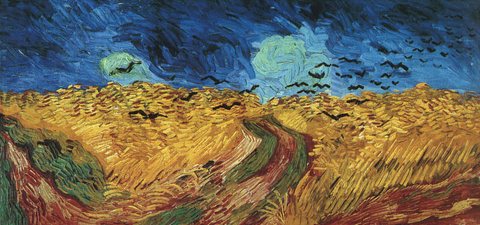 Kargalı Buğday TarlasıOne of his last paintings, Auvers, July 1890. Van Gogh Museum, Amsterdam.
Kronoloji
- 1853Born in Groot-Zundert, the Netherlands
- 1869Joins a firm of art dealers in The Hague
- 1879Preacher among the miners of the Borinage, Belgium
- 1880Decides to become an artist
- 1885The Potato Eaters
- 1886Joins his brother Theo in Paris
- 1888Arles: The Yellow House, the sunflowers, Gauguin arrives in October
- 1889The asylum at Saint-Rémy, The Starry Night
- 1890Auvers-sur-Oise; dies on 29 July
Nerede görülebilir
İlginç bilgiler
More than 800 letters by Vincent van Gogh survive, most of them to his brother Theo. Theo's widow, Johanna van Gogh-Bonger, published them in 1914.
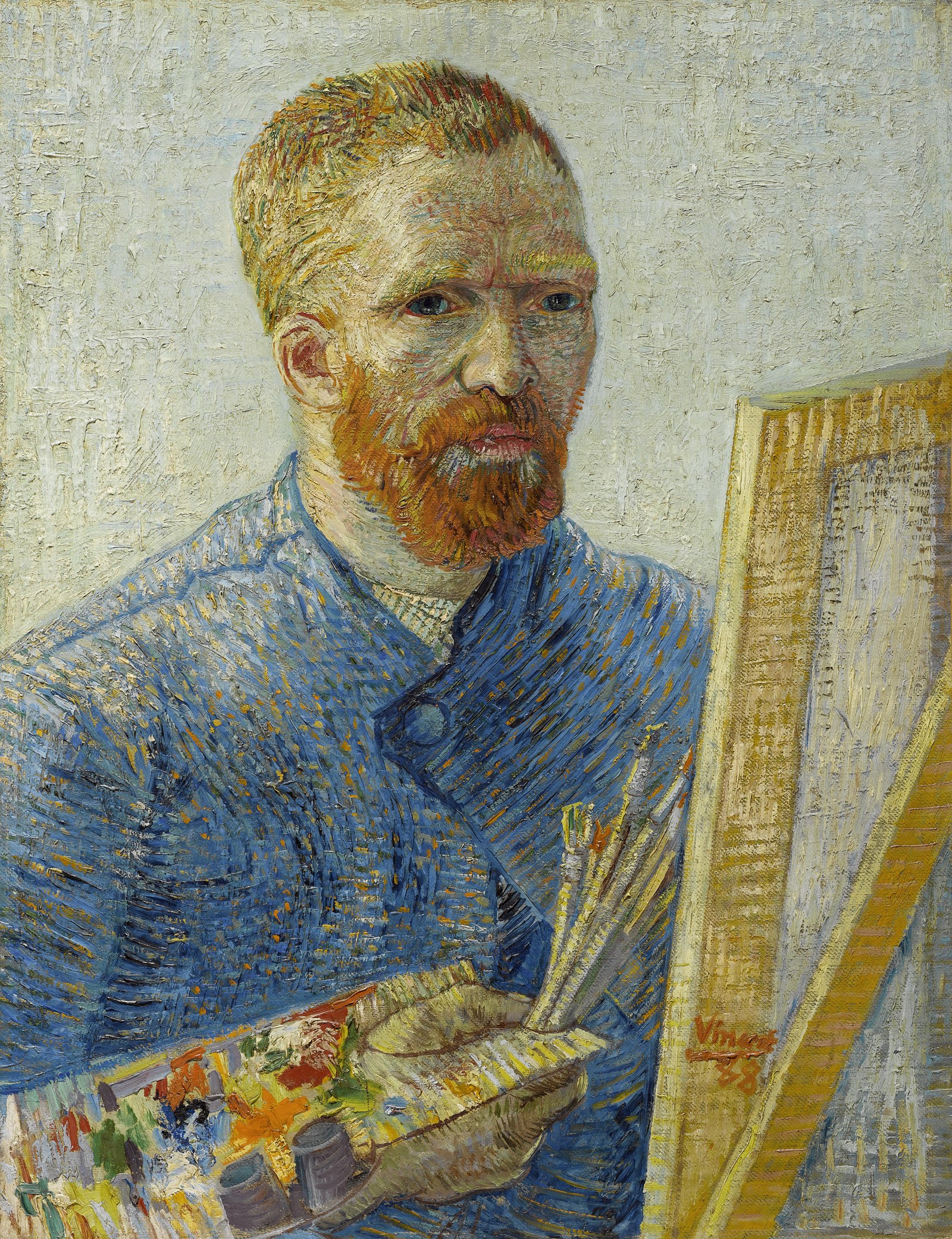
Van Gogh painted more than 35 self-portraits. One reason is that he had no money to pay models.
In 1990 the first version of Portrait of Dr Gachet was sold at auction in New York for 82.5 million dollars. At the time it was the most expensive painting ever sold.
The Starry Night has been in the Museum of Modern Art in New York since 1941.
The Van Gogh Museum in Amsterdam opened in 1973 and holds the largest collection of the artist's work in the world.