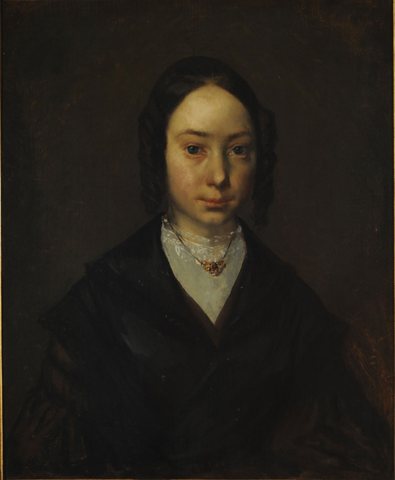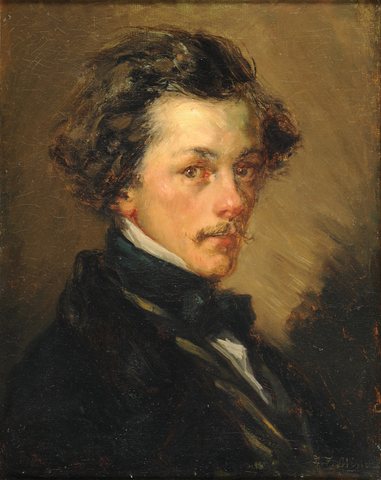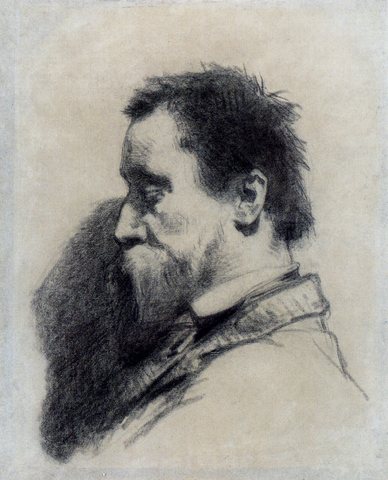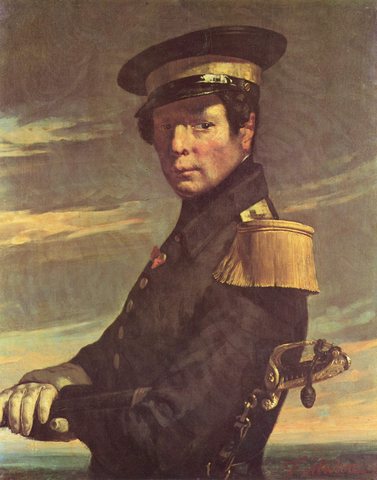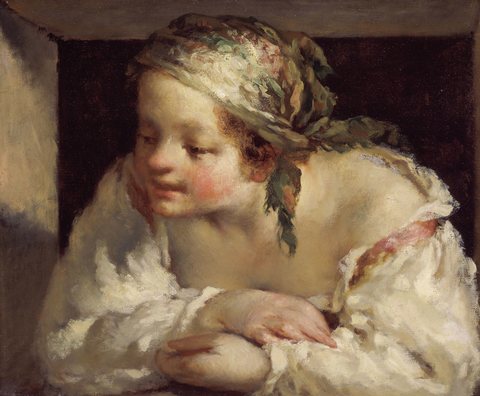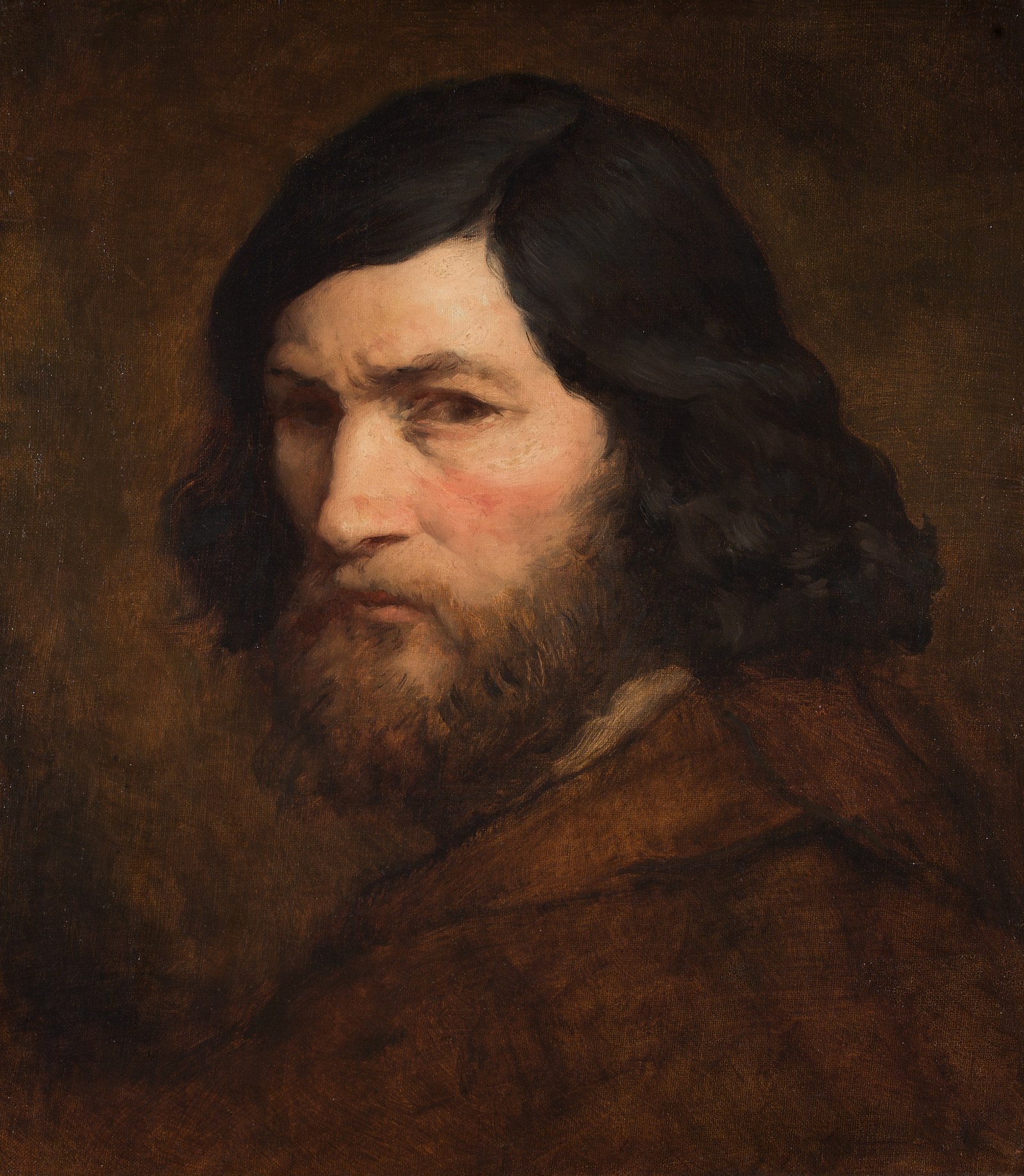
Jean-François Millet
Fransız, 1814–1875, Realizm ve natüralizm
Yaşam öyküsü
Jean-François Millet was born on 4 October 1814 in Gruchy, a small hamlet in Normandy, close to the sea. His family were peasants. As a boy he ploughed, mowed and reaped together with his father. His grandmother, a deeply religious woman, taught him to love the Bible and nature.
His father noticed that the boy drew well and took him to a painter in the town of Cherbourg. In 1837 the town gave Millet a grant, and he went to study in Paris. He did not like the big city. He felt a stranger there, like a peasant among gentlemen.
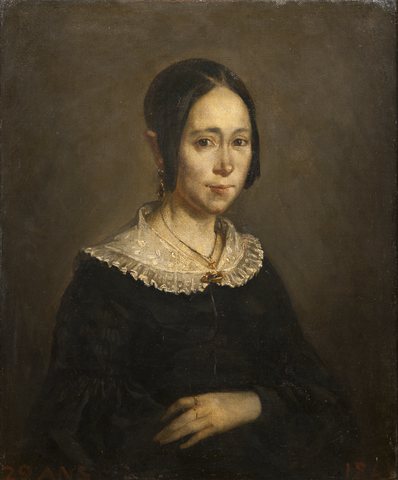
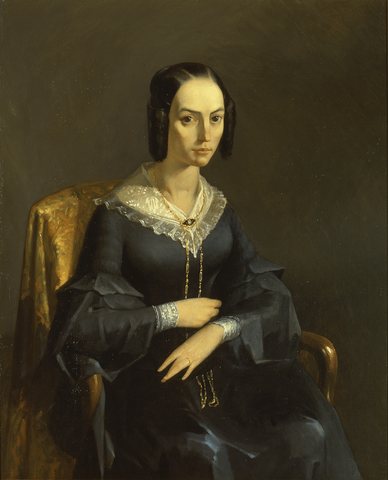
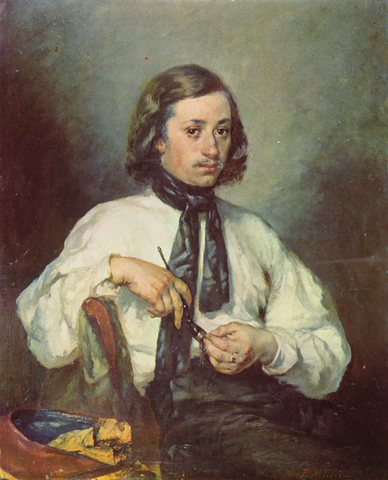
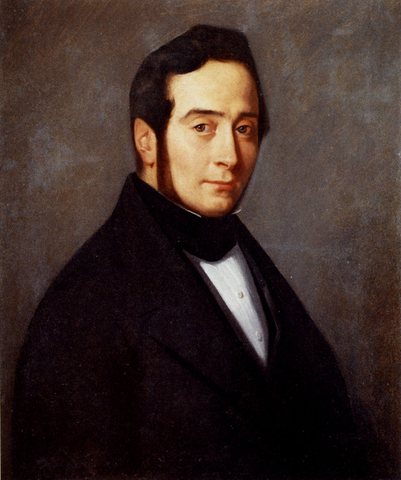
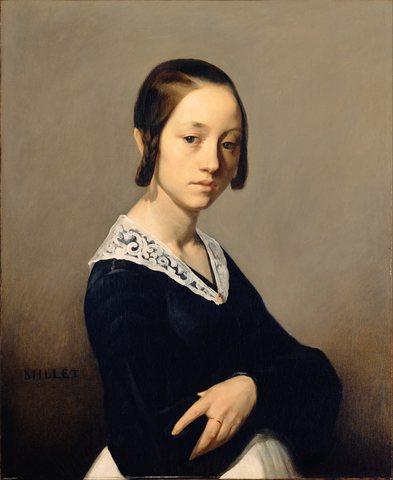
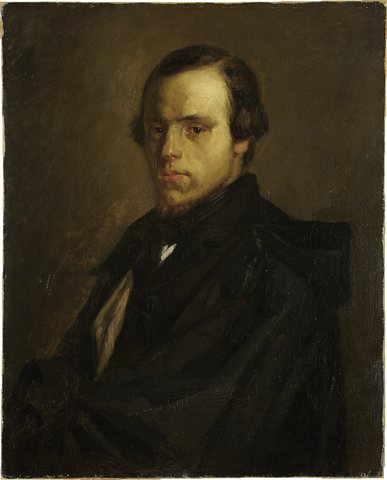
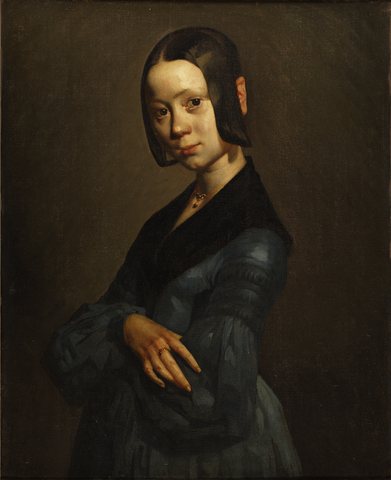
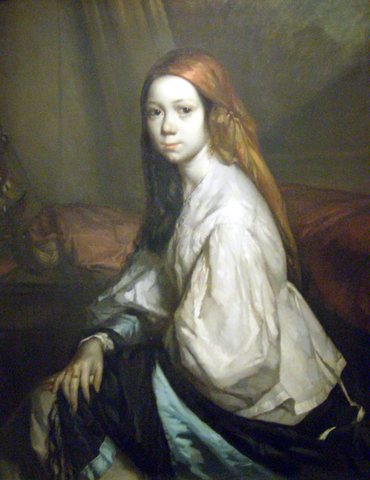
For years Millet painted portraits and small pictures to feed his family. His first wife died young. His second, Catherine Lemaire, stayed with him all his life, and they had nine children. There was almost never enough money.
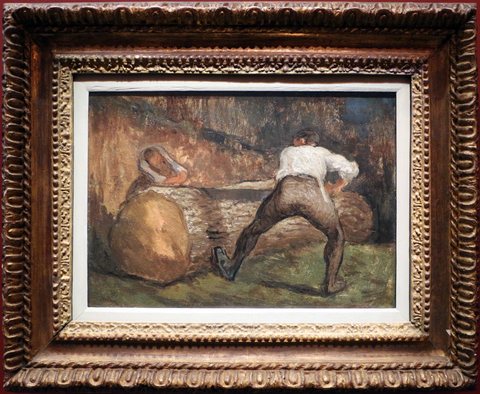
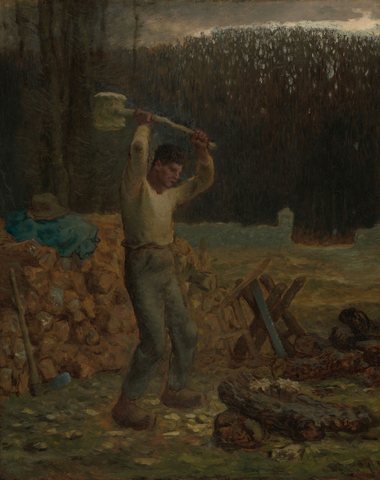
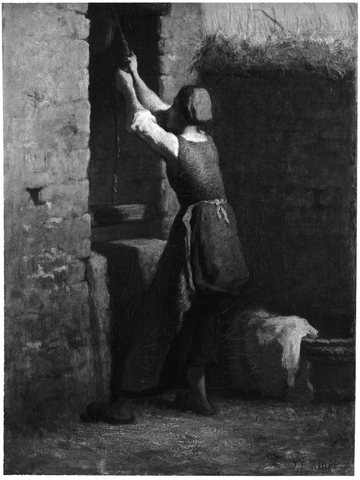
In 1848 Jean-François Millet showed The Winnower at the Salon – a peasant sifting grain. It was his first large painting about work on the land. A minister bought it, and then the painting disappeared for more than a hundred years.
In 1849 cholera broke out in Paris, and Millet moved with his family to Barbizon, a village by the forest of Fontainebleau. He stayed there for the rest of his life. His best friend there was the painter Théodore Rousseau.
It is said that Rousseau once bought a painting by Millet while pretending to be a rich American, so as not to embarrass his poor friend. In Barbizon Millet painted what he knew best – the people of the fields. These words are attributed to him: “I was born a peasant and I will die a peasant.”
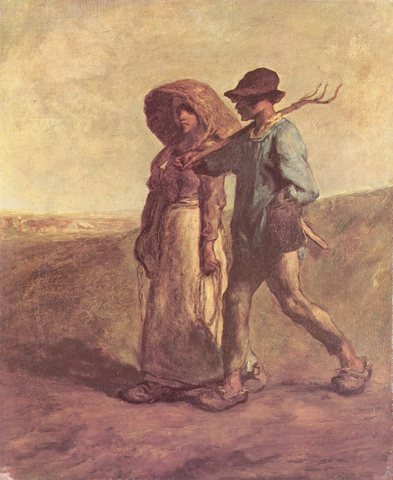
In 1850 he painted The Sower – a man scattering seed with a wide sweep of his arm. A few years later came The Gleaners. Some critics were frightened by these paintings. They saw in the poor peasant women a threat to the rich. Millet, like Gustave Courbet, showed the real life of simple people.
His most famous painting is “The Angelus” – two peasants stop work in the field and pray when the bell rings. Years after Millet's death it was sold at auction for the enormous sum of 553 000 francs. The painter Salvador Dalí was so fascinated by it that he wrote a whole book about it.
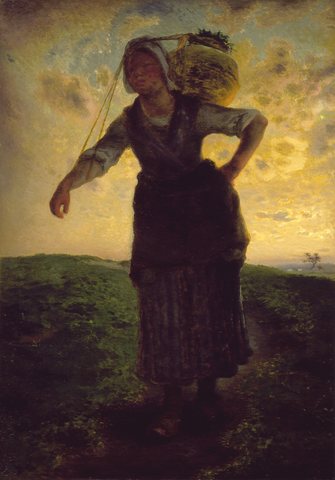
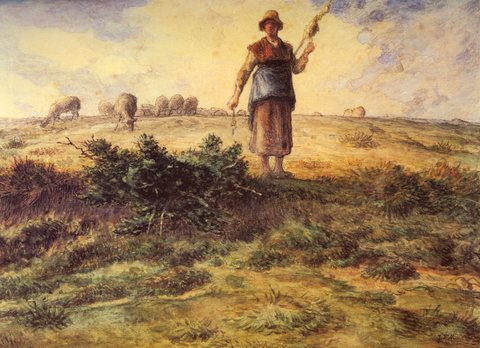
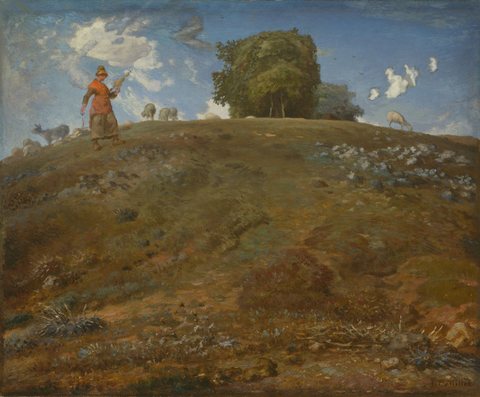
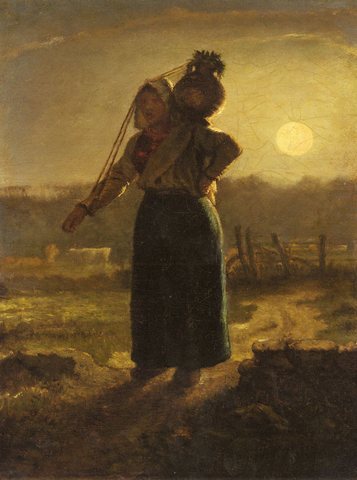
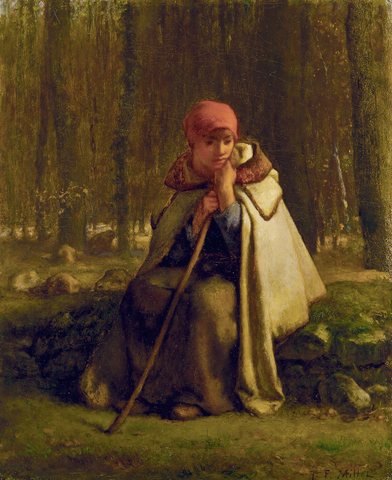
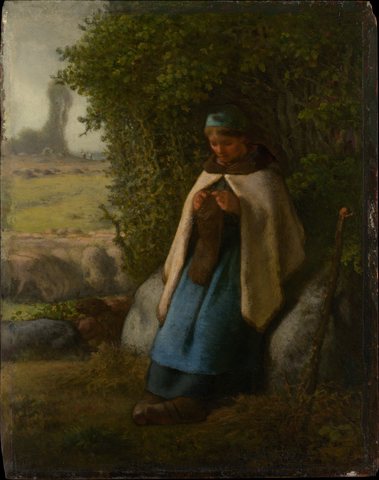
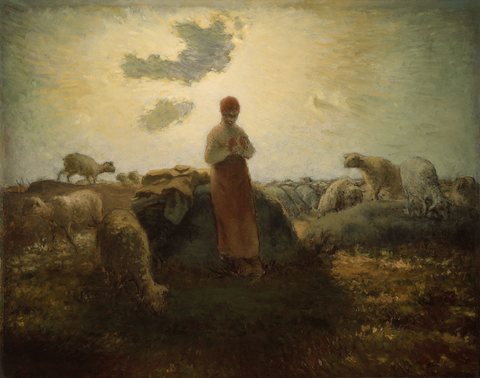
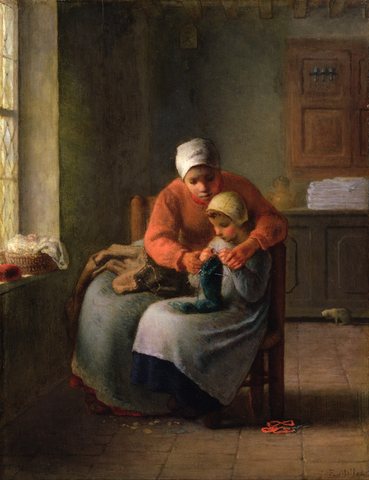
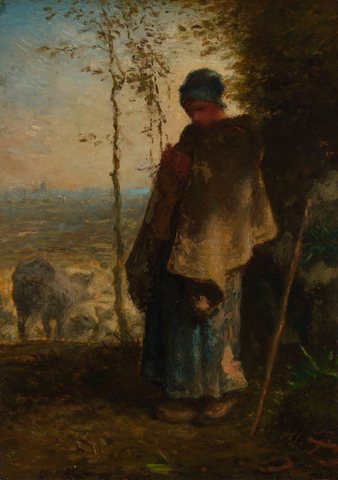
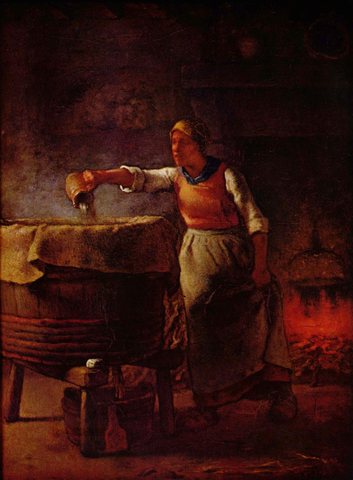
Millet also painted the quiet moments of village life – A Woman Baking Bread, children learning to knit, shepherdesses with their flocks. Sometimes he painted the night, as in Starry Night.
Only towards the end of his life did Jean-François Millet receive recognition. In 1867, at the World Exhibition in Paris, he won a first-class medal, and in 1868 he received the Legion of Honour.
Millet died in Barbizon on 20 January 1875, aged 60. He was buried in the neighbouring village of Chailly, beside his friend Théodore Rousseau.
The young Vincent van Gogh adored Millet and copied his paintings dozens of times. In Japan he is especially loved: “The Sower” is the emblem of a large Japanese publishing house, and one of the versions of the painting is in the museum of Yamanashi Prefecture.
En ünlü eserler
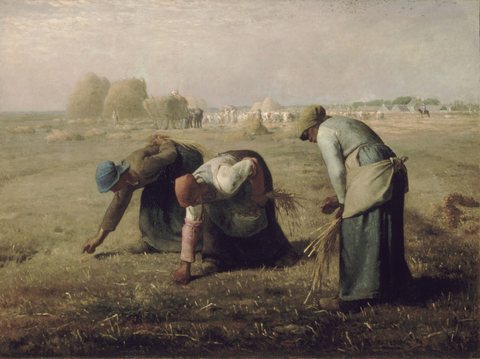 Başak ToplayanlarThree women and the leftover ears of grain, 1857. Musée d'Orsay, Paris.
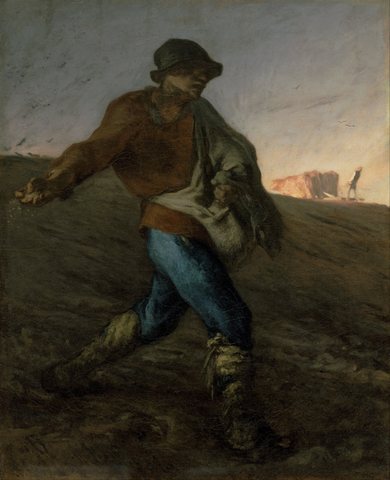 EkinciThe wide sweep of the sower, 1850.
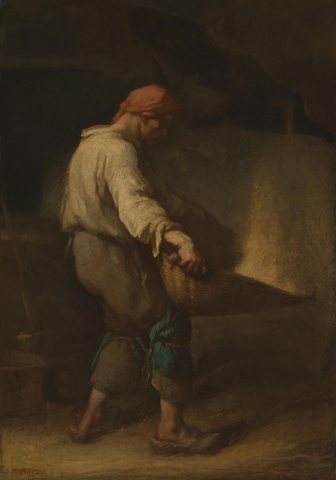 Harman SavuranThe painting lost for more than a hundred years, 1847–1848. National Gallery, London.Ulusal Galeri, Londra
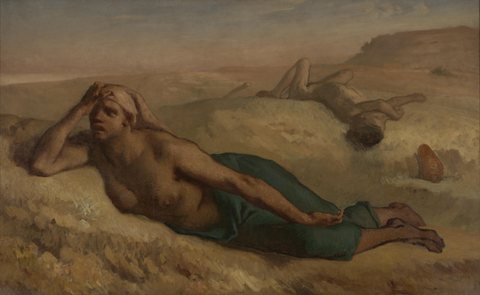
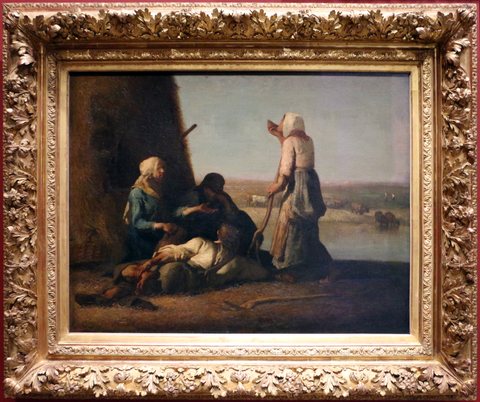
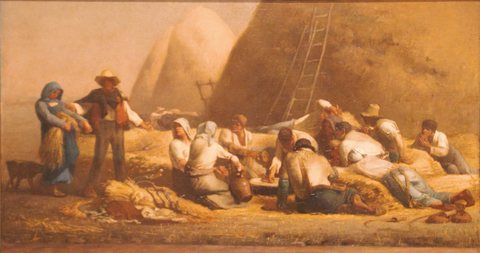 Dinlenen Hasatçılar (Ruth ve Boaz)The harvesters' midday rest, 1850–1853. Museum of Fine Arts, Boston.
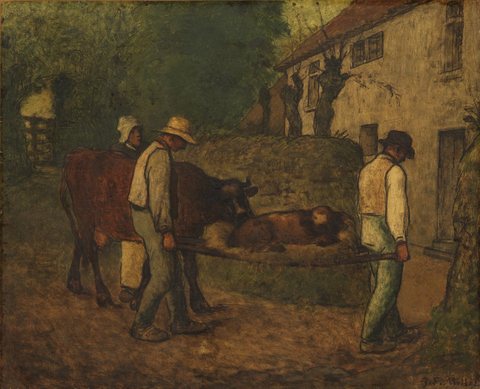
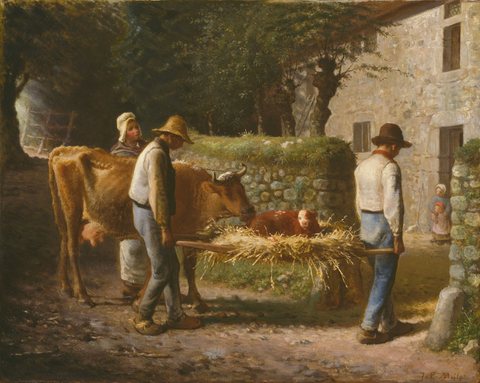 Tarlada Doğan Buzağıyı Eve Getiren KöylülerA newborn calf on a stretcher, 1864. Art Institute of Chicago.
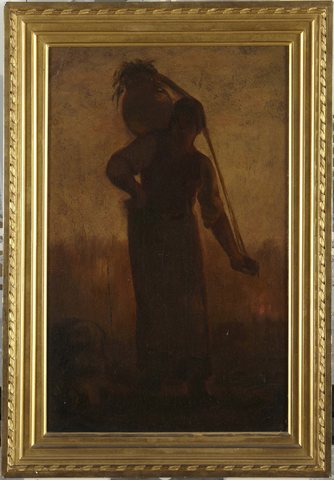
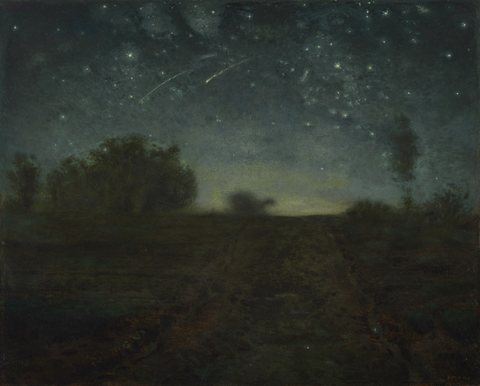 Yıldızlı GeceA night sky over the field, 1850–1865. Yale University Art Gallery, New Haven.
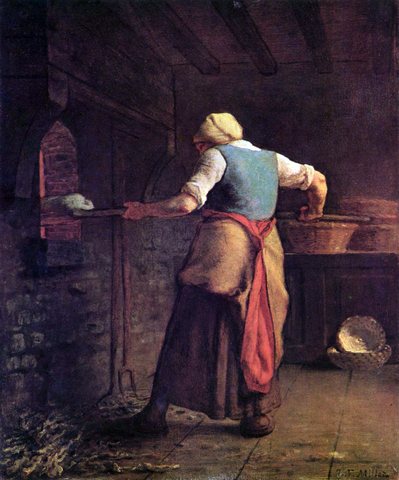 Ekmek Pişiren KadınThe fire in the oven and the bread, 1854. Kröller-Müller Museum, Otterlo.
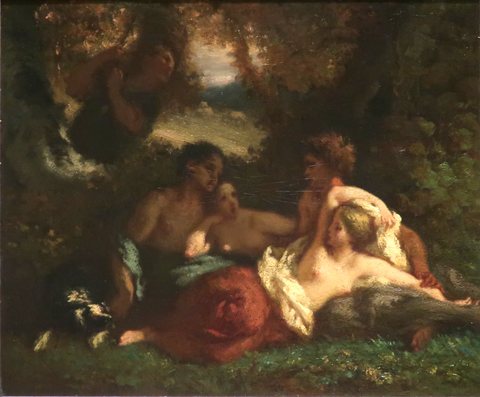
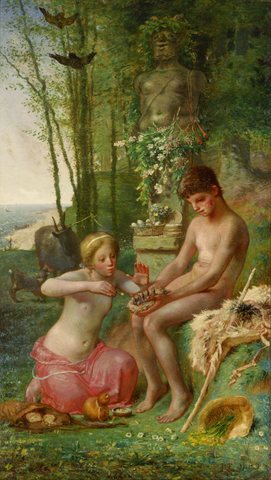 İlkbahar (Daphnis ile Khloe)Young lovers and the spring, 1865. National Museum of Western Art, Tokyo.
Kronoloji
- 1814Born in Gruchy, Normandy, on 4 October
- 1837Goes to Paris with a grant from Cherbourg
- 1848“The Winnower” at the Salon
- 1849Moves to Barbizon
- 1850“The Sower”
- 1853“Harvesters Resting (Ruth and Boaz)”
- 1857“The Gleaners”
- 1859Finishes “The Angelus”
- 1868Legion of Honour
- 1875Dies in Barbizon on 20 January
Nerede görülebilir
İlginç bilgiler
Jean-François Millet was born into a peasant family in Normandy.
“The Angelus” was sold at auction in 1889 for 553 000 francs.
Salvador Dalí wrote a whole book about Millet's “The Angelus”.
The painting “The Winnower” was lost for more than a hundred years and was found again in the USA.
One of the versions of “The Sower” is in the museum of Yamanashi Prefecture in Japan.