The Cliff at Étretat after a Storm
The story
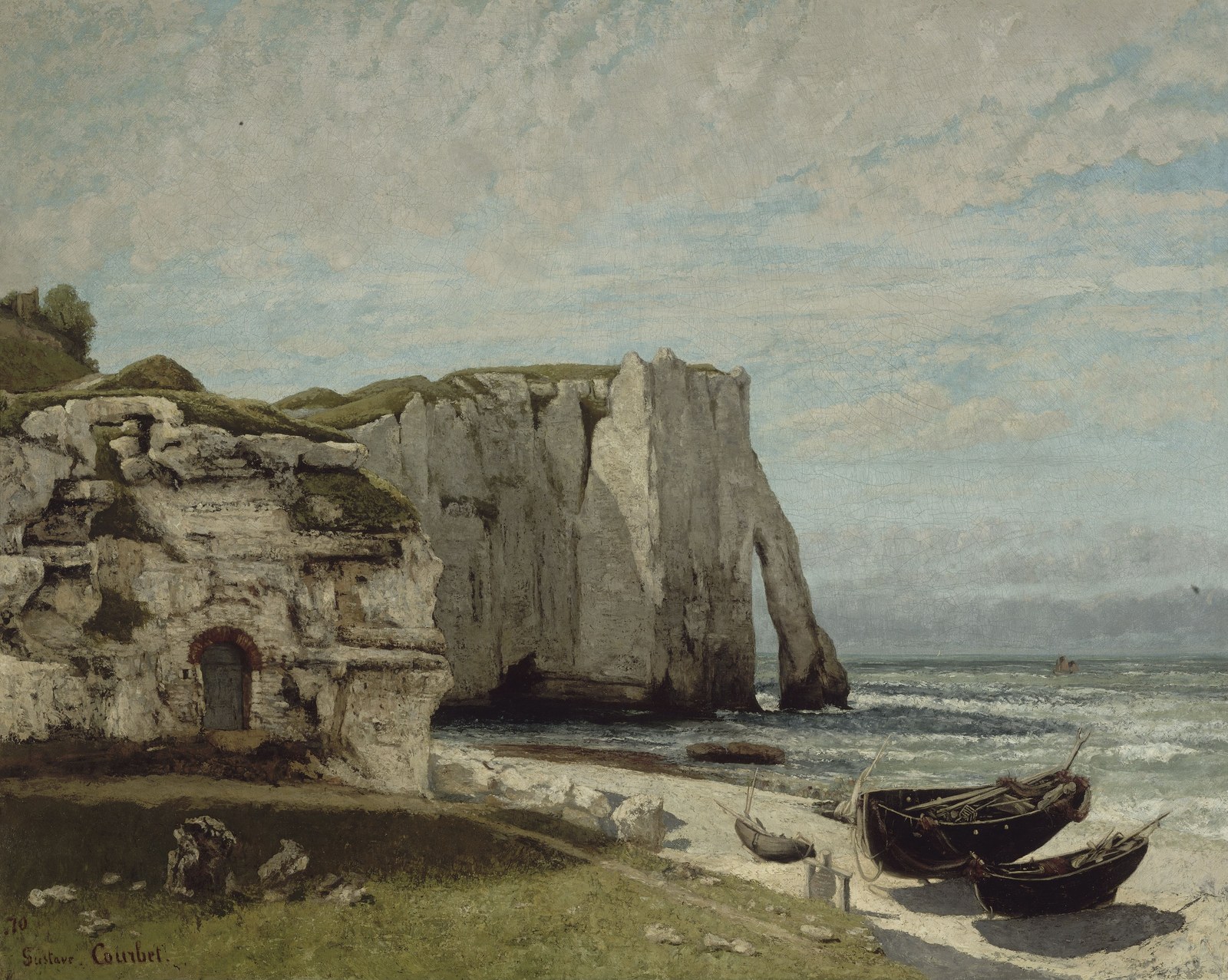
“The Cliff at Étretat after a Storm” was painted in 1870. In the summer of 1869 Gustave Courbet lived in Étretat, in Normandy, in a house right next to the huge white cliffs.
In “The Cliff at Étretat after a Storm” the white cliff with its famous arch into the sea rises on the right. In front, fishing boats lie on the shore. The sea is calm, and the sky is clear, washed by the rain. There are no people – only nature.
Gustave Courbet paints the cliffs thickly and heavily, as if they were made of real stone. The air is clear and fresh. The critic Castagnary praised the free and joyful air of the painting.
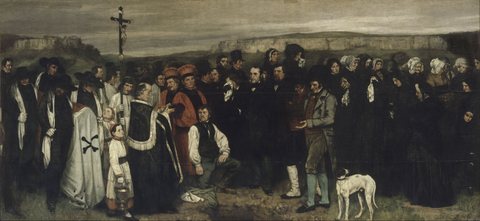
Courbet showed it at the Salon of 1870 together with a painting of a stormy sea. It was one of his last great successes before the hard years. Twenty years earlier he had shocked the Salon with A Burial at Ornans.
After the Second World War the painting was found in Germany. Today “The Cliff at Étretat after a Storm” is in the Musée d'Orsay in Paris.
Interesting facts
The canvas measures 130 × 162 cm, oil.
The painting was shown at the Salon of 1870.
Courbet painted the cliffs at Étretat many times.