阿西斯与伽拉忒亚的风景
作品故事
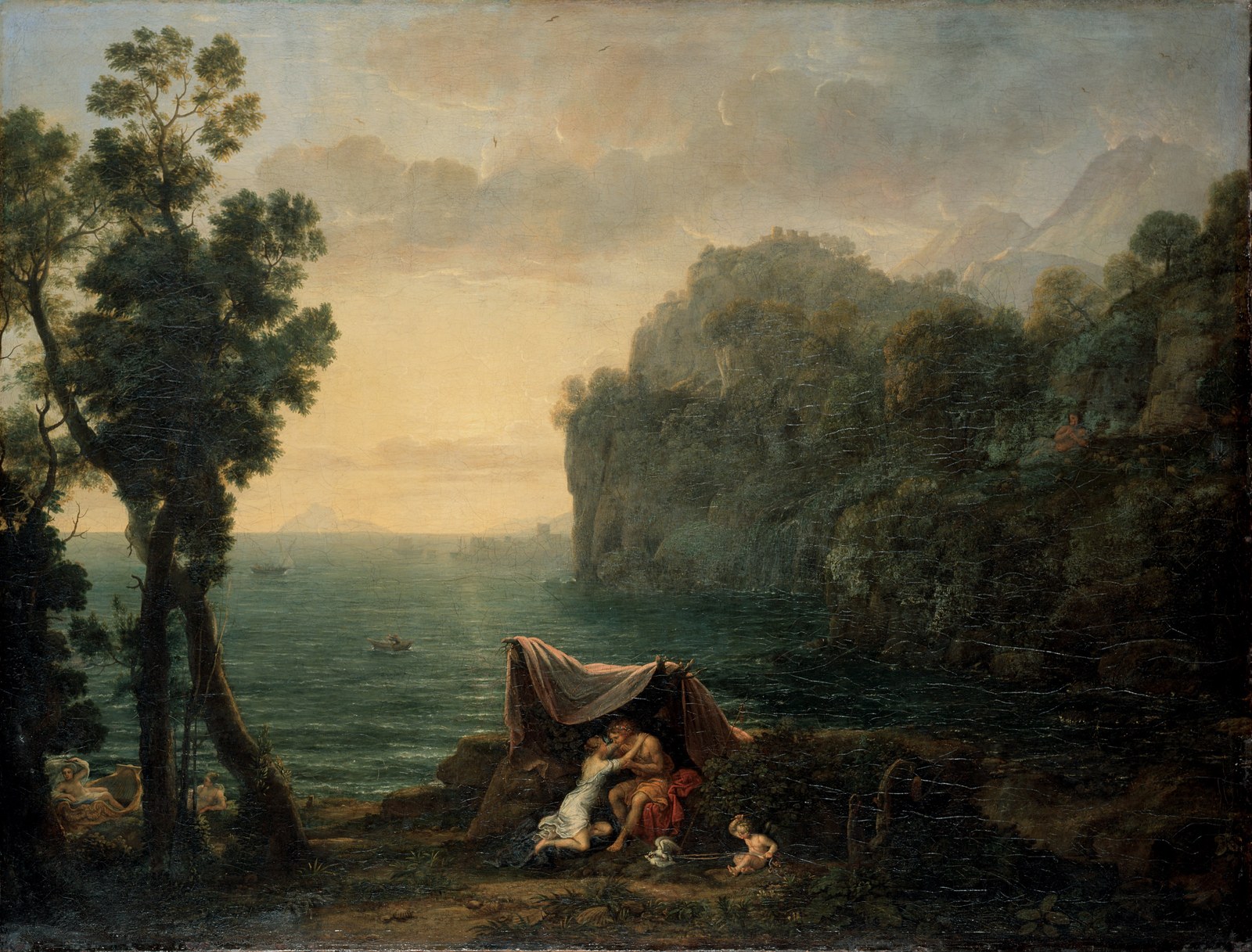
“Landscape with Acis and Galatea” was painted in 1657. The subject comes from an ancient myth: the sea nymph Galatea loves the shepherd Acis, but the giant Polyphemus is also in love with her. Claude Lorrain paints the lovers in moments of happiness.
In “Landscape with Acis and Galatea” in the foreground, on the shore, Acis and Galatea embrace under a canopy of cloth. The sea is calm, and the sun is setting below the horizon. On the right rises a tall rock, and high on it, barely visible, sits the giant Polyphemus.
According to the myth, Polyphemus will crush Acis with a rock out of jealousy. Claude Lorrain does not paint the tragedy but the silence before it. The light is golden and tender, as in a dream.
The writer Dostoevsky loved this painting and described it in his novels as a dream of the “golden age” of mankind. Another painting with a myth by Claude is Landscape with Narcissus and Echo.
Today “Landscape with Acis and Galatea” is in the Gemäldegalerie Alte Meister in Dresden. Claude Lorrain painted one of the most beautiful sunsets in the history of art.
趣闻
The canvas measures 100 × 135 cm, oil.
Dostoevsky described the painting as a dream of the “golden age”.
The giant Polyphemus can be seen high on the rock.