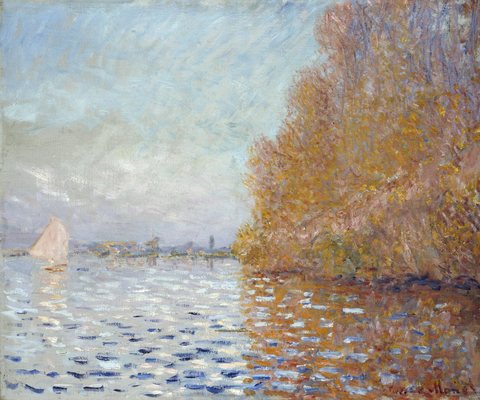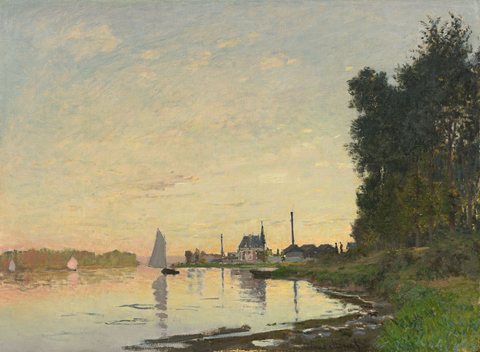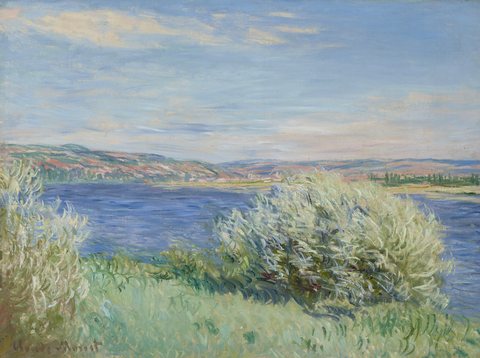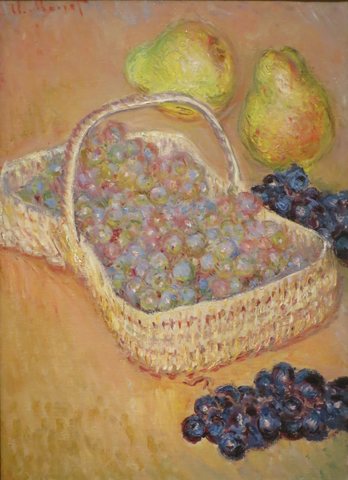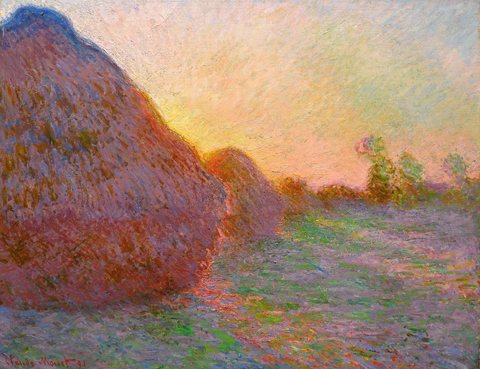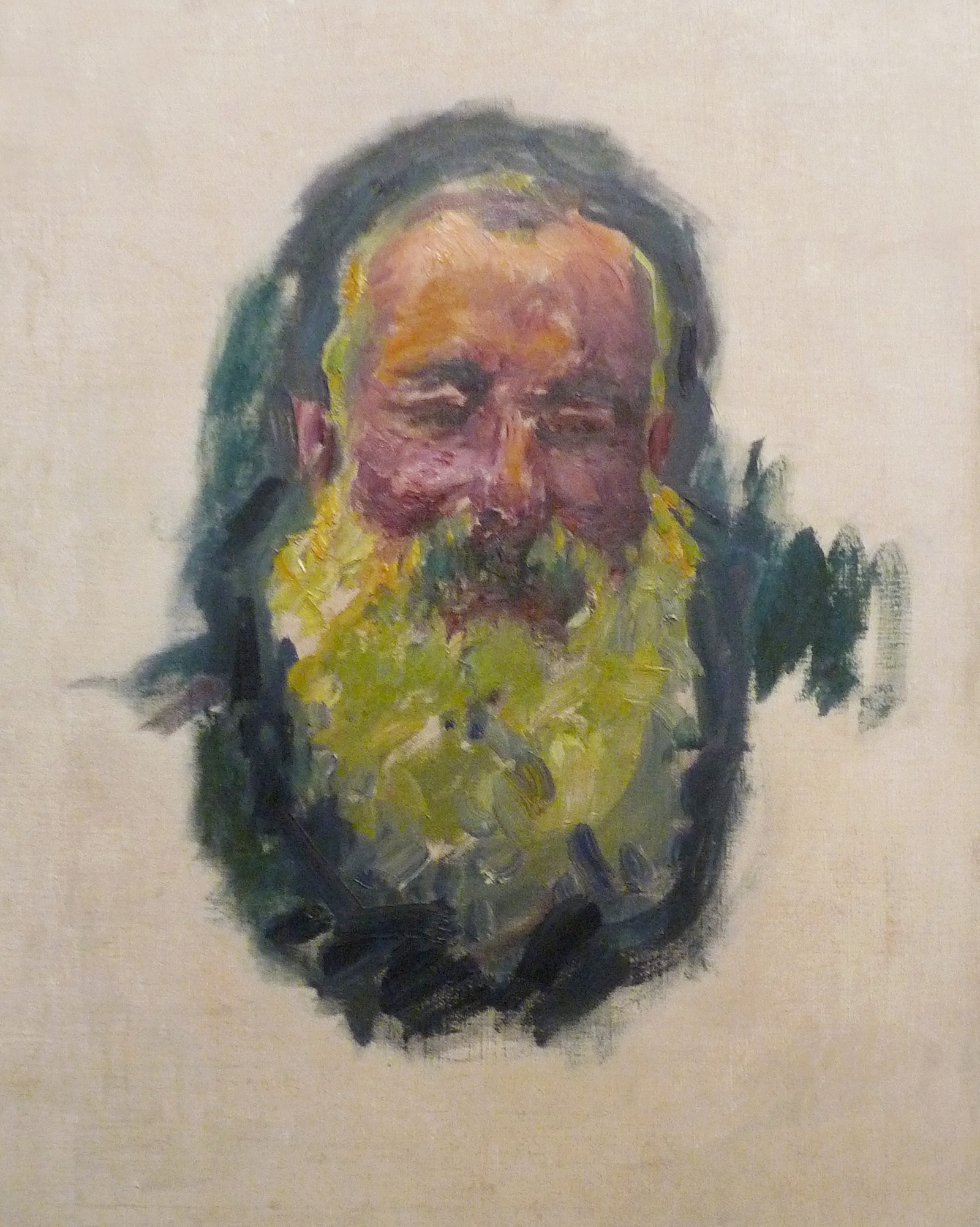
克劳德·莫奈
法国, 1840–1926, 印象派
生平故事
Claude Monet was born on 14 November 1840 in Paris, but he grew up in Le Havre, a port town in Normandy, where his family moved when he was five years old. His father traded in supplies for ships. The boy did not like school and filled the margins of his exercise books with caricatures of his teachers. By the age of fifteen he was already selling caricatures of the townspeople, and they hung in the window of a picture-framing shop.
There they were seen by the painter Eugène Boudin, who painted the sea and skies of Normandy. He invited young Claude Monet to come out with him and paint in the open air, directly in front of nature. At first the boy did not want to, but then he understood that the light changes every minute and that this can be painted. Later Monet said that if he had become a painter, he owed it to Boudin.
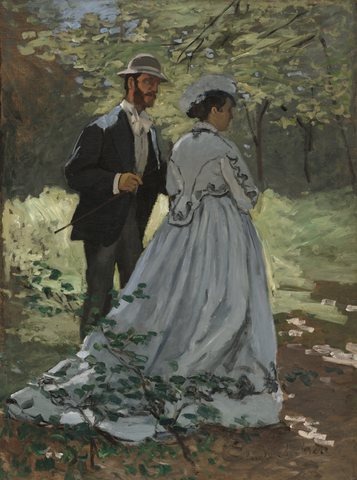
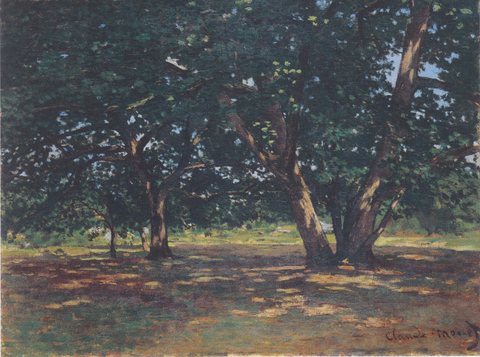
In 1859 he left for Paris. In 1861 he was called up for military service and served in Algeria, where the bright light and colours struck him. He fell ill, returned home, and his aunt paid for his release. In the studio of the painter Charles Gleyre he became friends with Pierre-Auguste Renoir, Alfred Sisley and Frederic Bazille. Together they painted in the forest of Fontainebleau. There Claude Monet began a huge picture of people at a picnic, about 6 metres wide. It was never finished. What survives of it today includes Le Déjeuner sur l'Herbe, Central Panel.
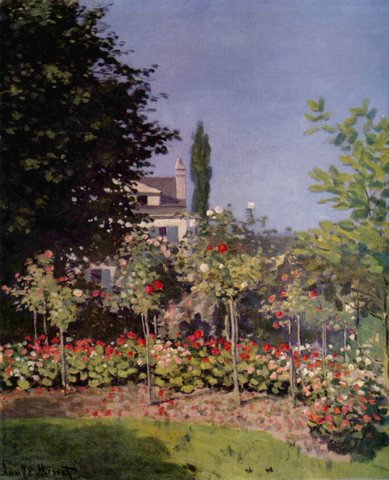
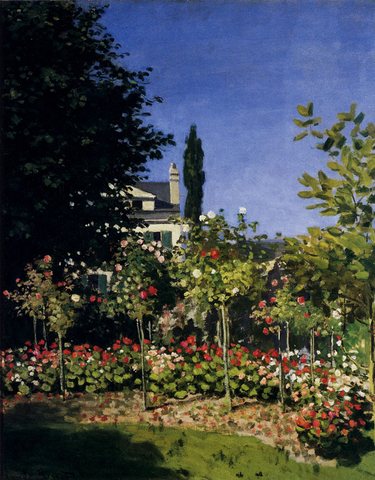
His favourite model became the young Camille Doncieux. In 1866 he painted Women in the Garden entirely outdoors, in the sun, on a canvas taller than a person. The Salon jury rejected it. Money was short, and in 1867 Camille gave birth to their son Jean. His friend Bazille bought the painting to help him. In 1870 Claude Monet and Camille were married.
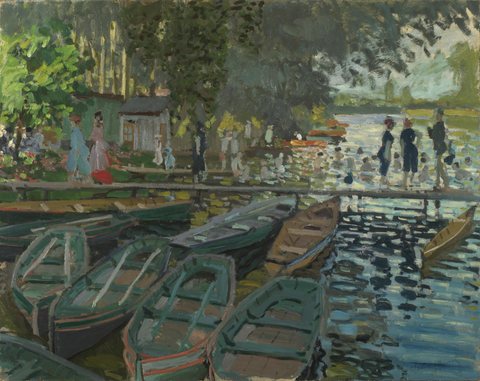
In the summer of 1869 Monet and Renoir painted side by side at the bathing place on the Seine that everyone called the “frog pond”. This is how La Grenouillère was born: water painted with short separate strokes that shimmer like real water. In 1870 the war with Prussia began, and Monet left for London. There he saw the paintings of Turner and met the dealer Paul Durand-Ruel, who would buy his pictures for years to come.
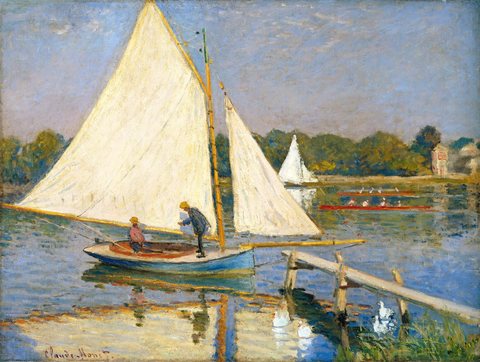
In April 1874 Claude Monet and his friends organised an exhibition themselves in the former studio of the photographer Nadar in Paris, because the Salon would not accept them. Among the pictures was Impression, Sunrise, a morning in the port of Le Havre. A critic mocked the title and called the whole group “Impressionists”. The mockery became the name of a movement. The same exhibition included The Poppy Field near Argenteuil. Monet was living in Argenteuil then and painted the river from a small boat turned into a floating studio: The Studio Boat.
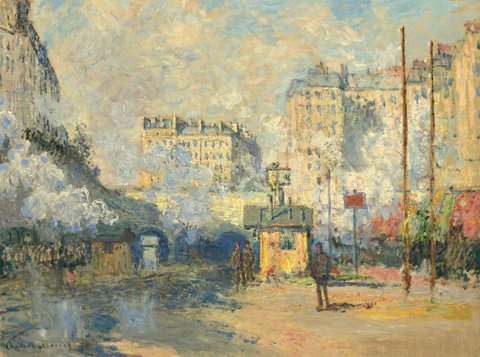
In 1877 he painted The Gare Saint-Lazare: steam, glass and iron, light passing through smoke. Yet money was short again. In 1878 the family moved to Vétheuil together with the family of Ernest and Alice Hoschedé. On 5 September 1879 Camille died, at the age of 32. Claude Monet painted Camille Monet on Her Deathbed, a face that seems to dissolve into blue and violet.
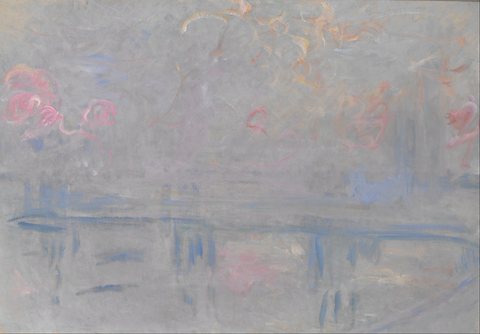
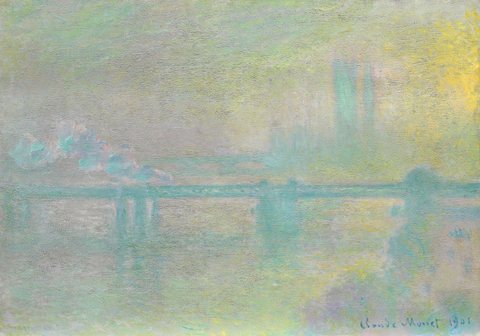
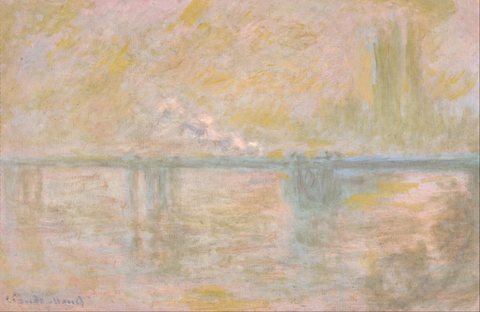
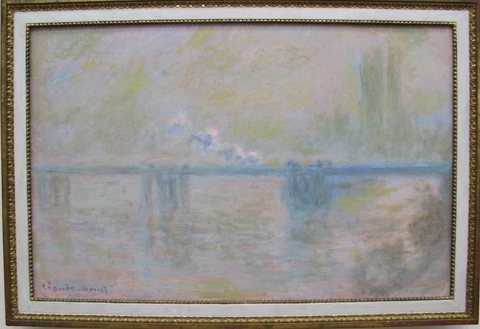
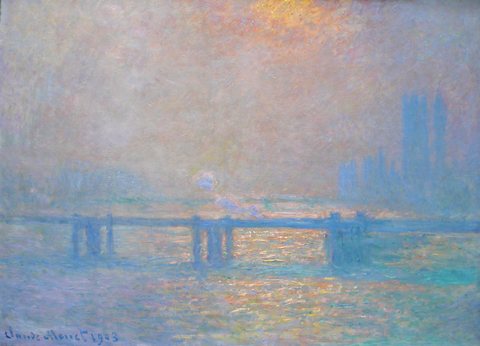
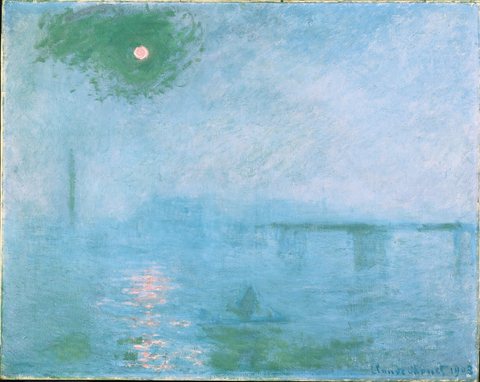
In 1883 Monet settled in Giverny, a village by the Seine, with Alice and the eight children of the two families. Here he began to paint the same motif again and again, at different hours and in different weather. In 1890–1891 he painted the grainstacks in the field next to his home. Among them is Grainstack (Sunset). Then he stood before the façade of the cathedral in Rouen and painted it more than 30 times: Rouen Cathedral, Symphony in Grey and Pink is one of them. In London he painted the Thames and The Houses of Parliament (Effect of Fog).
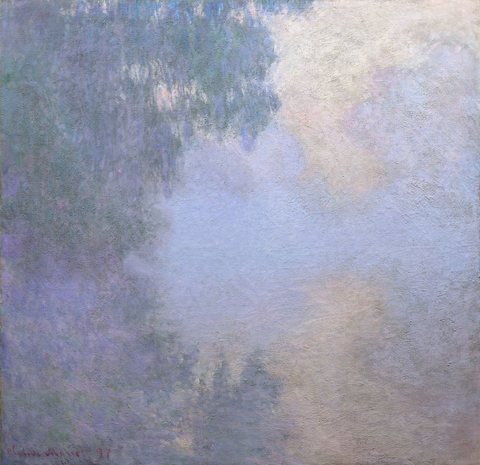
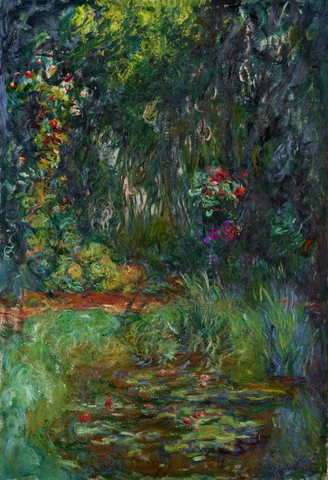
In Giverny Claude Monet created a garden that he composed like a painting. He dug a pond, planted water lilies and built a Japanese bridge. This is how Bridge over a Pond of Water Lilies was born. In his last decades the pond became his main subject: about 250 paintings of water lilies. His eyesight weakened because of cataracts, and in 1923 he had an operation. In 1918, the day after the end of the war, he decided to give France large panels of water lilies. One of them is Water Lilies, Clear Morning with Willows.
Claude Monet died on 5 December 1926 in Giverny, at the age of 86. At the funeral his friend Georges Clemenceau removed the black cloth from the coffin and replaced it with a flowered fabric, saying that there should be no black for Monet. In May 1927 the two oval rooms with his water lilies opened at the Musée de l'Orangerie in Paris. There, without horizon and without frame, a person stands among water, sky and light, exactly as Monet saw it.
最著名的作品
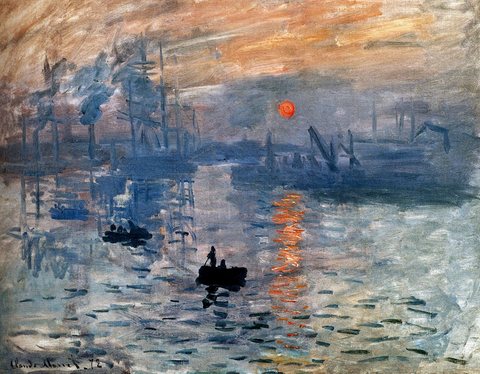 日出·印象A morning in the port of Le Havre, 1872. The painting that gave Impressionism its name. Musée Marmottan Monet, Paris.
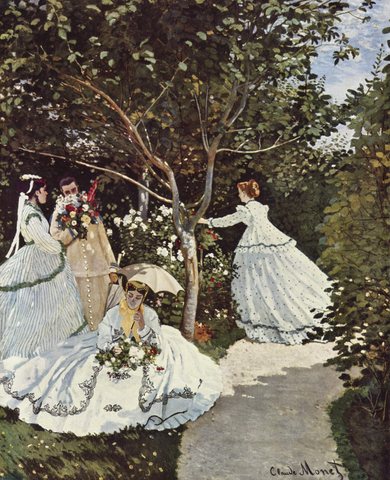 花园中的女人A large painting made entirely in the open air, 1866. Musée d'Orsay, Paris.
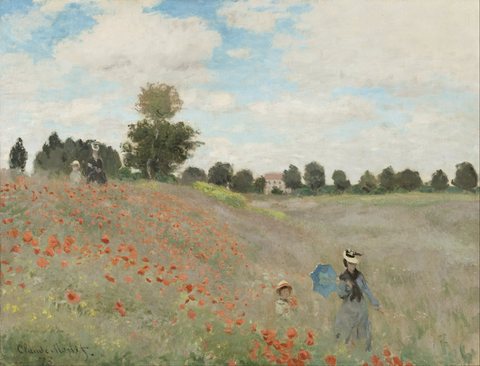 阿让特伊附近的罂粟花田A summer field by the Seine, 1873, shown at the first Impressionist exhibition. Musée d'Orsay, Paris.
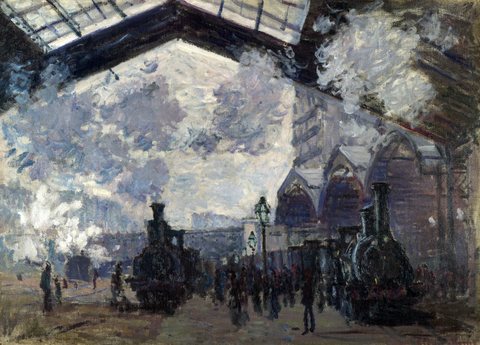 圣拉扎尔火车站Steam and light under the glass roof, 1877. Musée d'Orsay, Paris.伦敦国家美术馆
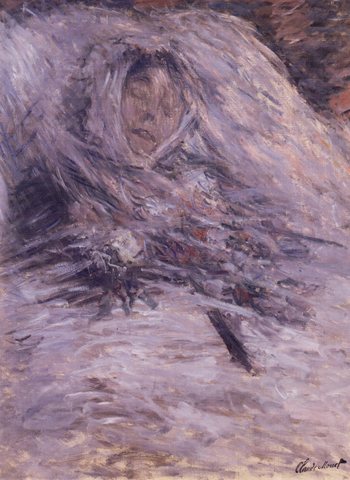 临终的卡米耶·莫奈The last portrait of Camille, 1879. Musée d'Orsay, Paris.
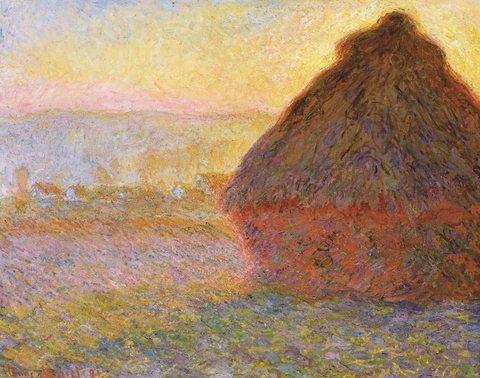 干草堆(日落)One of the grainstacks of Giverny, 1890–1891. Museum of Fine Arts, Boston.
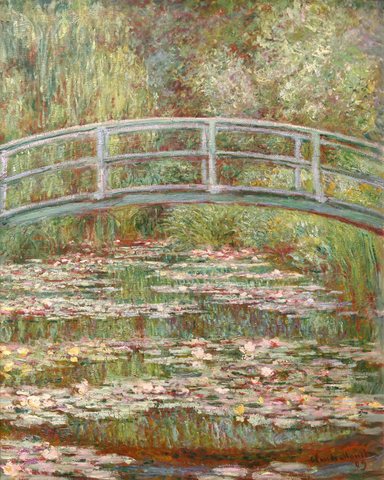 睡莲池上的桥The Japanese bridge in the garden at Giverny, 1899. Metropolitan Museum of Art, New York.
 睡莲:柳树下的晴朗早晨One of the great water lily panels, 1914–1926. Musée de l'Orangerie, Paris.
年表
- 1840Born in Paris; grows up in Le Havre
- 1858Paints in the open air with Eugène Boudin
- 1862Gleyre's studio; friendship with Renoir, Sisley and Bazille
- 1866“Women in the Garden”
- 1870Marries Camille; leaves for London
- 1874The first Impressionist exhibition, “Impression, Sunrise”
- 1879Camille's death in Vétheuil
- 1883Moves to Giverny
- 1891The grainstacks exhibition
- 1899The Japanese bridge and the water lilies
- 1926Dies in Giverny on 5 December
- 1927The water lily rooms open at the Orangerie
在哪里可以看到
趣闻
Claude Monet painted about 2000 pictures. About 250 of them show the water lilies from his garden in Giverny.
The name “Impressionism” comes from his painting “Impression, Sunrise”. The critic Louis Leroy used it as a mockery in 1874.
In 1985 “Impression, Sunrise” was stolen from the Musée Marmottan in Paris. It was found in 1990 in Corsica.
Monet painted the cathedral in Rouen more than 30 times, from windows opposite the façade, at different hours of the day.
Monet's house and garden in Giverny are still open to visitors today.