Elmalar ve Portakallar
Hikâye
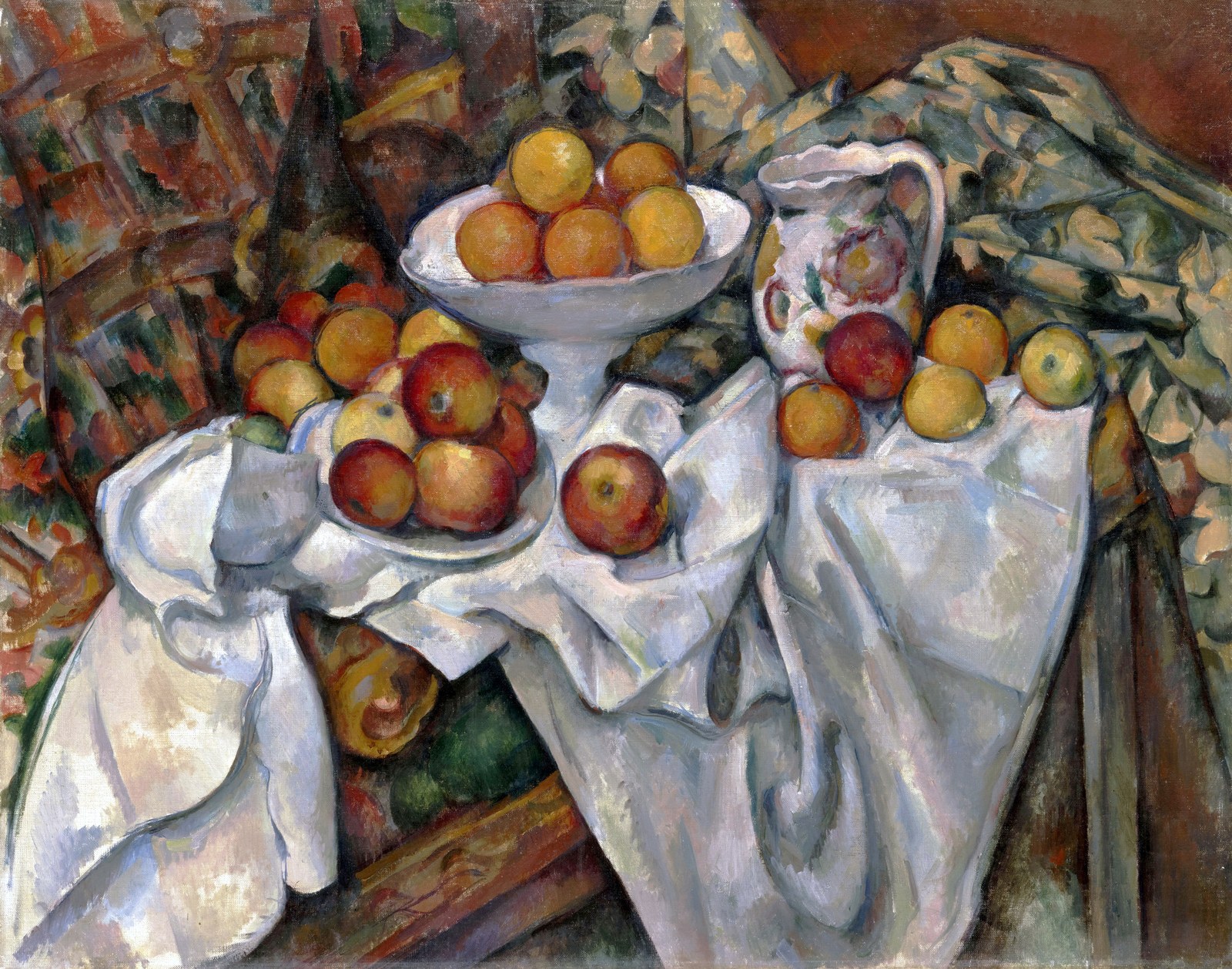
“Apples and Oranges” was painted around 1899 in the Paris studio of Paul Cézanne. He arranged the objects for a very long time – cloths, jugs, a fruit bowl and fruit – before he began to paint.
In “Apples and Oranges” we see a white cloth gathered into folds like mountains, a fruit bowl with apples, a jug with flowers and fruit scattered across the table. Behind them hangs a heavy patterned fabric. The red, orange and yellow of the fruit glow against the white.
Paul Cézanne does not paint the objects as they are in a room. He arranges them so that they look both stable and in motion. The cloth seems to slide towards us, and the fruit is about to fall at any moment – and yet everything stays in its place.
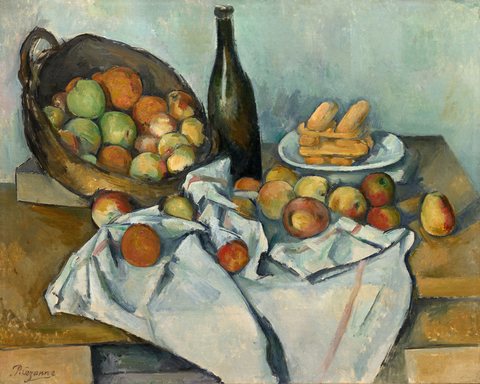
This is one of his last great still lifes. A similar table with apples appears in The Basket of Apples. Cézanne said he wanted to astonish Paris with an apple, and here the apples truly are the main characters.
Today “Apples and Oranges” is in the Musée d'Orsay in Paris. The collector Isaac de Camondo bequeathed it to the state in 1911. Paul Cézanne shows that even a table of fruit can be as grand as a landscape.
İlginç bilgiler
The canvas measures 74 × 93 cm, oil.
The painting was made around 1899 in Paris.
Isaac de Camondo bequeathed it to the French state in 1911.