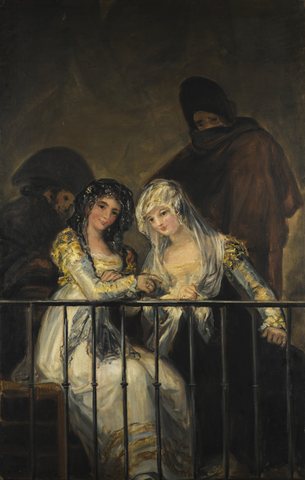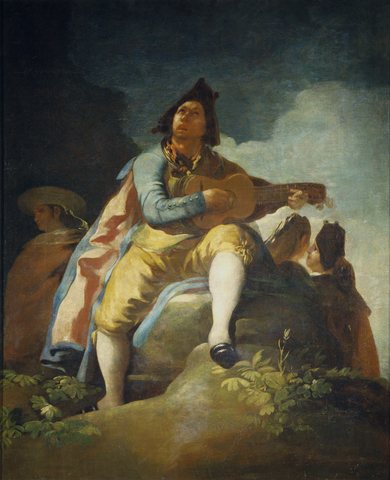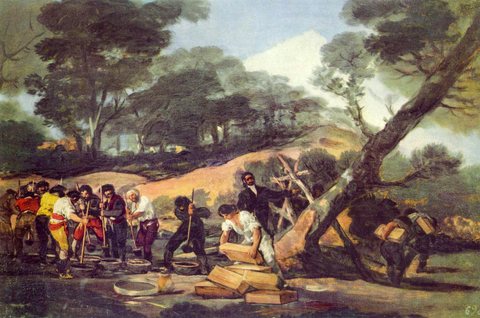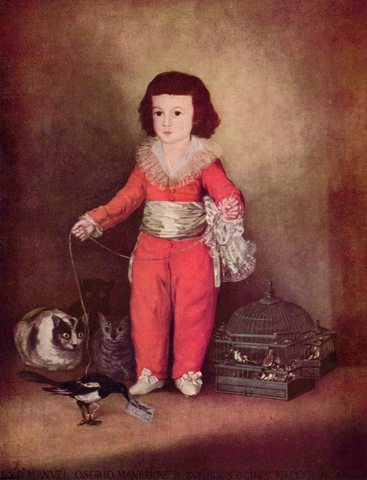
Francisco Goya
İspanyol, 1746–1828, Rokoko, Romantizm
Yaşam öyküsü
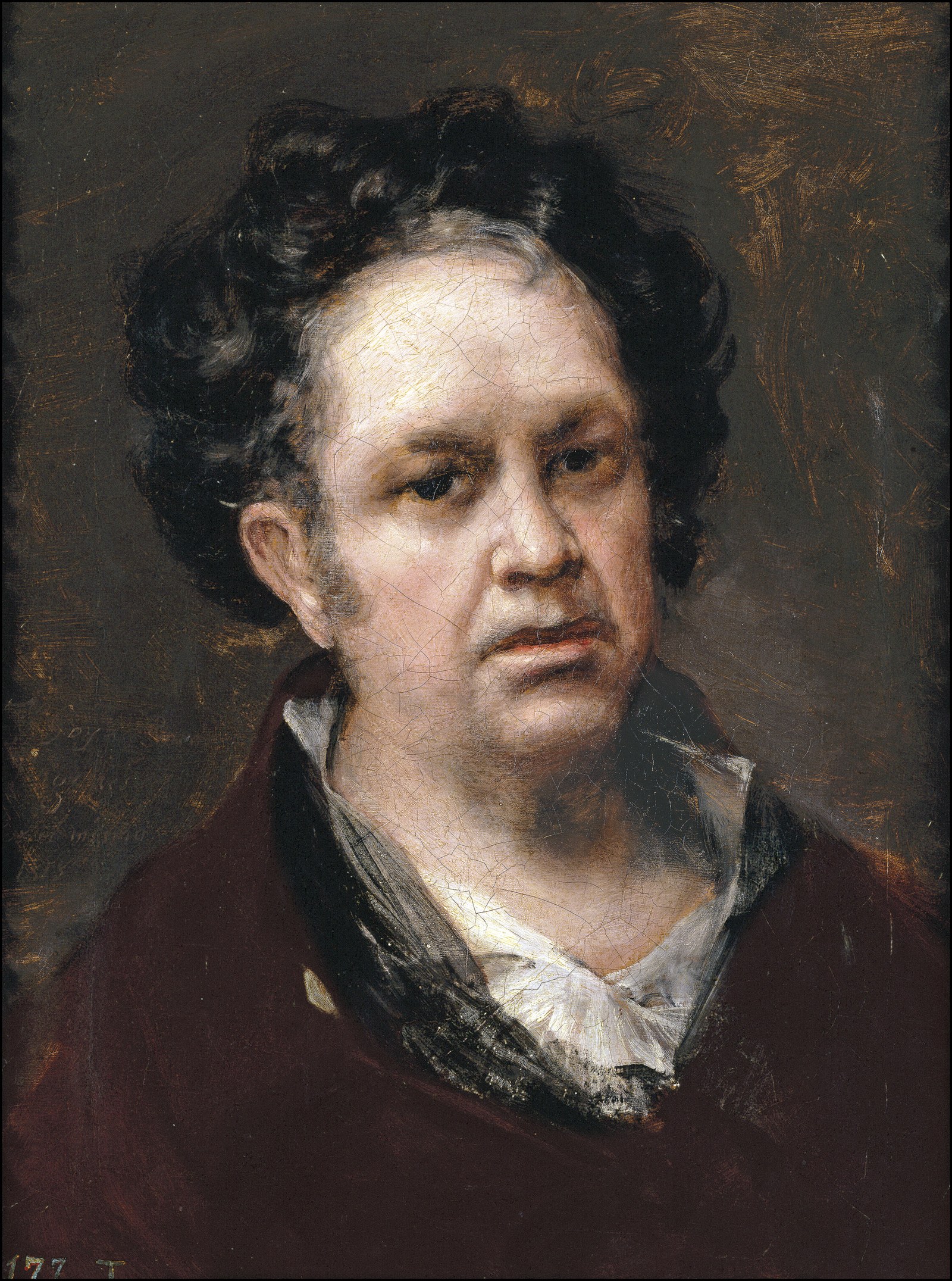
Francisco de Goya is the painter of two worlds. In one he painted cheerful festivals, beautiful ladies and royal portraits. In the other – war, madness, witches and human fears. He was court painter to the kings of Spain, yet he also saw and showed the dark side of his time. Many consider him the last of the old masters and the first of the modern painters.
The gilder's son
Francisco de Goya was born on 30 March 1746 in Fuendetodos – a small, poor village in Aragon, in Spain. His father José was a gilder – he covered frames and church altars with thin leaves of gold. Soon the family moved to the city of Zaragoza.
At 14 the boy began to study drawing with the local painter José Luzán. Later he tried to enter the Royal Academy in Madrid. He failed – neither in 1763 nor in 1766. Then he went to Italy. In 1771 he won second prize in a painting competition in the city of Parma.
The tapestry cartoons
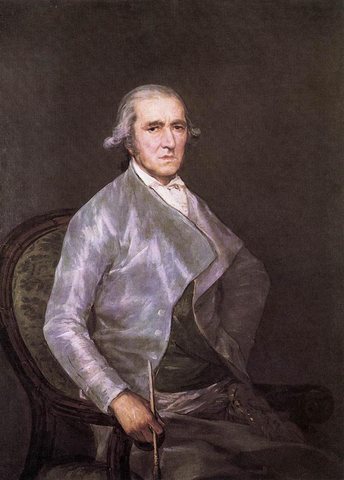
On 25 July 1773 Goya married Josefa Bayeu, the sister of the well-known court painter Francisco Bayeu. Josefa bore many children, but most of them died young. It is thought that only their son Javier lived to adulthood.
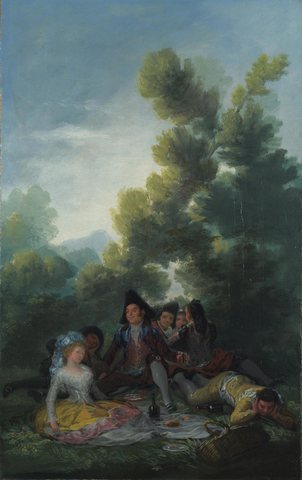
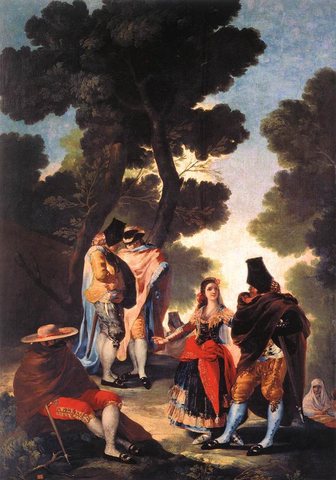
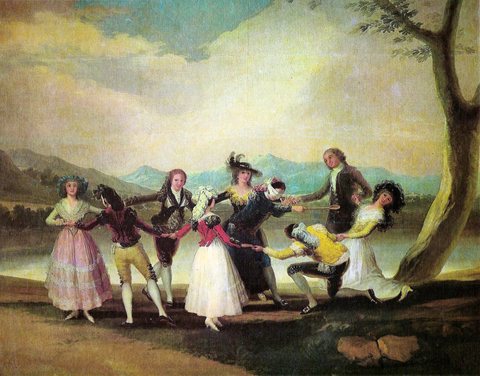
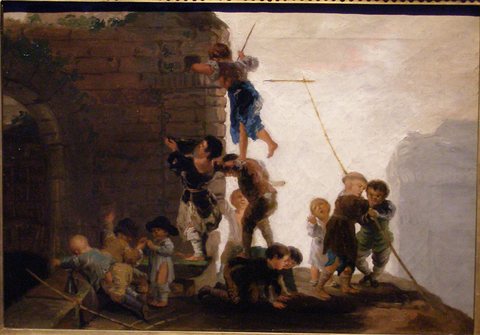
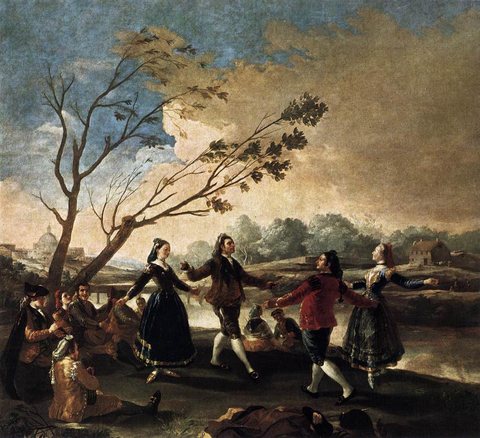
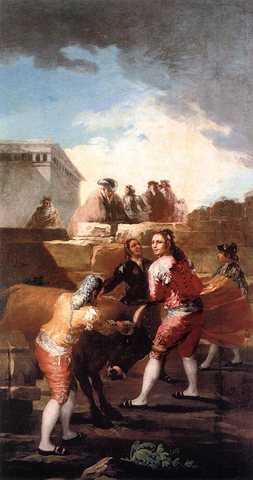
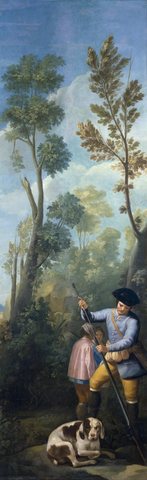
Soon Goya found work at the Royal Tapestry Factory in Madrid. He painted large pictures from which the weavers made tapestries for the walls of the royal palaces. They are cheerful scenes from the life of the people of Madrid – walks, games, dances and festivals. Among them is The Parasol – a young lady and a young man who shields her from the sun.
His last great commission for tapestries was The Straw Mannequin. Four girls toss a straw doll that looks like a dandy on a blanket. Behind the cheerful game some see another meaning – the man who is only a plaything in other people's hands.
The court painter
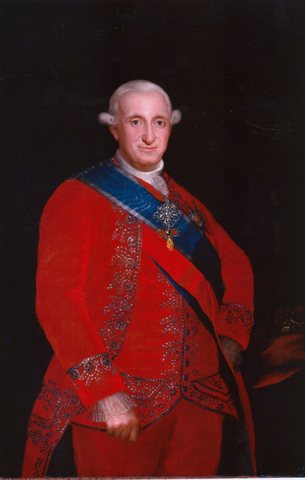
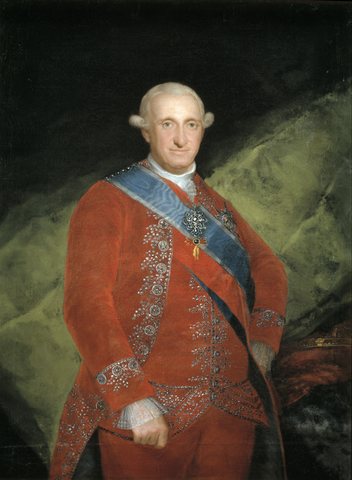
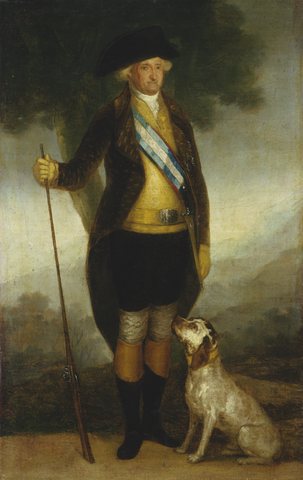
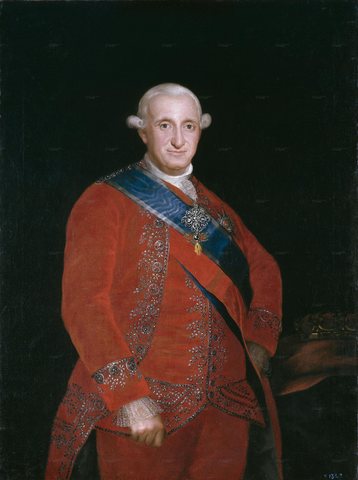
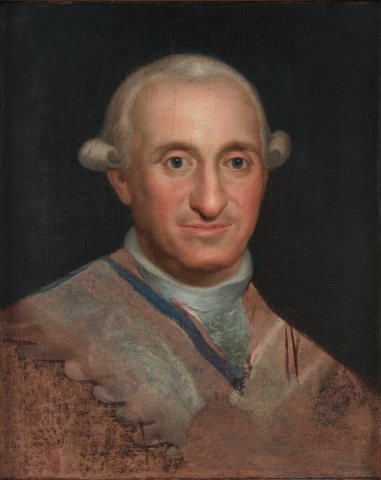
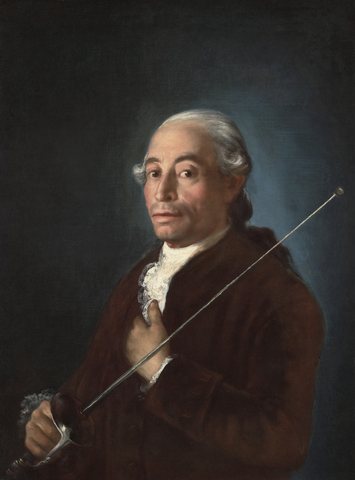
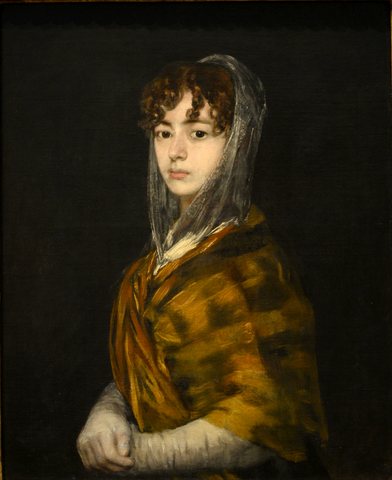
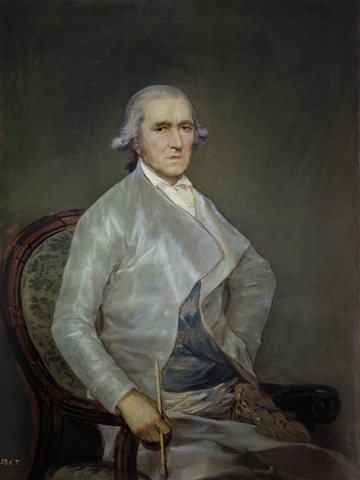
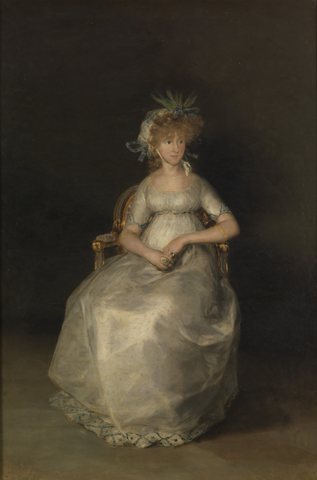
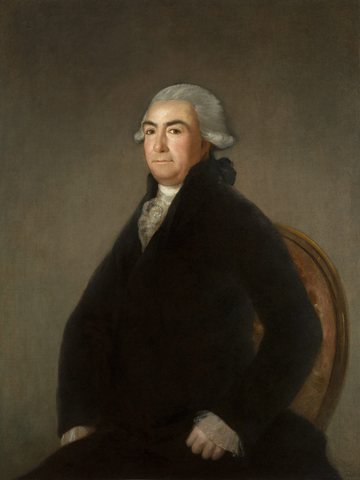
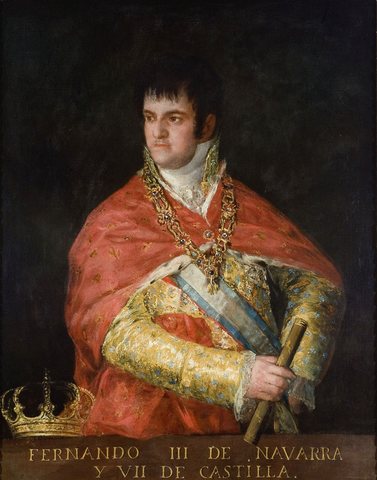
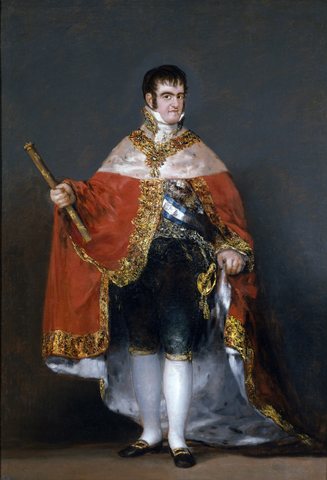
Goya painted portraits of important people and rose quickly. In 1786 he became painter to King Charles III, and in 1789 court painter to the new king, Charles IV. In 1799 he was appointed First Court Painter with a large salary. The gilder's son from the poor village was now the most important painter in Spain.
In 1798 Goya painted the dome and walls of the small church of San Antonio de la Florida in Madrid. Instead of stern saints he painted a crowd of ordinary people of Madrid – women, children, beggars – who watch the miracle of Saint Anthony. The people lean over the railing, as if watching from a balcony.
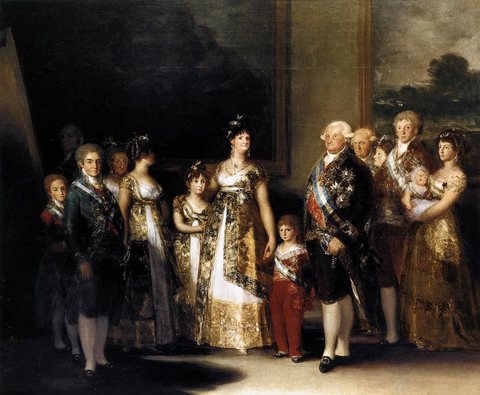
In 1800–1801 he painted The Family of Charles IV. The king, the queen and their children stand in a row, dressed in silk and orders. On the left, in the shadow, Goya also painted himself in front of a large canvas. The French writer Théophile Gautier later joked that it looked like the family of the corner grocer who has just won the lottery.
But the art historian Robert Hughes believed that Goya did not mean to mock the king. If he had, he would hardly have kept his place at court. The painting is inspired by “Las Meninas” by Velázquez – there too the painter painted himself in front of the canvas.
The silence
At the end of 1792 Goya fell seriously ill. Nobody knows exactly what the illness was. When he recovered, he was completely deaf. From then until the end of his life he lived in a world without sounds.
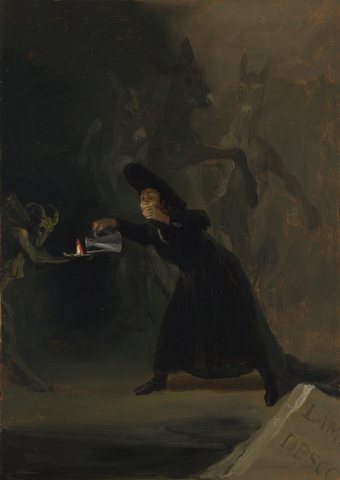
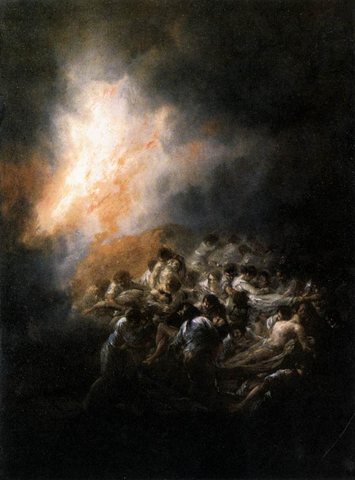
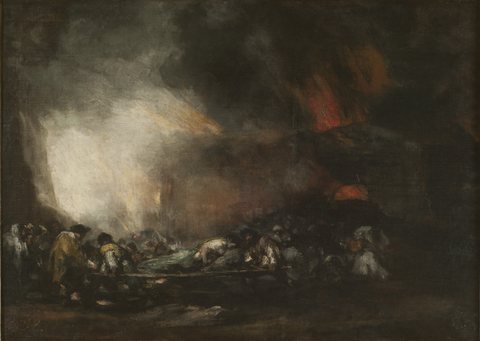
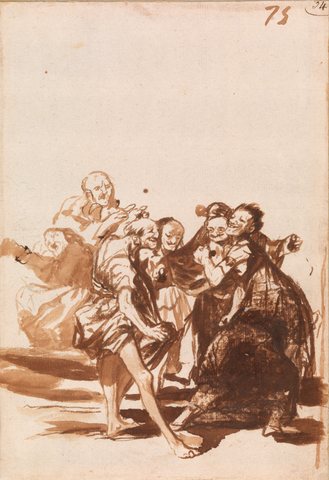
The illness changed his art. He began to paint small pictures for himself with terrible and strange scenes – fires, shipwrecks, the yard of a madhouse. In 1799 he published “Los Caprichos” – 80 prints in which he mocked stupidity, superstition and lies. The most famous of them is called “The Sleep of Reason Produces Monsters”: the artist sleeps at the table, and around him fly owls and bats.
The duchess and the maja
Goya painted the Duchess of Alba many times – one of the richest and most wilful women in Spain. In a portrait from 1797 she points to the ground, where the words “Only Goya” are written. It is said that there was love between them, but this has not been proven.
Around 1800 Goya painted two famous pictures of the same woman lying on a couch – in one she is nude, in the other she is clothed. This is The Clothed Maja. Nobody knows for certain who the woman is. The paintings belonged to the powerful minister Manuel Godoy. Later the Inquisition confiscated them and kept them hidden for years.
The war
In 1808 Napoleon's army entered Spain. On 2 May the people of Madrid rose up against the French. A long and cruel war began, which lasted until 1814. In 1812 Goya's wife, Josefa, died.
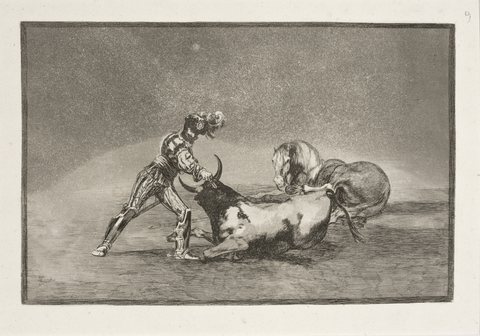
During these years Goya made the series of prints “The Disasters of War”. In them there are no heroes, only the killed, the wounded, the starving and the slaughtered. He did not dare to publish them. They were printed only in 1863, 35 years after his death.
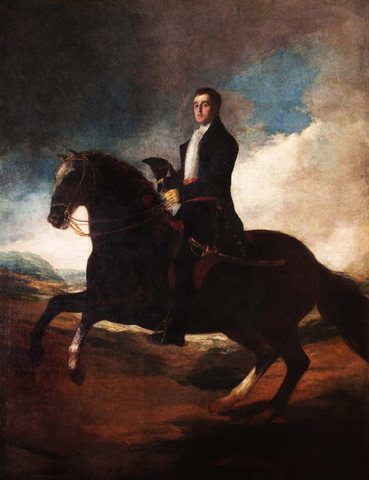
In 1961 the National Gallery in London bought the portrait of Wellington for 140,000 pounds. On 21 August the same year it was stolen. For several years nobody knew where it was. In 1965 a pensioner, Kempton Bunton, confessed that he had taken it as a protest against television licence fees. The painting was returned. In the meantime it even appeared in the James Bond film “Dr. No” – in the villain's lair.
In 1812 the British general Wellington, the victor over the French, entered Madrid. Goya painted The Duke of Wellington. More than 150 years later this small portrait became the hero of one of the strangest thefts in the history of art.
In 1814, after the French had been driven out, the government commissioned two large paintings of the uprising from Goya. One is The Second of May 1808 – the battle of the people of Madrid against Napoleon's horsemen. The other is “The Third of May 1808” – the shooting of the rebels at night. Today both are in the Prado Museum.
“The Third of May 1808” shows Spaniards facing French soldiers with rifles. In the centre a man in a white shirt raises his arms, lit by a lantern. This painting became one of the most powerful images of war in art. “The Second of May 1808” has its own sad story – in 1936, during the Spanish Civil War, it was damaged in an accident involving the lorry that was evacuating it. It was restored in 1941 and again in 2007–2008.
The house of the deaf man
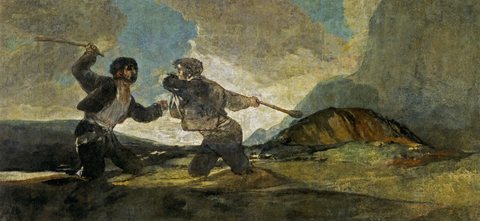
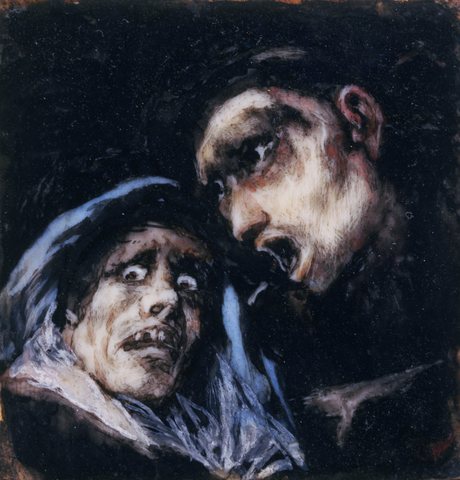
In 1819 Goya bought a house by the Manzanares river in Madrid. It is known as the “House of the Deaf Man” – after its previous owner, who was also deaf. On its walls Goya painted 14 dark pictures, called the “Black Paintings”. They were not for sale and not for other people's eyes.
Among them are “Saturn Devouring His Son” and The Dog – only the head of a dog looking up from a dark mass of sand. Around 1874 the paintings were taken down from the walls and transferred to canvas. Today they are in the Prado Museum.
The Spanish painter Antonio Saura called “The Dog” the most beautiful painting in the world. On his last visit to the Prado, Joan Miró asked to see two paintings – “Las Meninas” by Velázquez and “The Dog” by Goya.
At the end of 1819 Goya again fell seriously ill. He was saved by his friend, the doctor Eugenio Arrieta. As a sign of gratitude, in 1820 the painter painted Self-Portrait with Dr Arrieta, in which the doctor holds him and gives him medicine.
In these years Leocadia Weiss was at Goya's side – a woman much younger than him, who looked after his house together with her daughter Rosario.
Exile in Bordeaux
After the war a time of harsh rule came to Spain. Many of Goya's friends were persecuted. In May 1824 the old painter left for France and settled in the city of Bordeaux. There he went on painting, and one of his last paintings is “The Milkmaid of Bordeaux”.
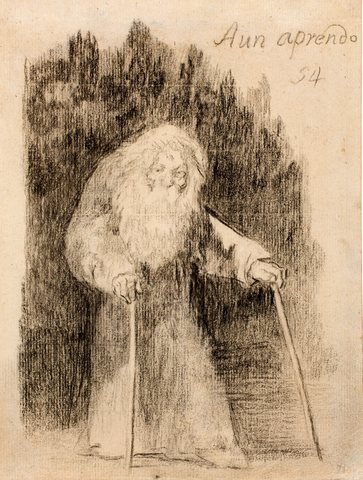
He was already almost 80 years old, deaf and frail, but he did not stop learning. One of his last drawings shows an old man leaning on two sticks, with the words “I am still learning”. The words that he had three teachers – nature, Velázquez and Rembrandt – are also attributed to him.
Francisco de Goya died in Bordeaux on 16 April 1828, aged 82. He was buried there. In 1919 his remains were moved to Madrid, to the small church of San Antonio de la Florida, whose walls and dome he had painted himself. His skull, however, is missing and has never been found.
The first modern painter
Goya painted both the beauty and the horror of his time with equal honesty. His portraits, wars and nightmares inspired the painters who came after him – from Edouard Manet to Pablo Picasso. Today the largest collection of his paintings is in the Prado Museum in Madrid.
En ünlü eserler
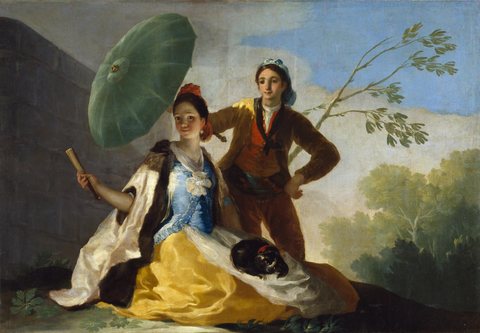 ŞemsiyeA lady and a young man on a summer day, 1777. Prado Museum, Madrid.
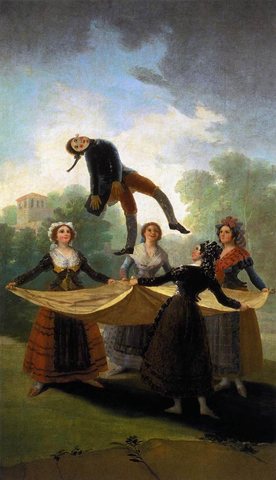 Saman KuklaThe girls and the straw doll, 1791–1792. Prado Museum, Madrid.
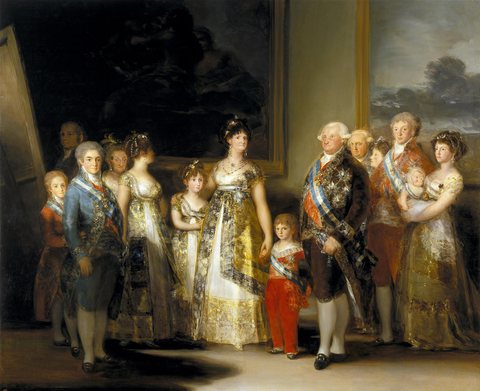 IV. Carlos'un AilesiThe king, the queen and the painter in the shadow, 1800–1801. Prado Museum, Madrid.
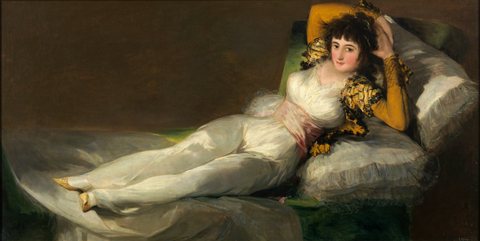 Giyinik MajaThe mysterious woman on the couch, around 1800–1807. Prado Museum, Madrid.
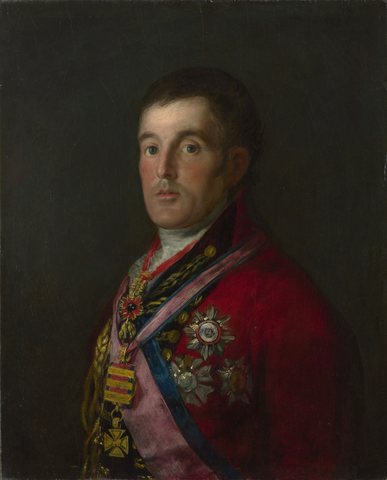 Wellington DüküThe victor who became the hero of a theft, 1812–1814. National Gallery, London.
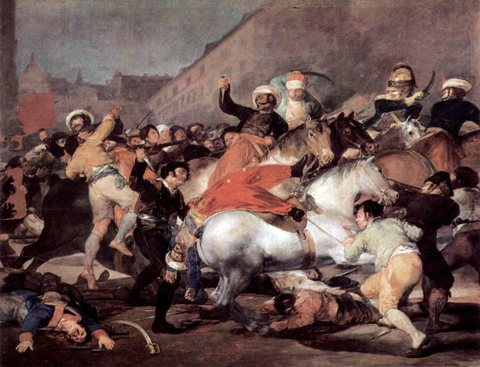 2 Mayıs 1808Madrid rises up, 1814. Prado Museum, Madrid.
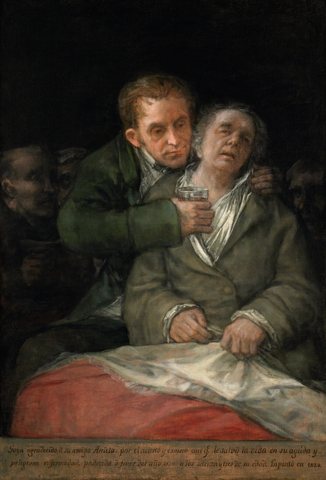 Doktor Arrieta ile OtoportreGratitude to the doctor, 1820. Minneapolis Institute of Art.
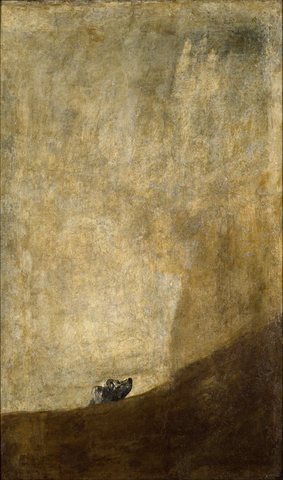 KöpekThe lonely head in the sand, 1819–1823. Prado Museum, Madrid.
Kronoloji
- 1746Born in Fuendetodos on 30 March
- 1760Studies drawing with José Luzán in Zaragoza
- 1771Prize in a competition in Parma
- 1773Marries Josefa Bayeu
- 1777“The Parasol”
- 1786Painter to King Charles III
- 1789Court painter to Charles IV
- 1792Serious illness; becomes deaf
- 1798The frescoes in San Antonio de la Florida
- 1799“Los Caprichos”; First Court Painter
- 1800“The Family of Charles IV”
- 1808The French army in Spain; the uprising of 2 May
- 1812Josefa dies; the portrait of Wellington
- 1814“The Second of May 1808” and “The Third of May 1808”
- 1819Buys the “House of the Deaf Man”; serious illness
- 1820“Self-Portrait with Dr Arrieta”
- 1824Leaves for Bordeaux
- 1828Dies in Bordeaux on 16 April
Nerede görülebilir
İlginç bilgiler
Francisco de Goya was the son of a gilder from the small village of Fuendetodos.
The Royal Academy in Madrid refused to admit Goya twice – in 1763 and 1766.
Goya painted dozens of tapestry cartoons for the royal palaces.
In 1799 Goya became First Court Painter of Spain.
After an illness at the end of 1792 Goya remained deaf for the rest of his life.
The series of prints “Los Caprichos” has 80 plates.
In “The Family of Charles IV” Goya also painted himself – on the left, in the shadow.
The prints “The Disasters of War” were printed only 35 years after Goya's death.
The portrait of the Duke of Wellington was stolen from the National Gallery in London in 1961.
The “Black Paintings” were painted directly on the walls of Goya's house.
Antonio Saura called Goya's “The Dog” the most beautiful painting in the world.
Goya thanked the doctor who saved him with a painting – “Self-Portrait with Dr Arrieta”.
One of Goya's last drawings bears the words “I am still learning”.
Goya is buried in the church whose dome he painted himself, but his skull is missing.