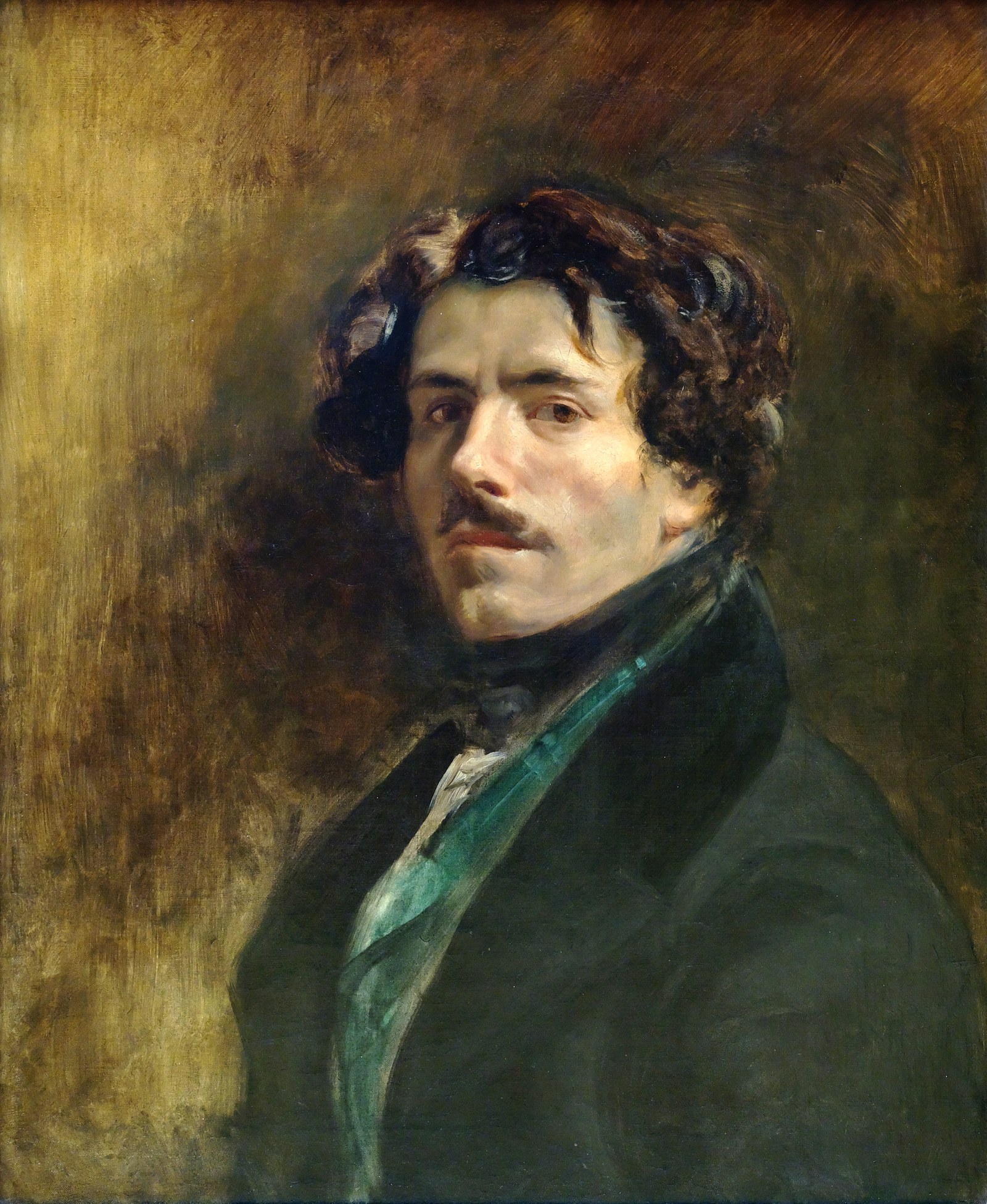
Eugène Delacroix
Fransız, 1798–1863, Romantizm
Yaşam öyküsü
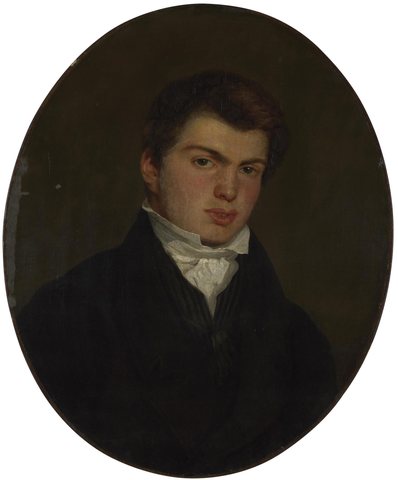
Eugene Delacroix was born on 26 April 1798 in Charenton, near Paris. His father was a minister and an ambassador. It is said that his real father was the famous politician Talleyrand, but this has never been proved. By the age of 16 Eugène had lost both his parents.
He studied painting in the studio of the painter Pierre-Narcisse Guérin. There he became friends with the older Théodore Géricault and even posed for one of the figures in his “Raft of the Medusa”. Delacroix spent hours in the Louvre copying the old masters, above all Rubens.
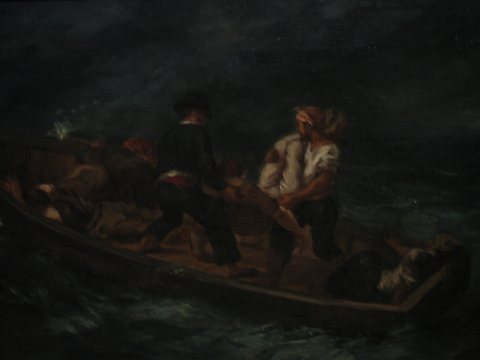
In 1822, at the age of 24, he showed The Barque of Dante at the Salon. The painting is full of passion and horror. The state bought it, and the young painter immediately became famous.
Two years later he presented The Massacre at Chios – a scene from the Greeks' war for freedom. It is said that before the Salon he saw the landscapes of the Englishman John Constable and repainted parts of his picture in fresher colours. An old painter called it “the massacre of painting”.
In 1827 Death of Sardanapalus caused a scandal. The critics were horrified by the bloody scene and the stormy colours. Delacroix became the leader of the Romantics – the painters of feeling, passion and movement.
Against him stood Jean Auguste Dominique Ingres, the master of the pure line. The two were rivals all their lives. It is said that Ingres asked for the windows to be opened after Delacroix had left a room. French art divided into supporters of line and of colour.
In 1830 a revolution broke out in Paris, and Delacroix painted “Liberty Leading the People” – a woman with a flag leading the people across the barricades. It became a symbol of France and for many years appeared on the 100-franc banknote.
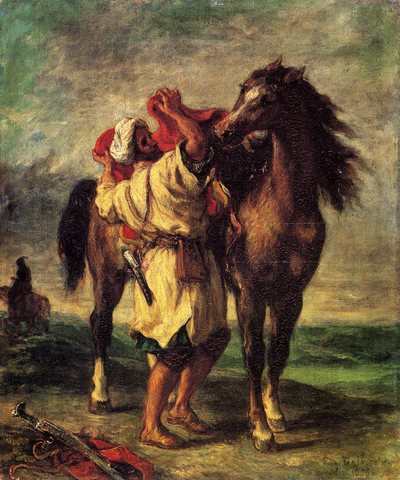
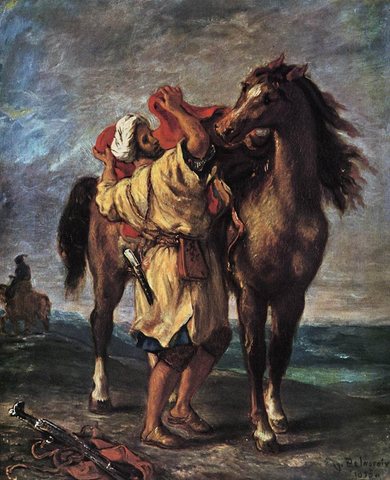
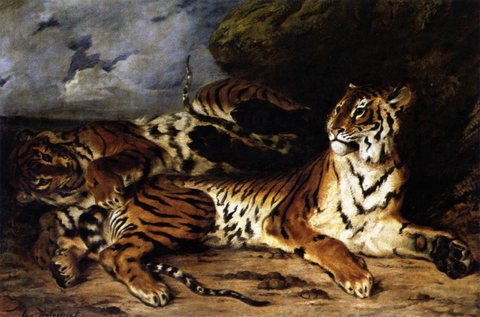
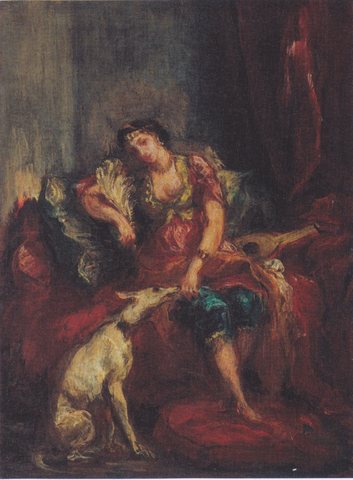
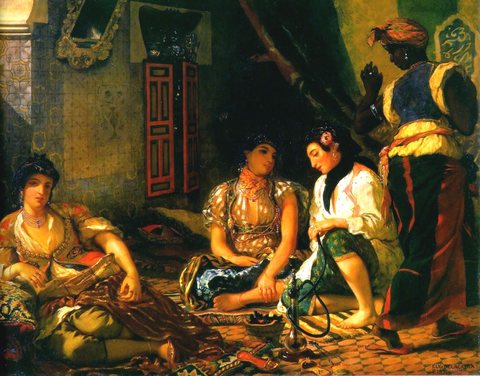
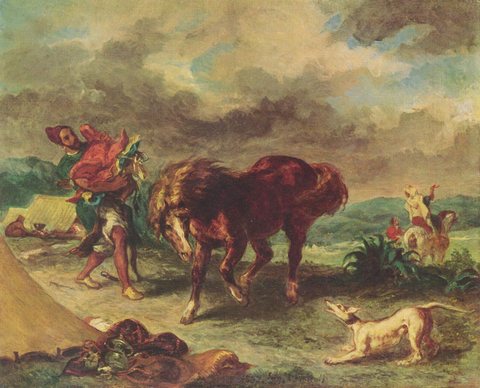
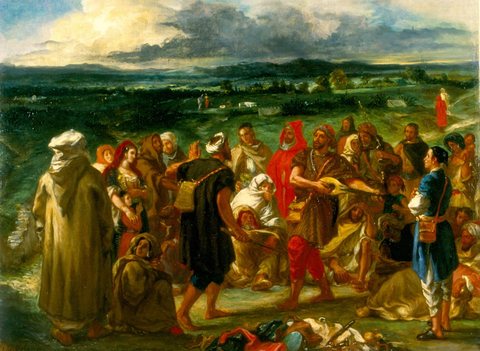
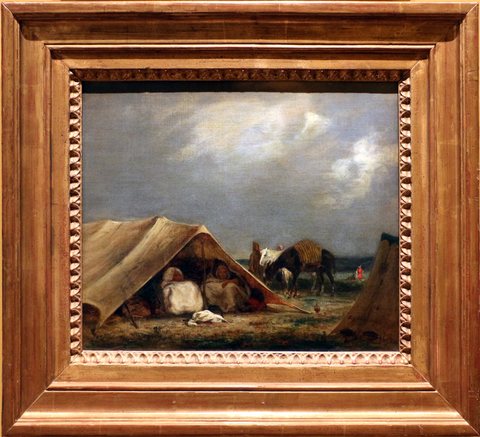
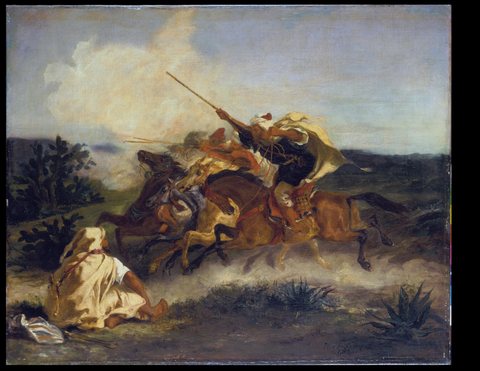
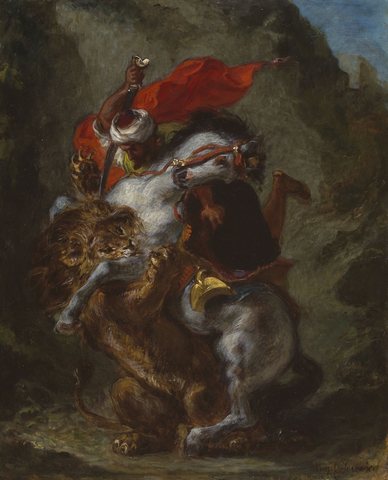
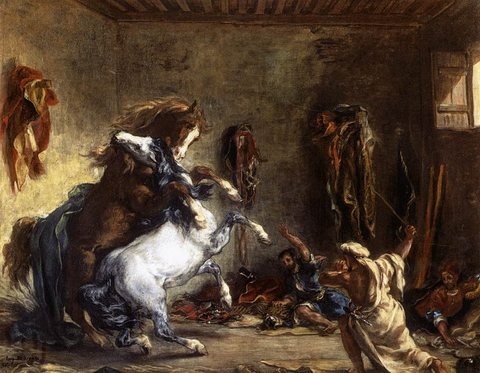
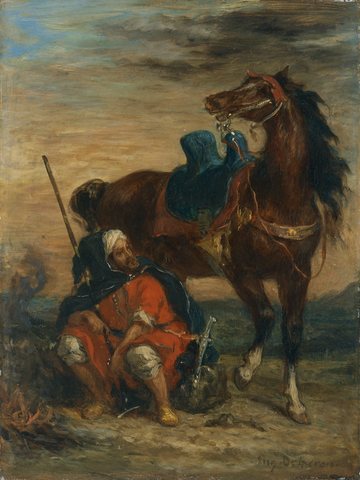
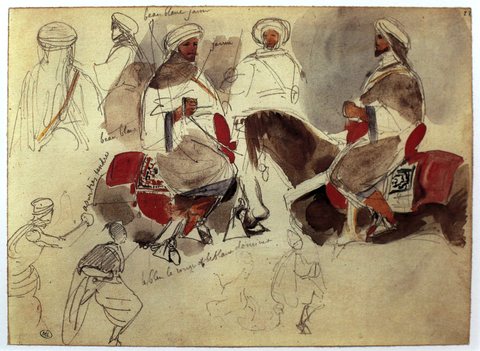
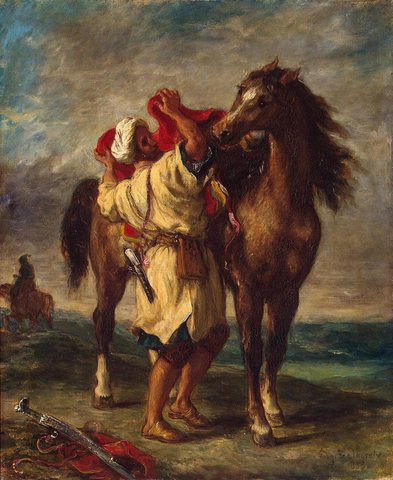
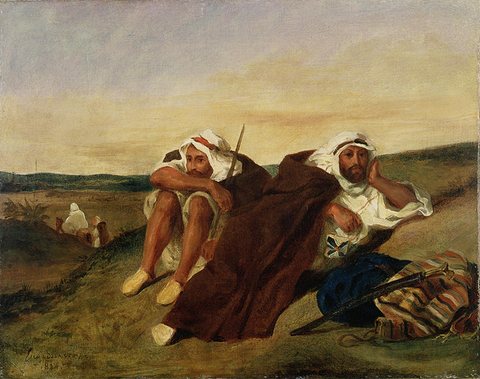
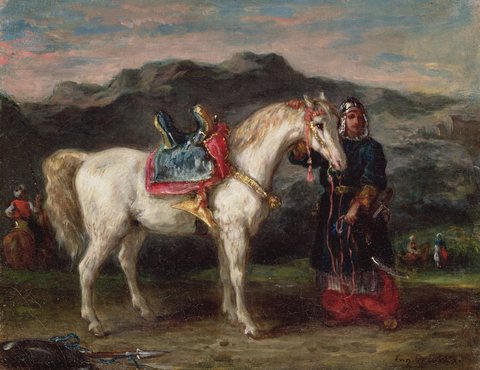
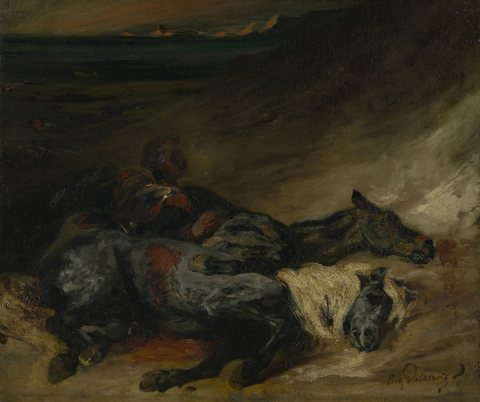
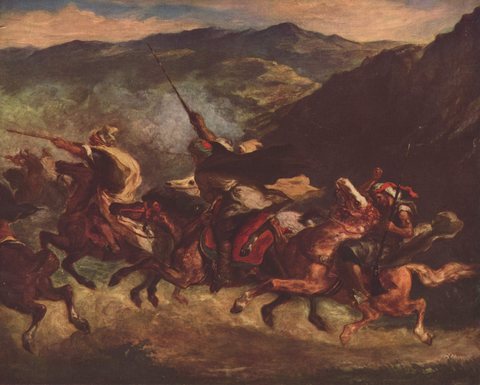
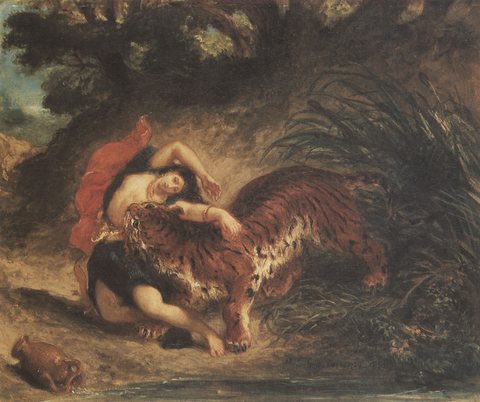
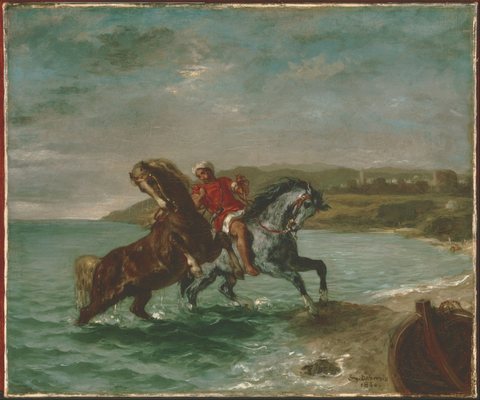
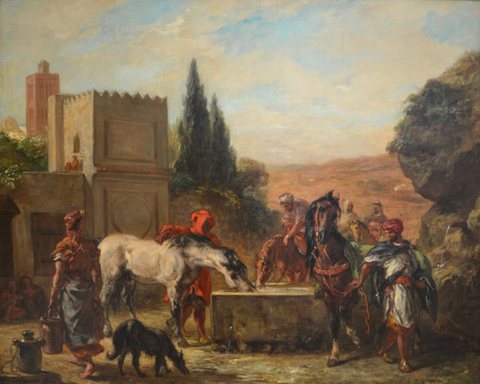
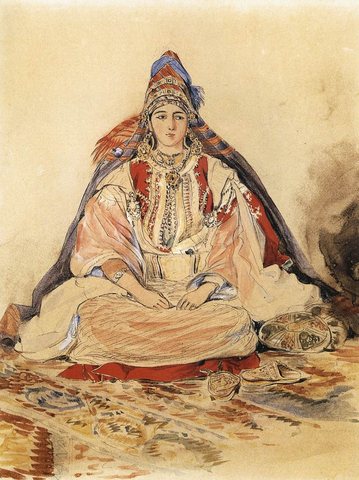
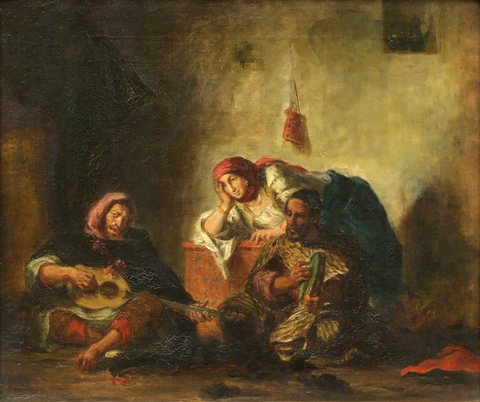
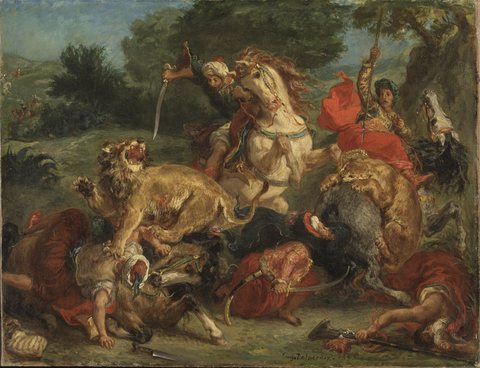
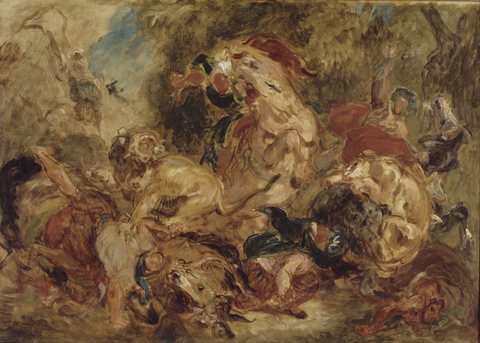
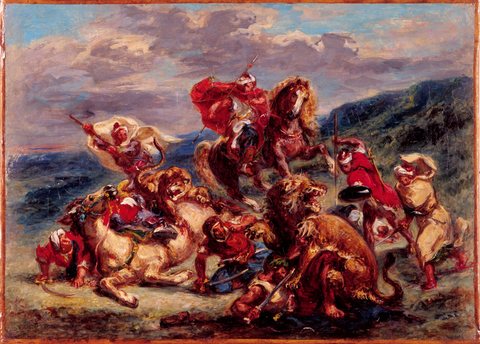
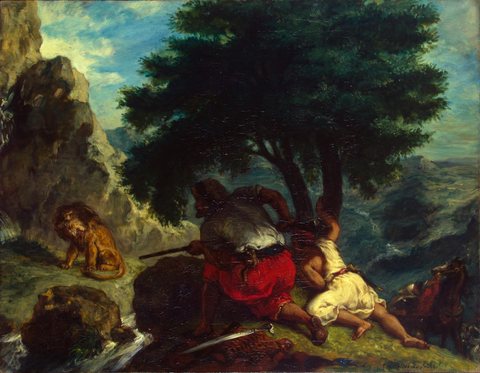
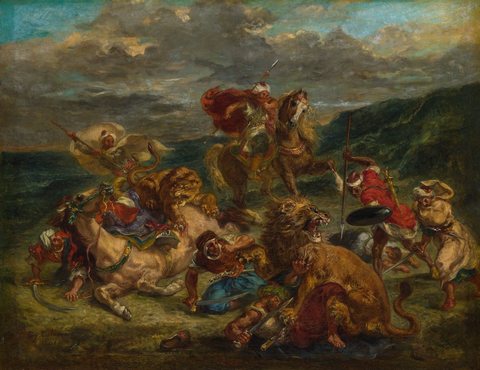
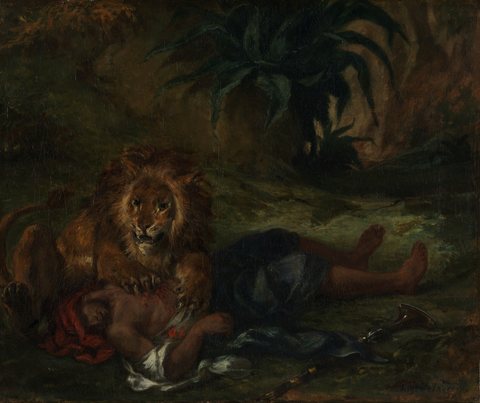
In 1832 Delacroix travelled with a diplomatic mission to Morocco and Algeria. The light, the colours and the people of North Africa captivated him. After his return he painted The Women of Algiers and dozens of scenes with Arabs, horses and lions.
He was a friend of the composer Chopin and the writer George Sand. In 1838 he began a double portrait of the two. Later the painting was cut in two – Frédéric Chopin is today in Paris, and George Sand in Copenhagen.
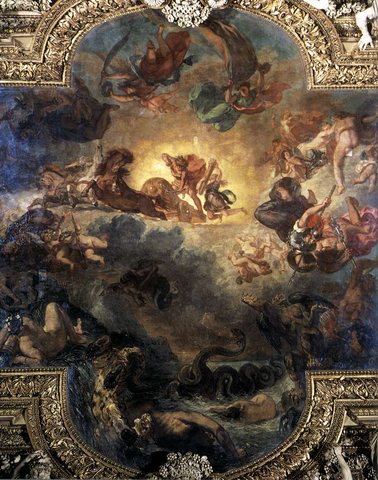
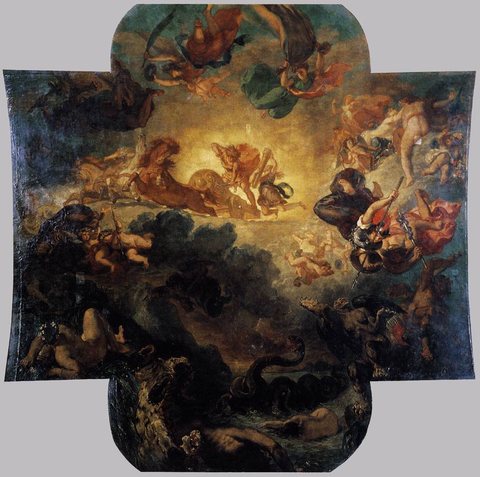
Delacroix painted huge murals in churches and palaces in Paris. He applied to the Academy seven times before he was finally elected in 1857. All his life he kept a journal, which today is one of the most valuable books about art. These words are attributed to him: “The first merit of a painting is to be a feast for the eye.”
Eugene Delacroix died in Paris on 13 August 1863, aged 65. His last home and studio is a museum today.
Young painters considered him their teacher, although they never studied with him. Cézanne, Degas, Van Gogh and the Impressionists learned from his bold colours.
En ünlü eserler
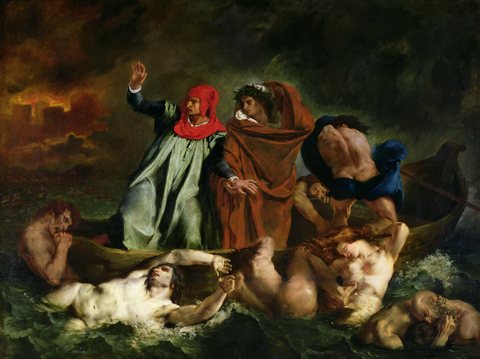 Dante'nin KayığıDante and Virgil on the stormy waters, 1822. Louvre, Paris.
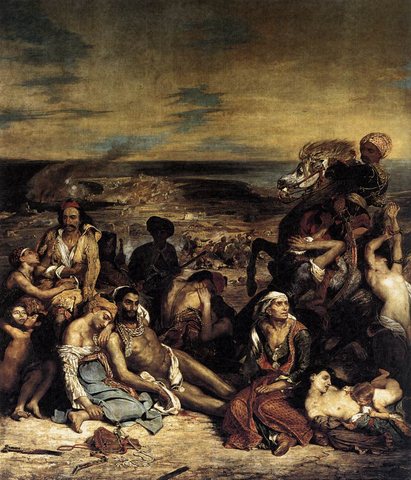 Sakız KatliamıThe tragedy of a Greek island, 1824. Louvre, Paris.
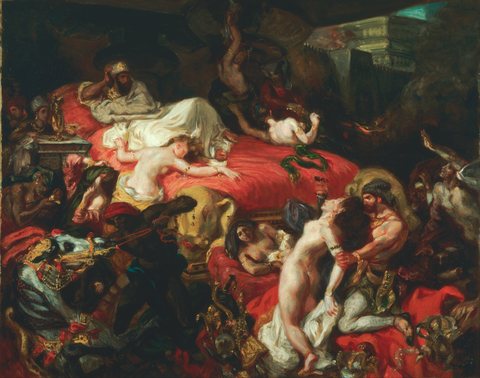 Sardanapal'ın ÖlümüThe king who watches the ruin of all he owns, 1827. Louvre, Paris.
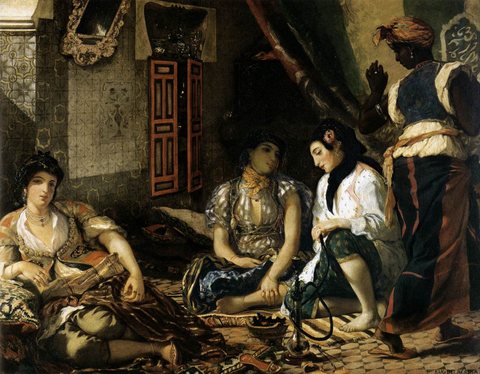 Cezayirli KadınlarThe quiet of an Algerian home, 1834. Louvre, Paris.
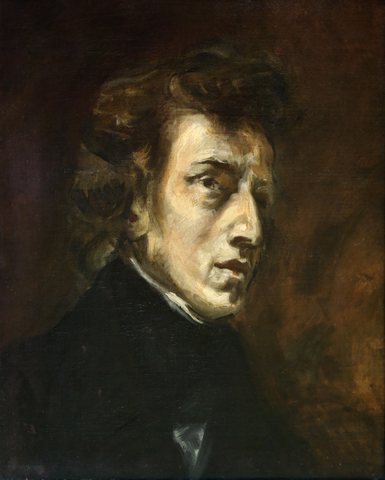 Frédéric ChopinThe composer listening to music, 1838. Louvre, Paris.
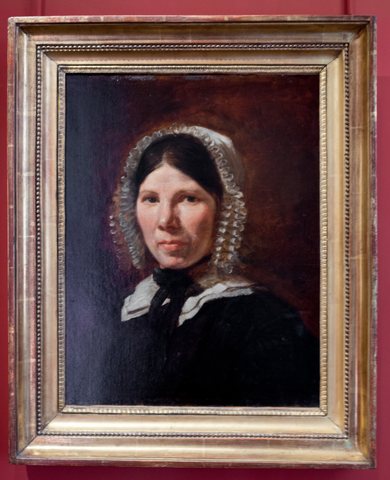
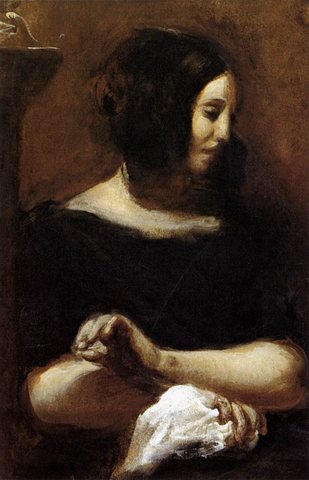 George SandThe writer from the cut portrait, 1838. Ordrupgaard, Copenhagen.
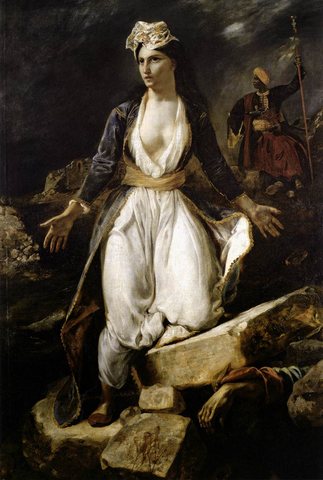 Missolonghi Harabelerinde YunanistanGreece among the ruins, 1826. Musée des Beaux-Arts, Bordeaux.
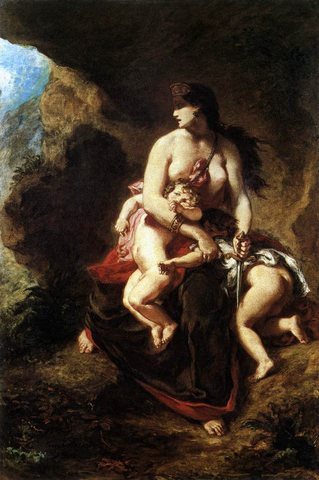 Çocuklarını Öldürmek Üzere Olan MedeaThe despair of a mother, 1838. Palais des Beaux-Arts, Lille.
Kronoloji
- 1798Born in Charenton on 26 April
- 1822“The Barque of Dante” at the Salon
- 1824“The Massacre at Chios”
- 1825Travels to England
- 1827“Death of Sardanapalus” causes a scandal
- 1830“Liberty Leading the People”
- 1832Journey to Morocco and Algeria
- 1834“The Women of Algiers”
- 1857Elected to the Academy
- 1863Dies in Paris on 13 August
Nerede görülebilir
İlginç bilgiler
Eugene Delacroix posed for one of the figures in Géricault's “Raft of the Medusa”.
Delacroix's “Liberty Leading the People” appeared for many years on the French 100-franc banknote.
The double portrait of Chopin and George Sand was cut into two parts.
Delacroix was elected to the Academy only at his seventh attempt, in 1857.
Delacroix's journal is one of the most valuable books about art.