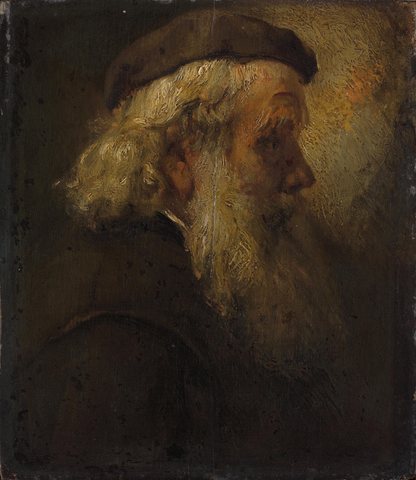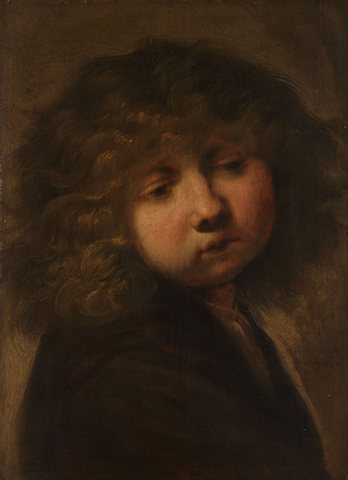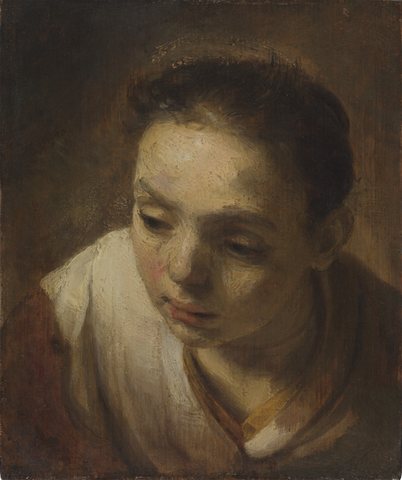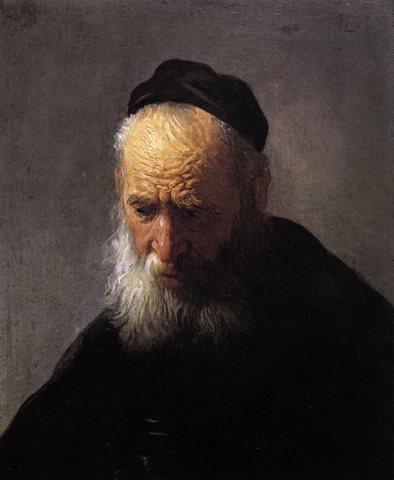
Rembrandt
Neerlandês, 1606–1669
História de vida
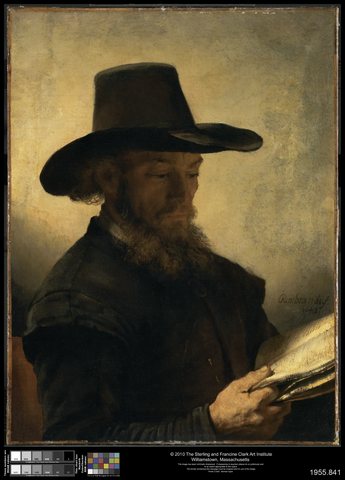
Rembrandt van Rijn was born on 15 July 1606 in Leiden, in Holland, the ninth child in the family of a miller. His father's mill stood on the town wall, by the river Rhine, and that is where the family name “van Rijn”, “of the Rhine”, comes from. His parents sent him to a Latin school and briefly to the university, but the boy wanted only to paint. He studied for three years with a local painter, and then for half a year in Amsterdam with Pieter Lastman, who painted biblical stories.
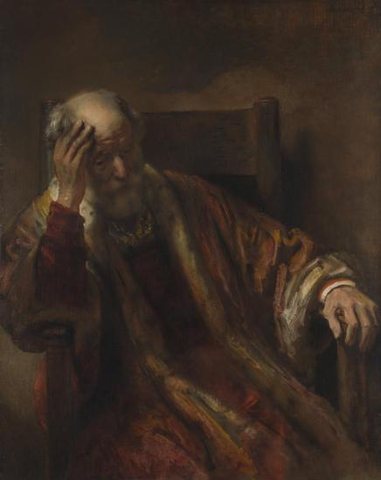
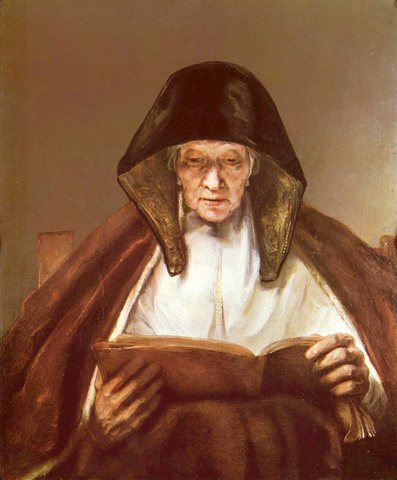
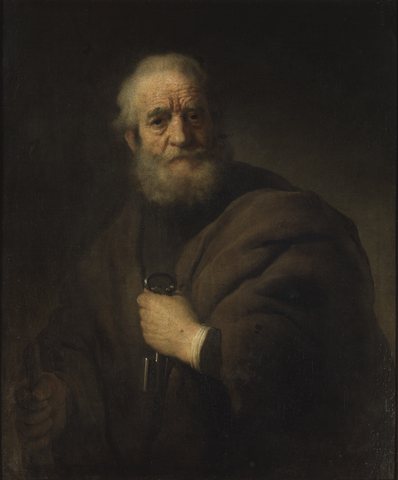
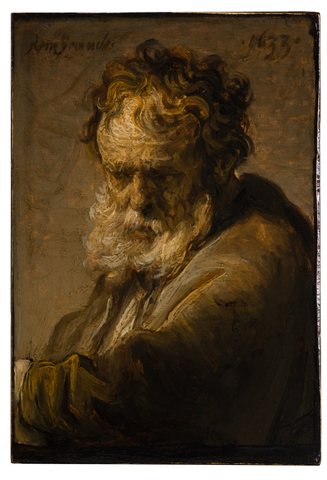
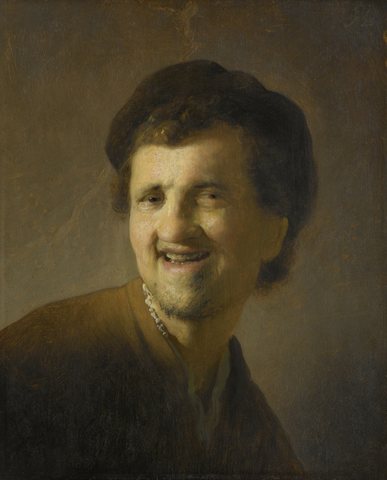
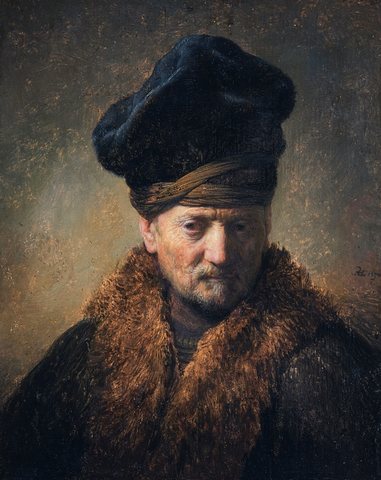
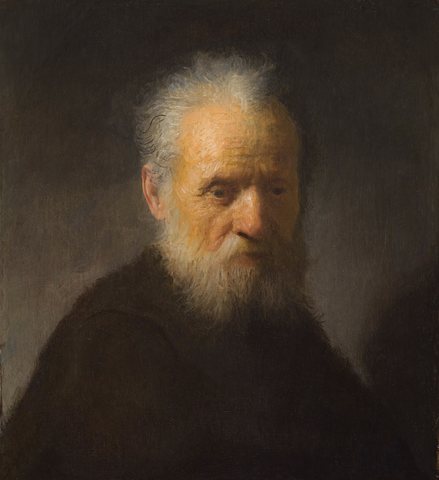
Back in Leiden the young Rembrandt painted old people, saints and himself. He worked side by side with his friend Jan Lievens. Constantijn Huygens, the prince's secretary, visited them and wrote that these two young sons of a miller and an embroiderer would soon surpass the old masters. Around 1631 Rembrandt moved to Amsterdam, the richest city in Europe at that time.
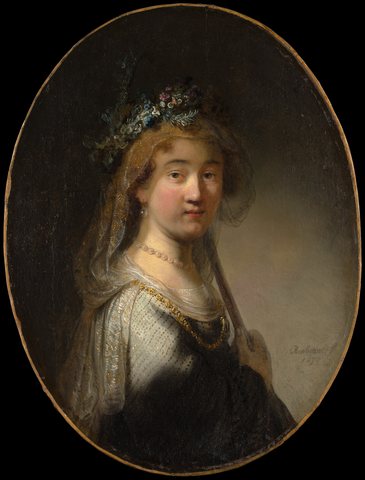
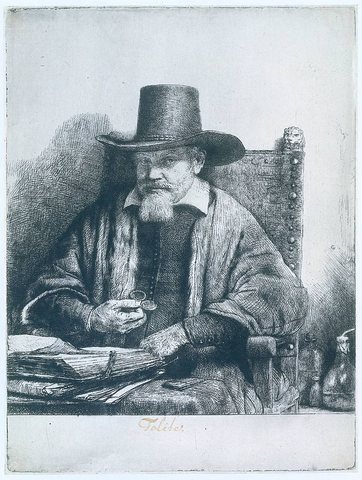
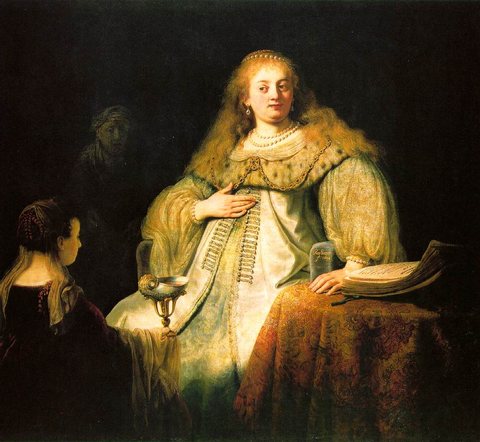
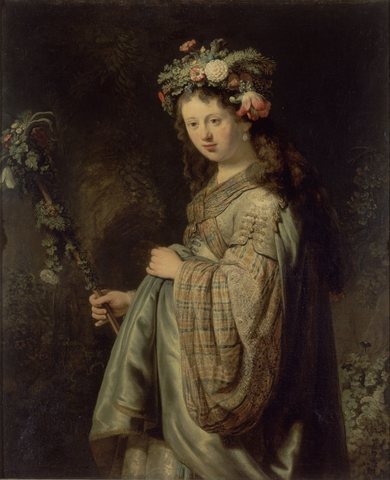
In 1632, soon after he arrived, he painted The Anatomy Lesson of Dr Nicolaes Tulp: surgeons around a body on a table, each with his own face and his own attention. The painting made him famous overnight. The wealthy citizens of Amsterdam wanted portraits only from him. In 1634 he married Saskia van Uylenburgh, the daughter of a respected family. He painted her as a goddess, as a bride, as himself at a feast: Rembrandt and Saskia in the Parable of the Prodigal Son.
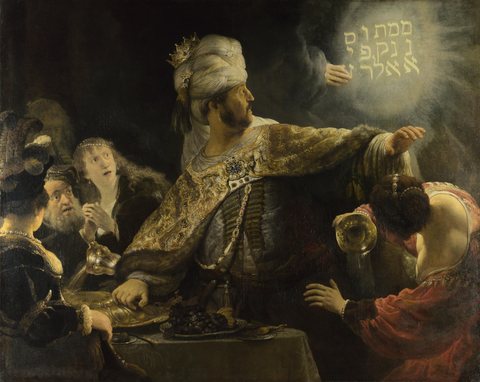
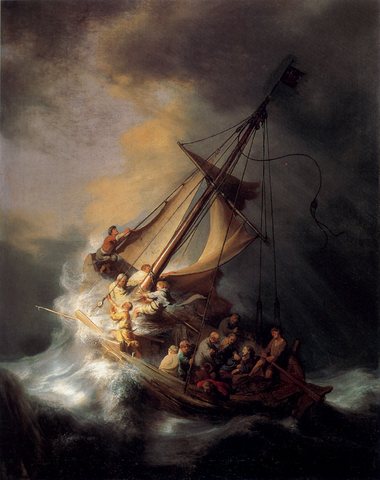
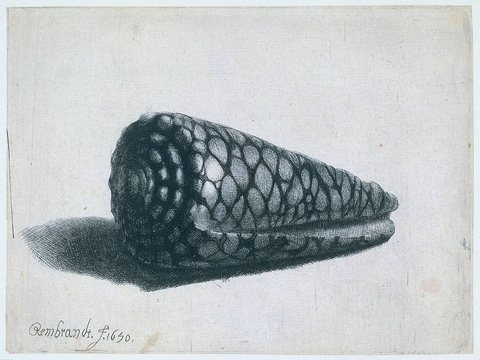
These were the happy years. Rembrandt painted The Storm on the Sea of Galilee, Danaë and Belshazzar's Feast. In 1639 he bought a large house in the centre of Amsterdam. He collected paintings, prints, shells, weapons, costumes and everything that might be of use to him. But three of Saskia's four children died as babies. Only their son Titus, born in 1641, survived.
In 1642 Rembrandt finished the huge group painting of the civic guard company of Captain Frans Banninck Cocq. Instead of people lined up in a row, he painted movement: the captain gives an order, the drum beats, the dog barks, the banner is raised. Later the varnish darkened and the painting received the name The Night Watch. In June of the same year Saskia died, at the age of 29.
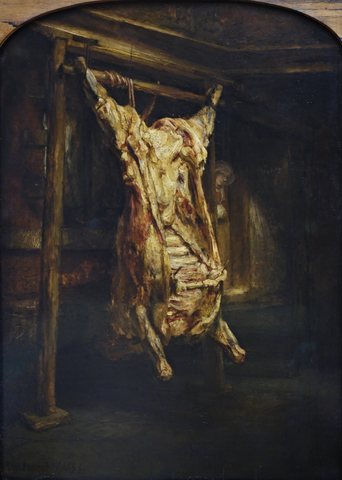
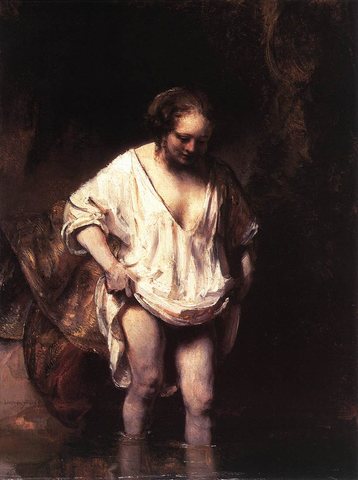
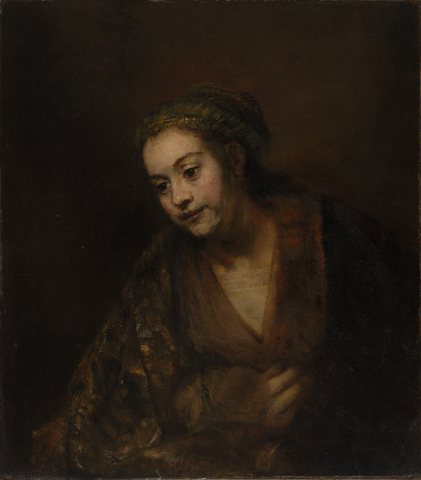
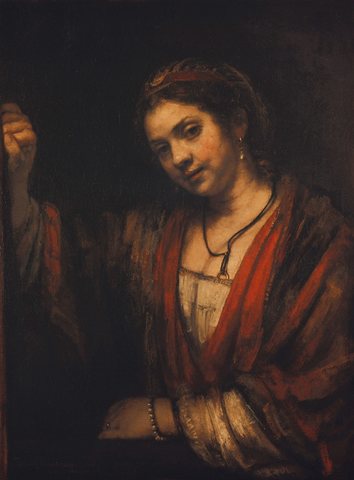
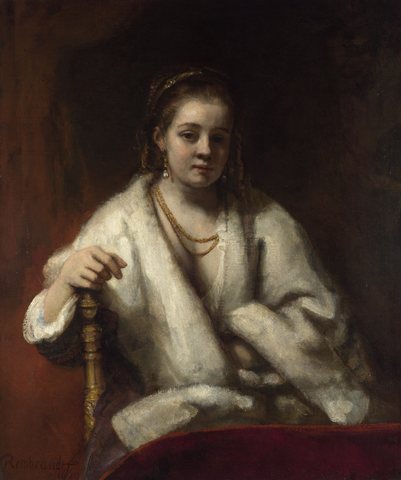
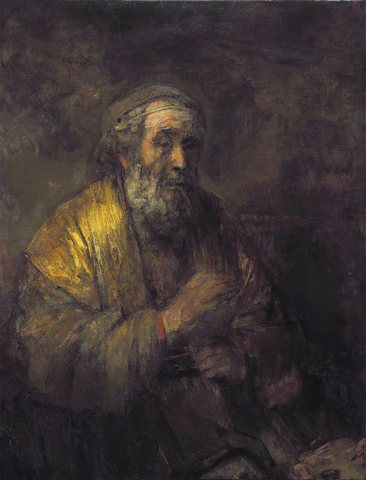
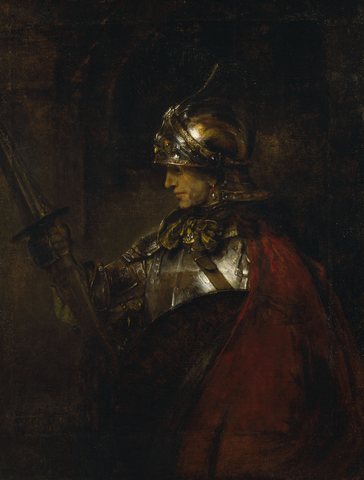
After her death Rembrandt lived with Hendrickje Stoffels, who looked after little Titus. In 1654 their daughter Cornelia was born. The church council reprimanded Hendrickje because they were not married. Rembrandt painted ever more freely and more deeply: Aristotle with a Bust of Homer was a commission from a Sicilian nobleman, and A Slaughtered Ox is simply the split carcass of an animal turned into a painting.
Yet money was short. Rembrandt had spent a great deal on his house and his collection. In 1656 he was declared insolvent. Everything he owned was listed and sold at auction, including the house. The family moved to a modest home in the Jordaan district. So that Rembrandt could go on working, Hendrickje and Titus founded an art-dealing business, and he became its employee.
Despite the poverty, his greatest paintings were born in these years. The huge The Conspiracy of Claudius Civilis was commissioned for the Amsterdam town hall, but it was returned and the artist cut it down. In 1662 he painted Syndics of the Drapers' Guild: five men who seem to look up from their books because of us. Around 1665 he painted The Jewish Bride: two people and one hand, laid with infinite tenderness.
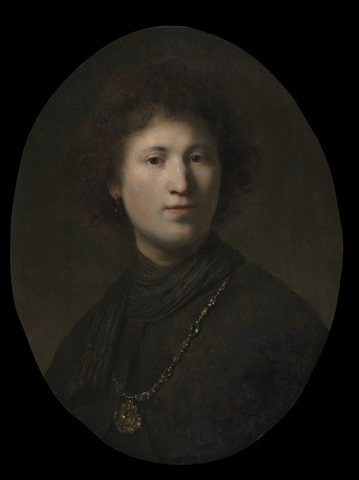
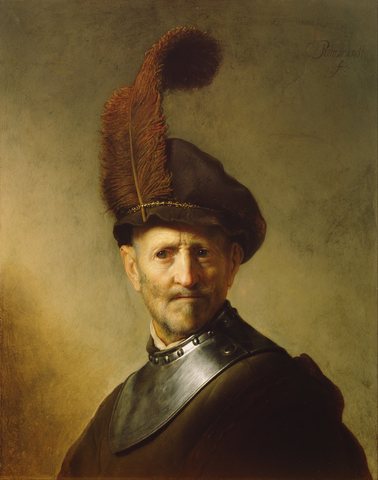
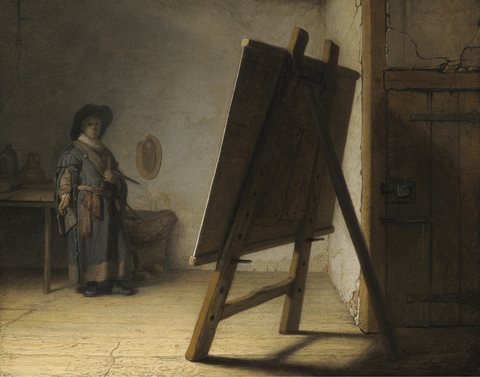
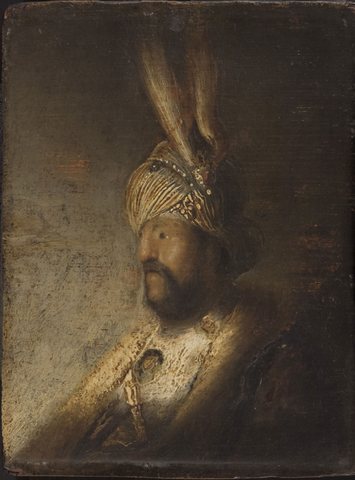
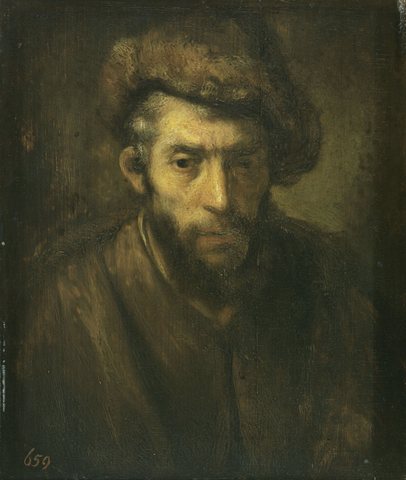
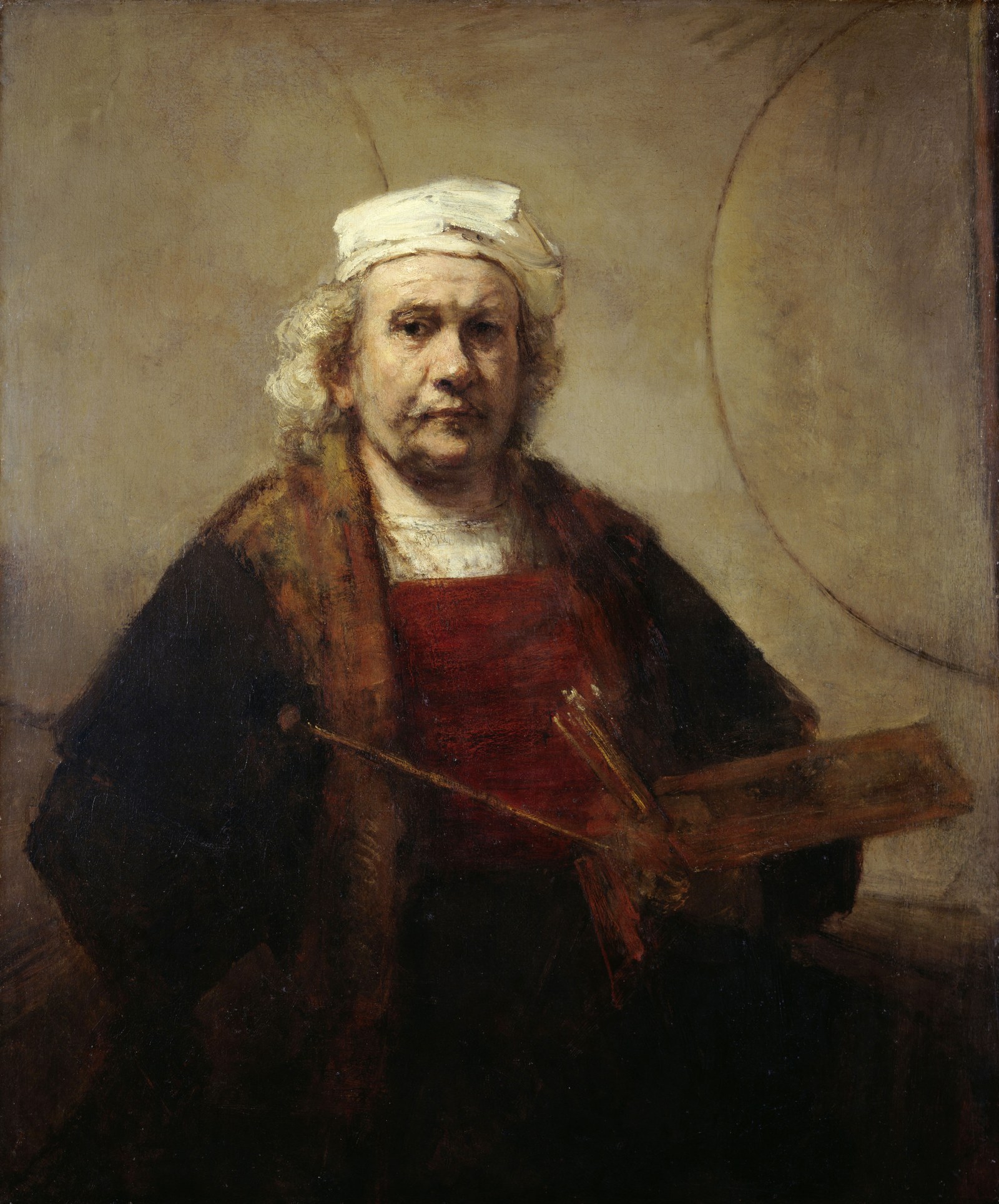
Rembrandt painted himself throughout his life: nearly 80 self-portraits in paintings, etchings and drawings. As a young man he painted himself with plumed hats and gold chains. As an old man he painted himself without ornaments, as he was: Self-Portrait with Two Circles shows the artist with palette and brushes before an empty wall. These self-portraits are like the diary of a human life.
In 1663 Hendrickje died, and in 1668 Titus too, only a few months after his wedding. Rembrandt was left alone. In 1669 he painted Self-Portrait at the Age of 63: a tired face and calm, clasped hands. He died on 4 October 1669 and was buried in the Westerkerk in Amsterdam, in an unmarked grave. Today Rembrandt is considered one of the greatest painters of all time.
Obras mais famosas
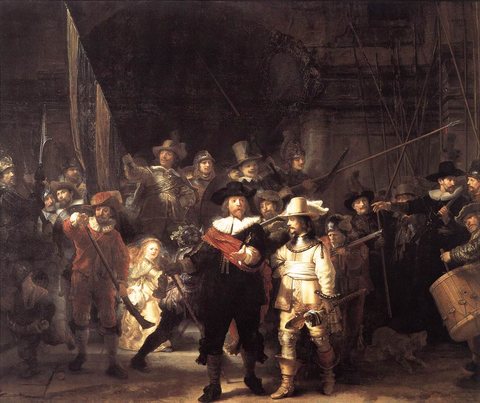 A Ronda NoturnaThe civic guard company of Captain Banninck Cocq, 1642. Rijksmuseum, Amsterdam.
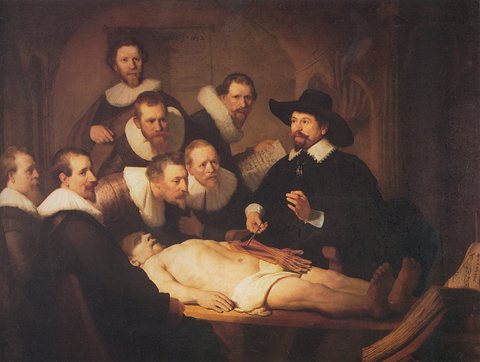 A Lição de Anatomia do Dr. Nicolaes TulpThe painting that made Rembrandt famous, 1632. Mauritshuis, The Hague.
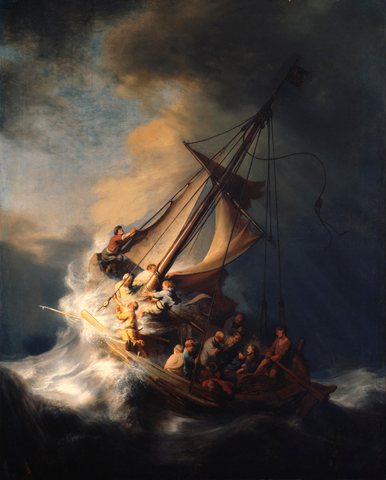 A Tempestade no Mar da GalileiaHis only seascape, 1633. Stolen in 1990.
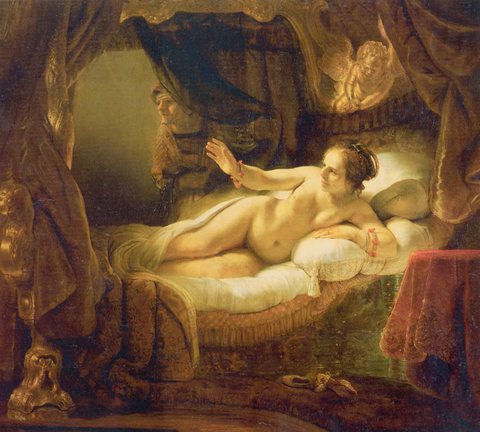 DânaeThe myth of Danaë and the golden light, 1636. Hermitage Museum, Saint Petersburg.
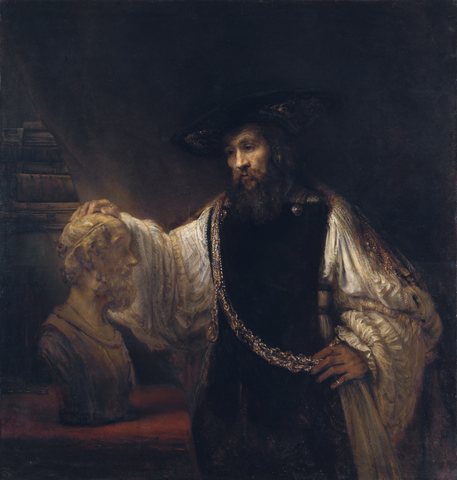 Aristóteles com um busto de HomeroA philosopher lost in thought before the bust of a poet, 1653. Metropolitan Museum of Art, New York.
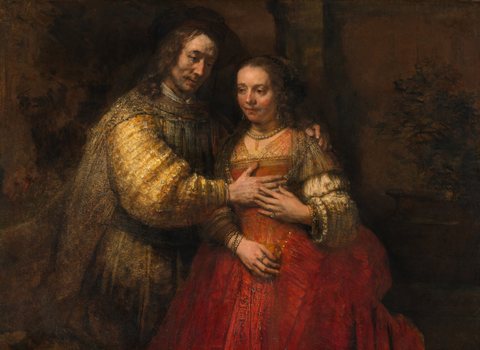 A Noiva JudiaOne of the most tender paintings in the history of art, around 1665. Rijksmuseum, Amsterdam.
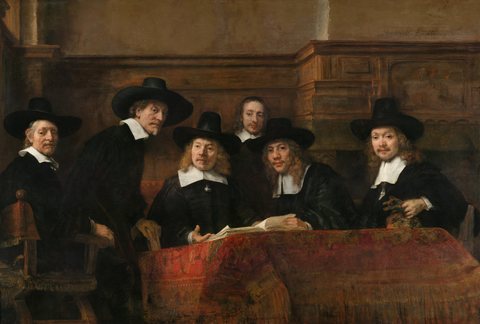 Os Síndicos da Guilda dos Fabricantes de TecidosFive men look up from their books, 1662. Rijksmuseum, Amsterdam.
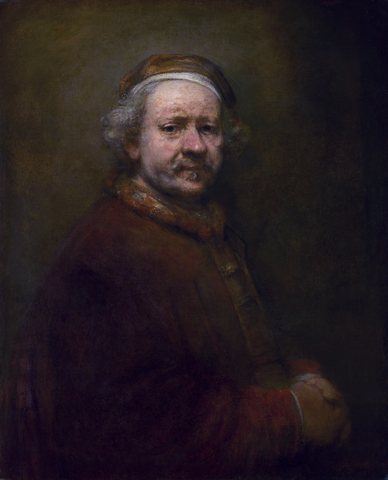 Autorretrato aos 63 anosOne of his last self-portraits, 1669. National Gallery, London.
Cronologia
- 1606Born in Leiden on 15 July
- 1625Studies with Pieter Lastman in Amsterdam
- 1631Moves to Amsterdam
- 1632“The Anatomy Lesson of Dr Nicolaes Tulp”
- 1634Marries Saskia van Uylenburgh
- 1639Buys a large house in Amsterdam
- 1641His son Titus is born
- 1642“The Night Watch”; Saskia's death
- 1656Declared insolvent
- 1662“Syndics of the Drapers' Guild”
- 1668His son Titus dies
- 1669Dies in Amsterdam on 4 October
Onde vê-las
Curiosidades
Rembrandt made nearly 80 self-portraits in paintings, etchings and drawings, more than almost any painter before him.
The name “The Night Watch” appeared later. The painting actually shows daytime, but the varnish darkened over time.
The house in Amsterdam that Rembrandt bought in 1639 is now a museum, the Rembrandt House.
In 1990 “The Storm on the Sea of Galilee” was stolen from the Isabella Stewart Gardner Museum in Boston and has still not been found.
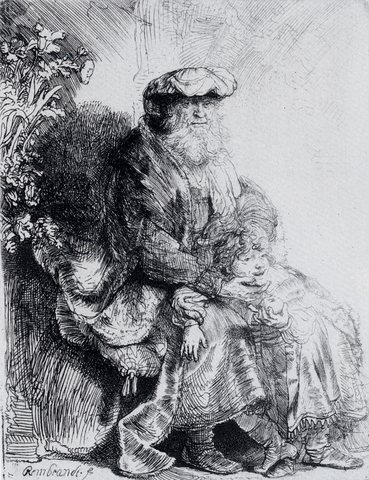
Rembrandt was also one of the greatest masters of etching. One of his prints is known as the “Hundred Guilder Print”.