Paul Gauguin
Francês
História de vida
Paul Gauguin was born on 7 June 1848 in Paris. His father was a journalist, and his grandmother, Flora Tristan, was a famous writer who fought for the rights of workers and of women. When Paul was one year old, the family set out by ship for Peru, but his father died on the way. The boy spent his childhood in Lima, in the home of relatives, among sunshine, colours and servants. This memory of a distant, warm world would guide him all his life.
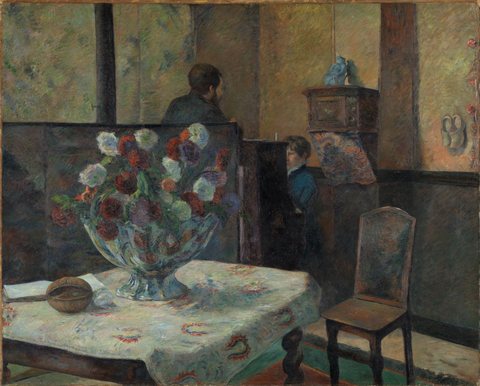
At 17 Gauguin joined the merchant navy as a sailor and travelled the world. Then he served in the navy. In 1872 he began work as a stockbroker in Paris and earned well. He married the Danish Mette Gad, and they had five children. In his free time he painted and bought paintings by the Impressionists.
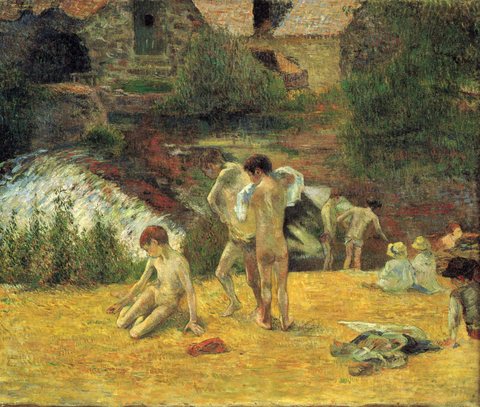
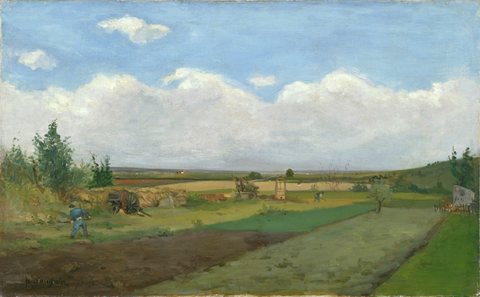
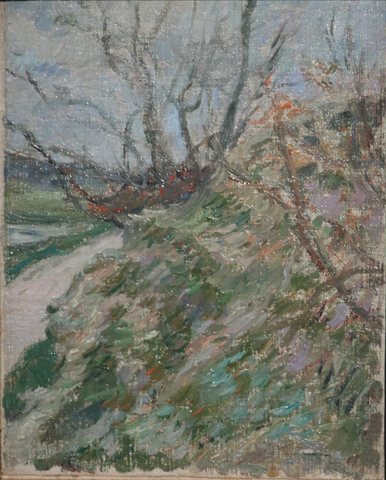
His teacher and friend became Camille Pissarro, who taught him to paint outdoors. From 1879 Paul Gauguin showed his paintings at the Impressionist exhibitions. In 1882 the stock market crashed, and he decided to leave his job to be only an artist. The money soon ran out. His wife left with the children for Copenhagen, and he returned to Paris alone.
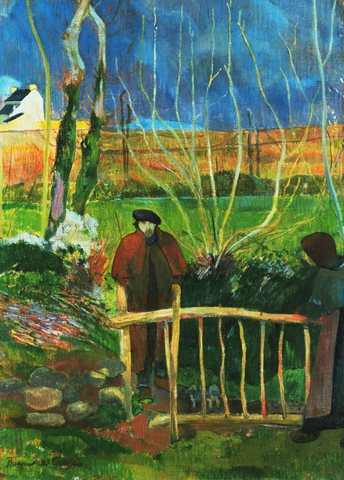
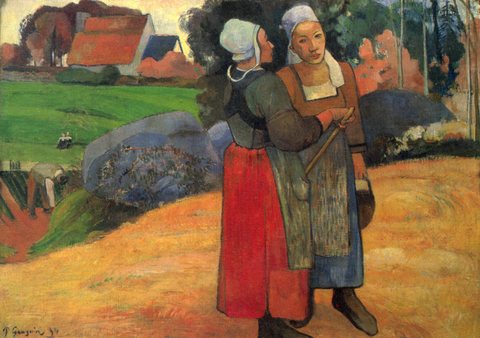
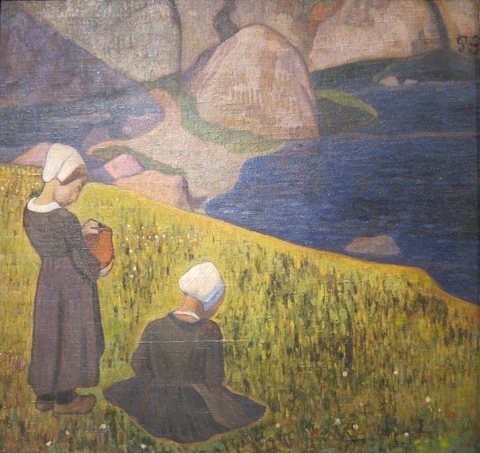
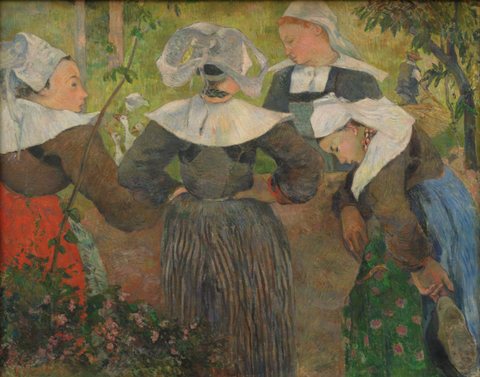
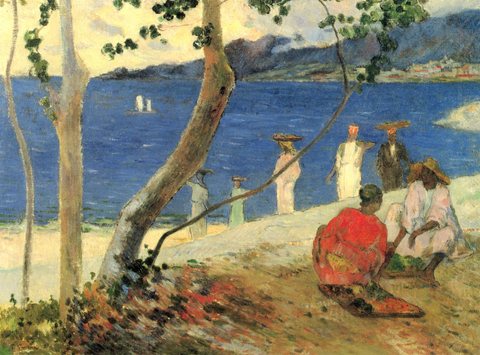
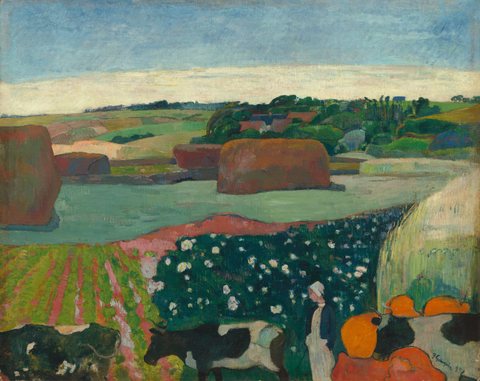
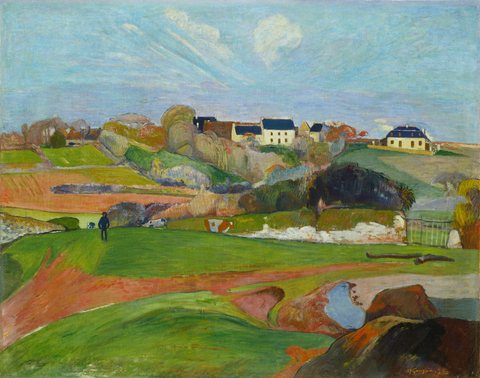
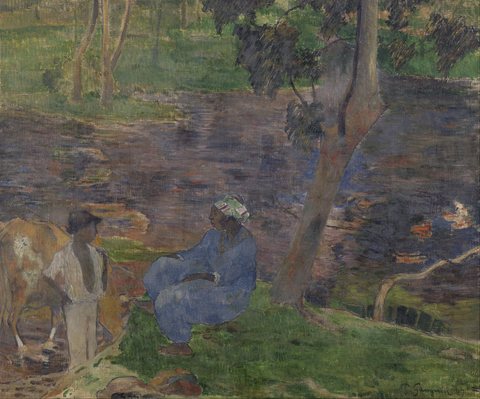
In 1886 Gauguin went to Pont-Aven, a small village in Brittany, where life was simple and cheap and the women wore white caps. In 1887 he travelled to Panama and the island of Martinique. Back in Brittany, in 1888, he painted Vision After the Sermon, a painting with red ground such as does not exist in nature. Here colour no longer describes the world, but the feeling.
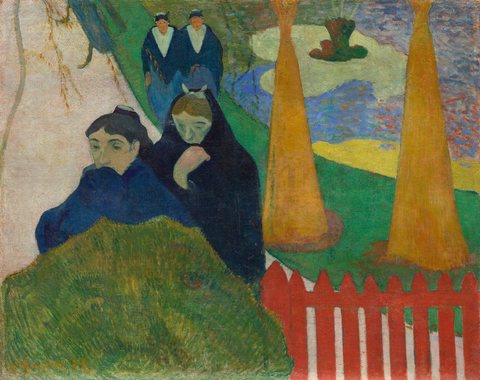
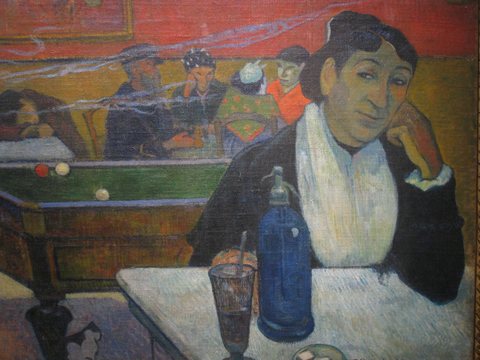
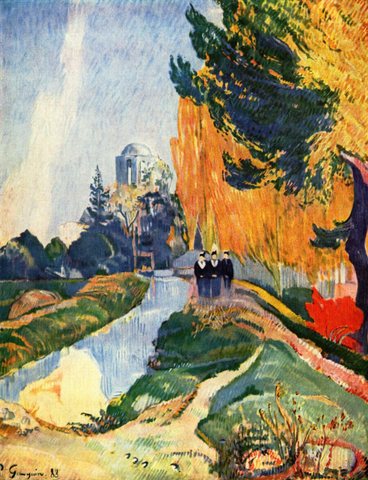
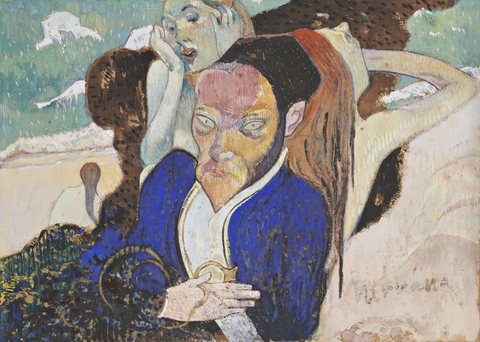
In October 1888 Paul Gauguin arrived in Arles to join Vincent van Gogh. Before that the two had exchanged self-portraits: Gauguin sent him Self-Portrait with Portrait of Bernard (Les Misérables). In Arles they painted together, sometimes the same places and people. Gauguin painted The Night Café in Arles. But the two often quarrelled, and after Van Gogh's crisis on 23 December Gauguin left for Paris.
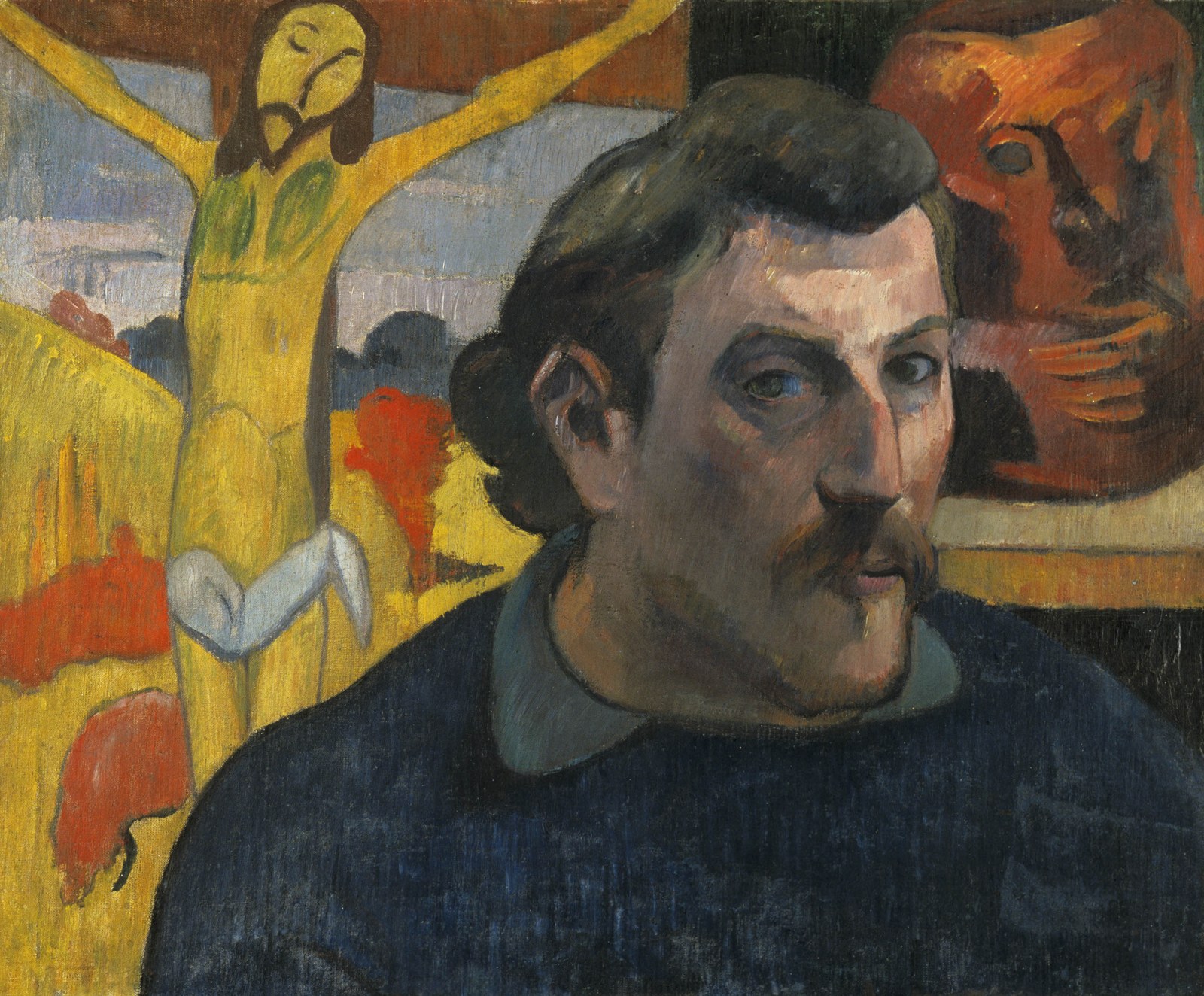
Back in Brittany he painted The Yellow Christ, and then portrayed himself in front of it in Portrait of the Artist with the Yellow Christ. Paul Gauguin dreamed more and more of escaping from Europe. In 1891 he sold his paintings at auction in Paris and with the money he raised he left for Tahiti.
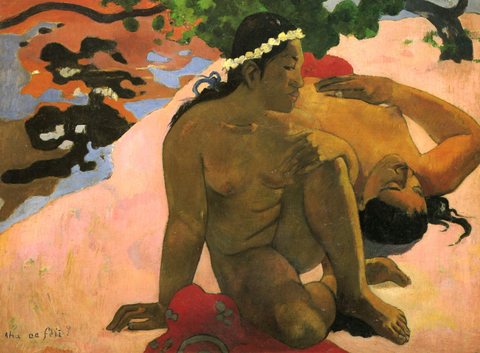
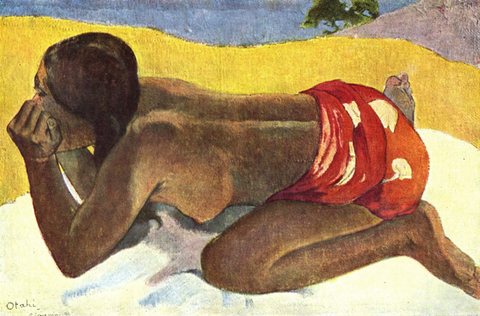
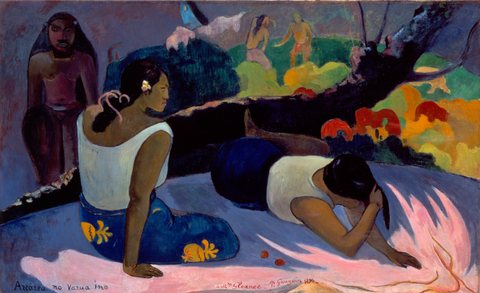
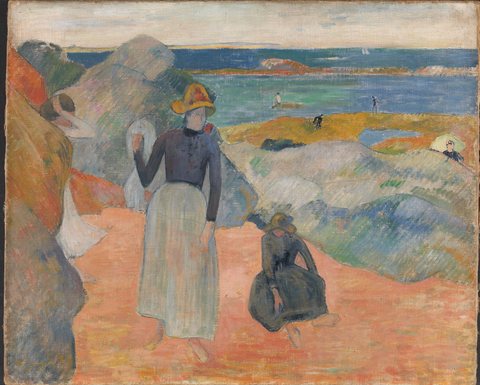
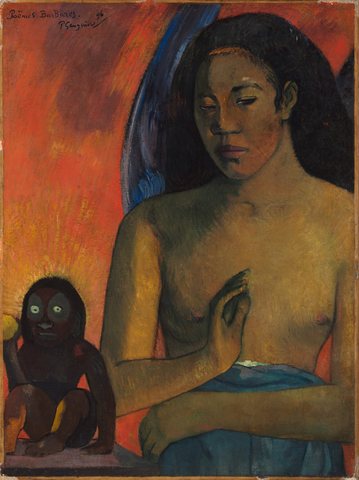
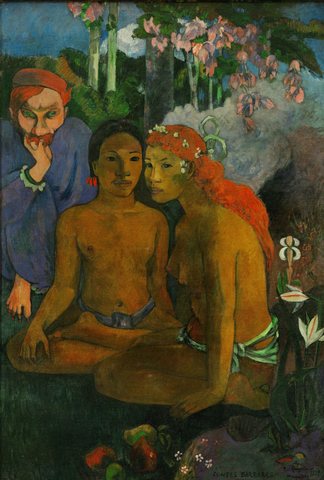
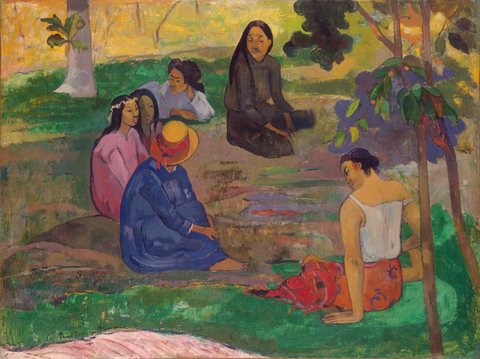
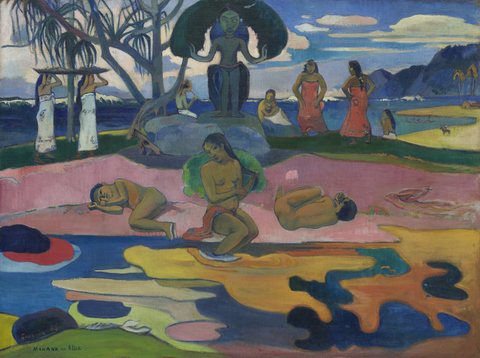
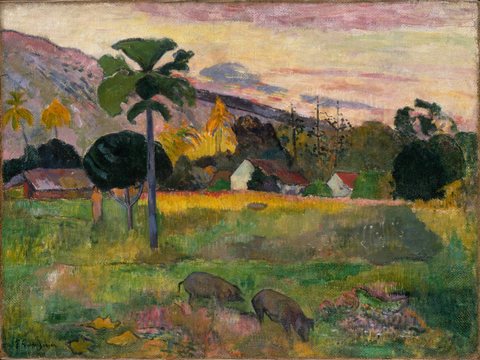
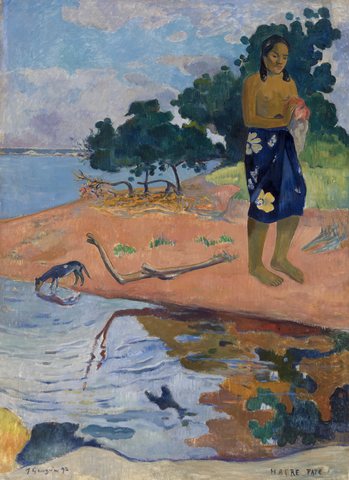
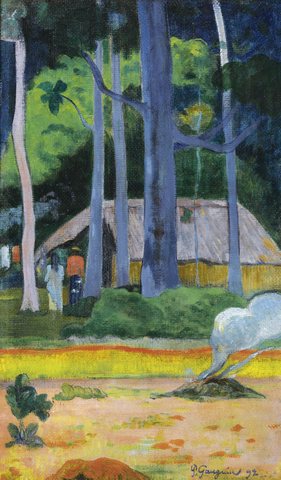
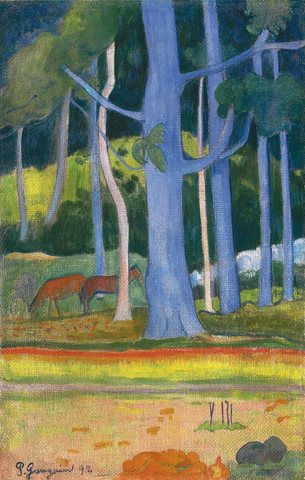
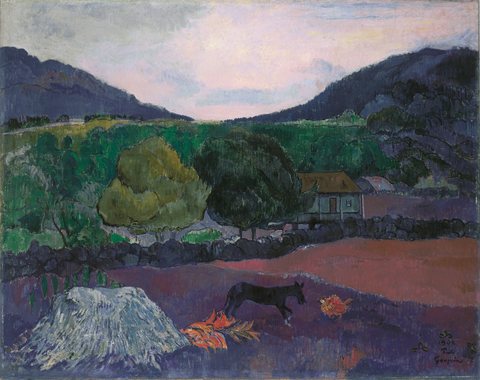
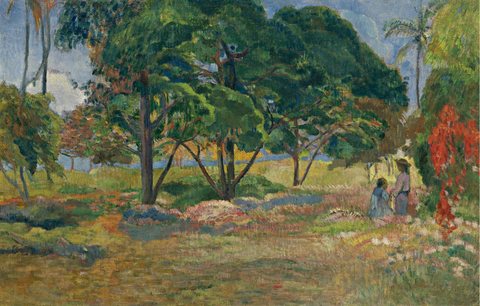
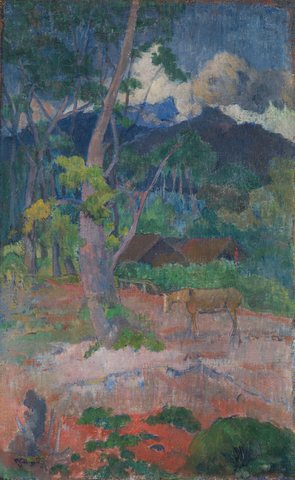
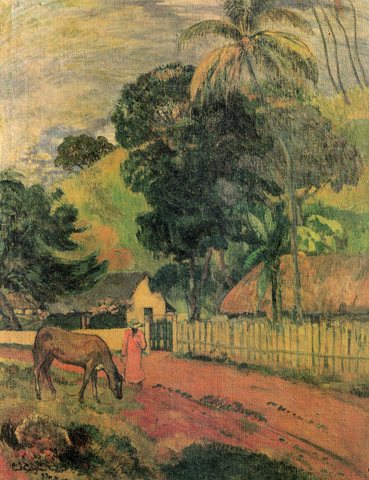
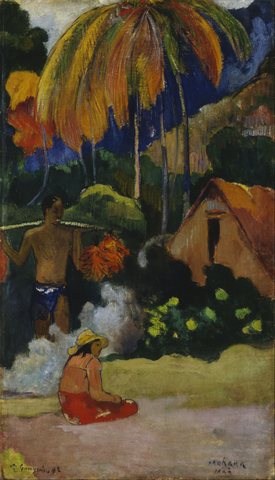
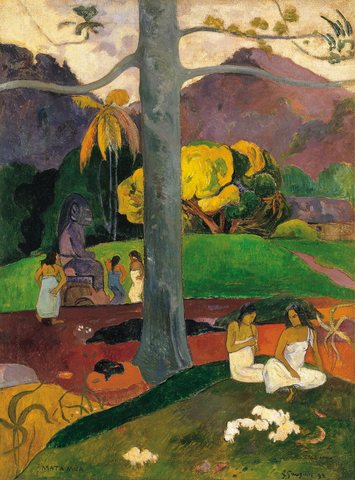
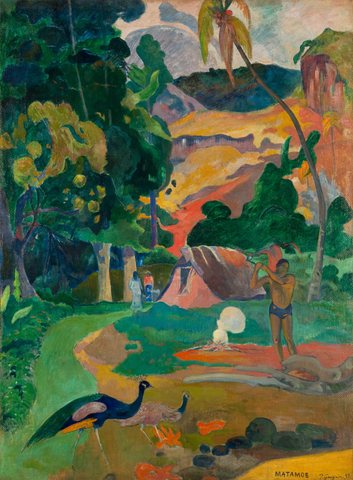
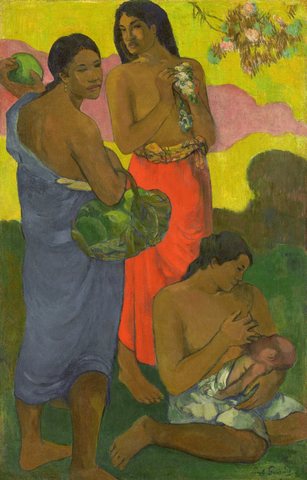
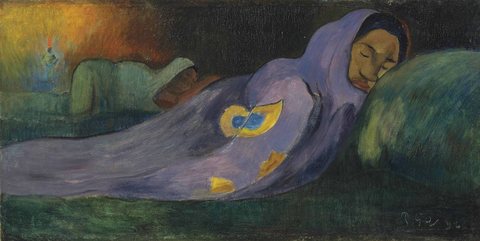
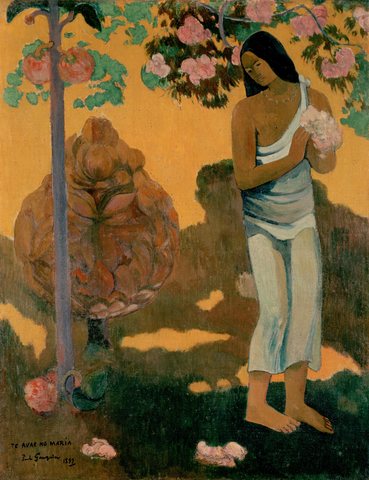
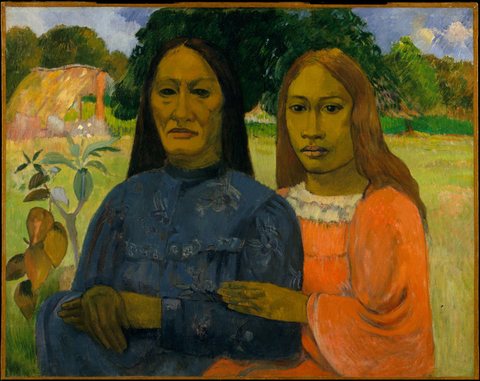
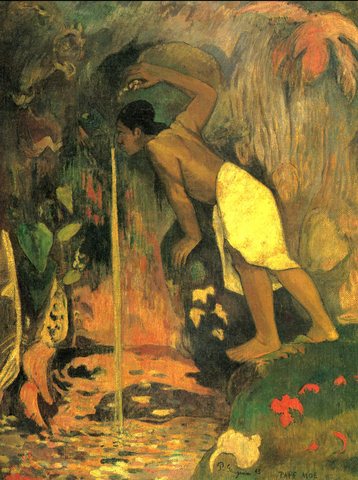
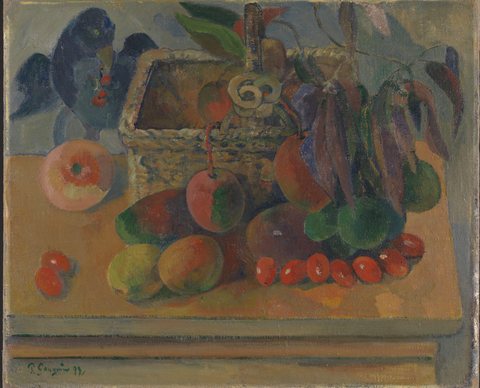
On Tahiti Gauguin painted the people, fruit, flowers and gods of the islands in bold, bright colours. Among his first paintings there is Tahitian Women on the Beach. In 1892 he painted Manaò tupapaú (Spirit of the Dead Watching). He was searching for an older and truer world, which, however, was already changing under French rule.
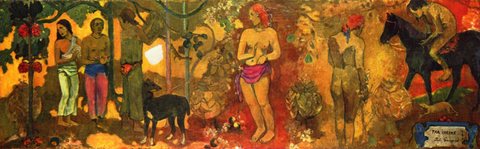
In 1893 Paul Gauguin returned to Paris and held a large exhibition of his Tahitian paintings, but it did not sell well. In 1895 he left again for Tahiti, this time for good. Ill and poor, in 1897–1898 he created his largest painting: Where Do We Come From? What Are We? Where Are We Going?. In the same year he also painted Nevermore.
In 1901 Gauguin moved to the island of Hiva Oa in the Marquesas Islands, even farther from the world. There he built a wooden house and went on painting. He died on 8 May 1903, at the age of 54, and was buried on the hill above the village of Atuona. In Europe few knew of his death.
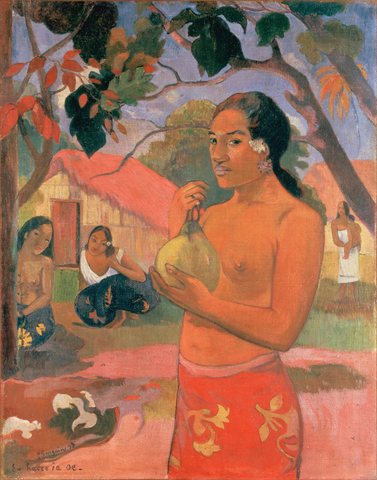
Only three years later a large exhibition in Paris showed hundreds of his works. Young artists saw in Paul Gauguin the freedom to paint colour as they felt it, not as they saw it. Today his paintings are in museums all over the world, and one of them, When Will You Marry?, was reportedly sold in 2015 for one of the highest prices ever paid for a painting.
Obras mais famosas
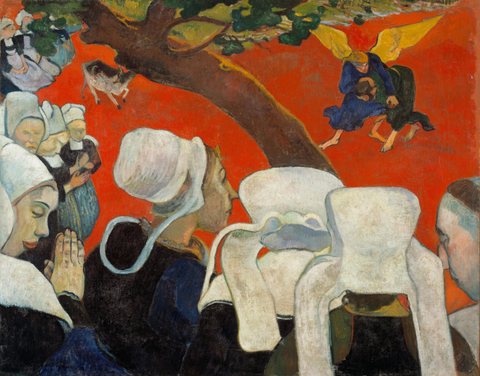 A Visão após o SermãoThe vision of the Breton women on red ground, 1888. Scottish National Gallery, Edinburgh.
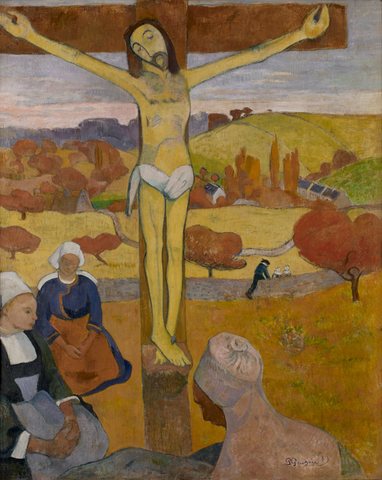 O Cristo AmareloA yellow cross among the autumn fields of Brittany, 1889.
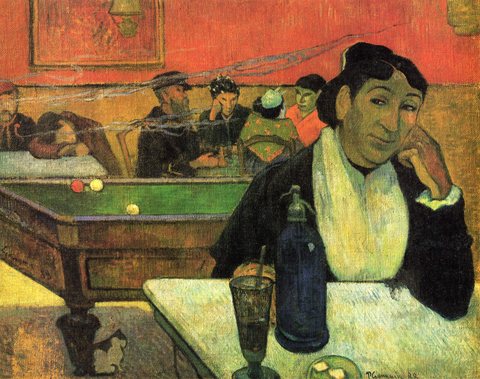 O Café Noturno em ArlesThe café in Arles, painted together with Van Gogh, 1888. Pushkin Museum, Moscow.
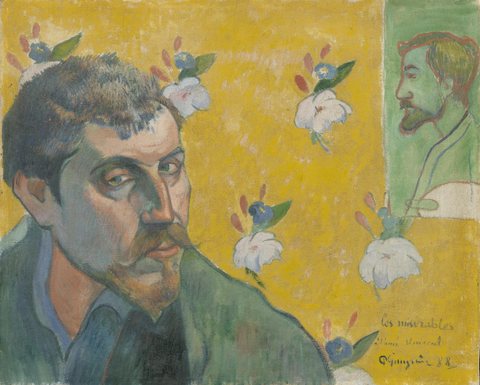 Autorretrato com retrato de Bernard (Os Miseráveis)A self-portrait given to Van Gogh, 1888. Van Gogh Museum, Amsterdam.
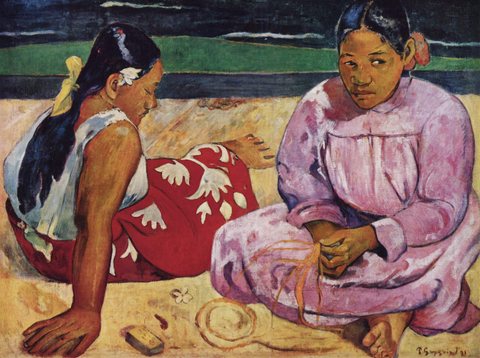 Mulheres taitianas na praiaOne of his first paintings on Tahiti, 1891. Musée d'Orsay, Paris.
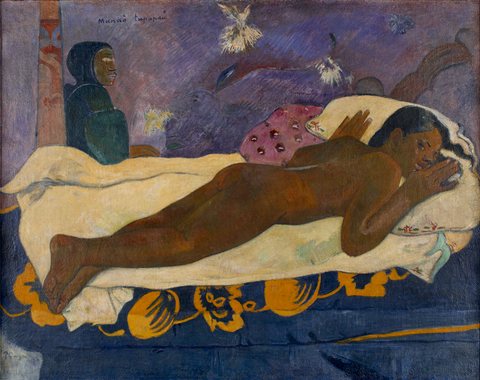 O Espírito dos Mortos Vigia (Manao tupapau)Night, fear and the spirit of the dead, 1892.
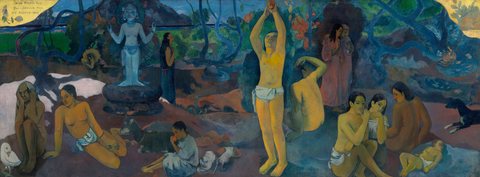 De onde viemos? O que somos? Para onde vamos?His largest painting, the questions of life, 1897–1898. Museum of Fine Arts, Boston.
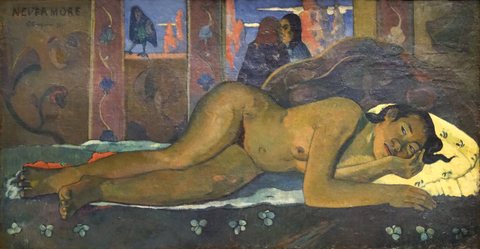 NevermoreA bird at the window and one word, 1897. Courtauld Gallery, London.
Cronologia
- 1848Born in Paris on 7 June
- 1865Becomes a sailor in the merchant navy
- 1872Stockbroker in Paris
- 1883Leaves his job to paint
- 1886First journey to Pont-Aven in Brittany
- 1888“Vision After the Sermon”; two months with Van Gogh in Arles
- 1891Leaves for Tahiti
- 1893Exhibition in Paris
- 1895Leaves for Tahiti for good
- 1897“Where Do We Come From? What Are We? Where Are We Going?”
- 1901Moves to Hiva Oa
- 1903Dies on Hiva Oa on 8 May
Onde vê-las
Curiosidades
Paul Gauguin's grandmother, Flora Tristan, was a famous writer and a fighter for the rights of workers and women.
Before becoming an artist, Gauguin was a sailor and then a stockbroker in Paris.
Gauguin and Van Gogh lived and painted together in Arles for about two months in 1888.
Gauguin is buried on the island of Hiva Oa in the Marquesas Islands, far from Europe.
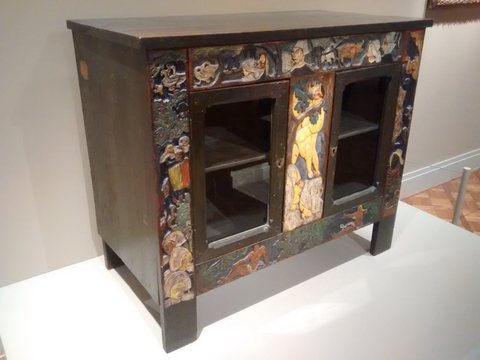
Besides paintings, Gauguin made wood sculptures, ceramics and woodcuts.