Śmierć Sardanapala
Historia
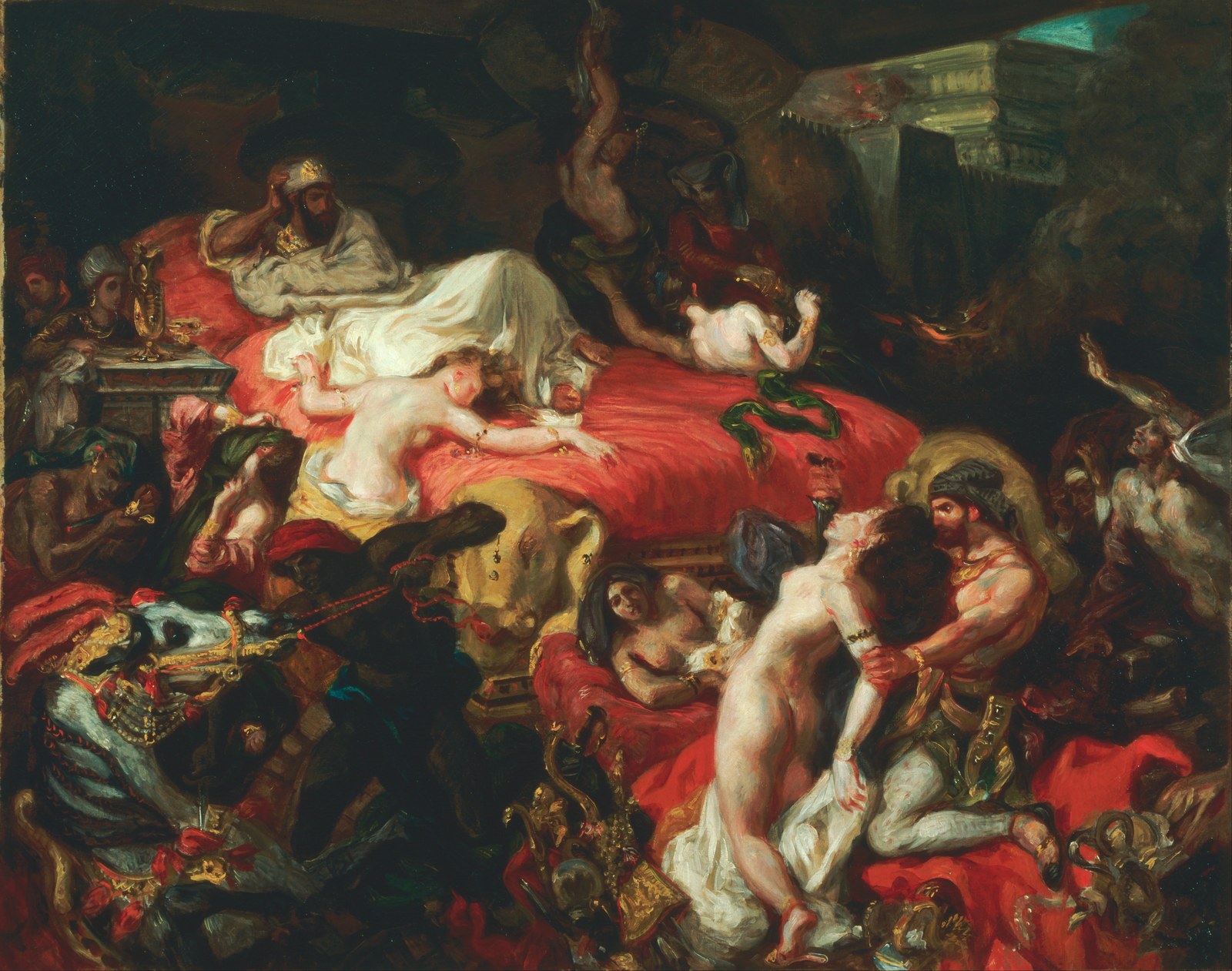
“Death of Sardanapalus” was painted in 1827. The subject comes from a play by the English poet Byron. Eugene Delacroix shows the ancient Assyrian king Sardanapalus, who orders all his possessions to be destroyed before the enemy takes the city.
In “Death of Sardanapalus” the king lies calmly on a huge red bed. Around him his servants kill his women and his horses and smash his treasures. The scene is full of bodies, gold and silk. Red, gold and white mingle like a flame.
Eugene Delacroix paints the chaos without a single clear centre. Our gaze wanders across the painting. The king's indifference to the horror is the most terrible thing in it.
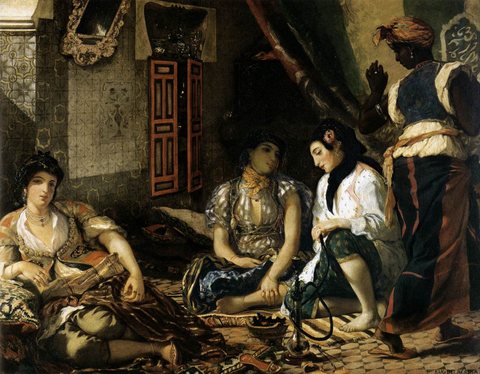
When the painting was shown at the Salon, it caused a scandal. For many years it remained unsold. Later Delacroix painted quite different, quiet women in The Women of Algiers.
Today “Death of Sardanapalus” is in the Louvre in Paris, which bought it in 1921. It is one of the most tempestuous paintings of Romanticism.
Ciekawostki
The canvas measures 392 × 496 cm, oil.
The subject comes from a play by Byron.
The Louvre bought the painting in 1921.