Ostatki
Historia
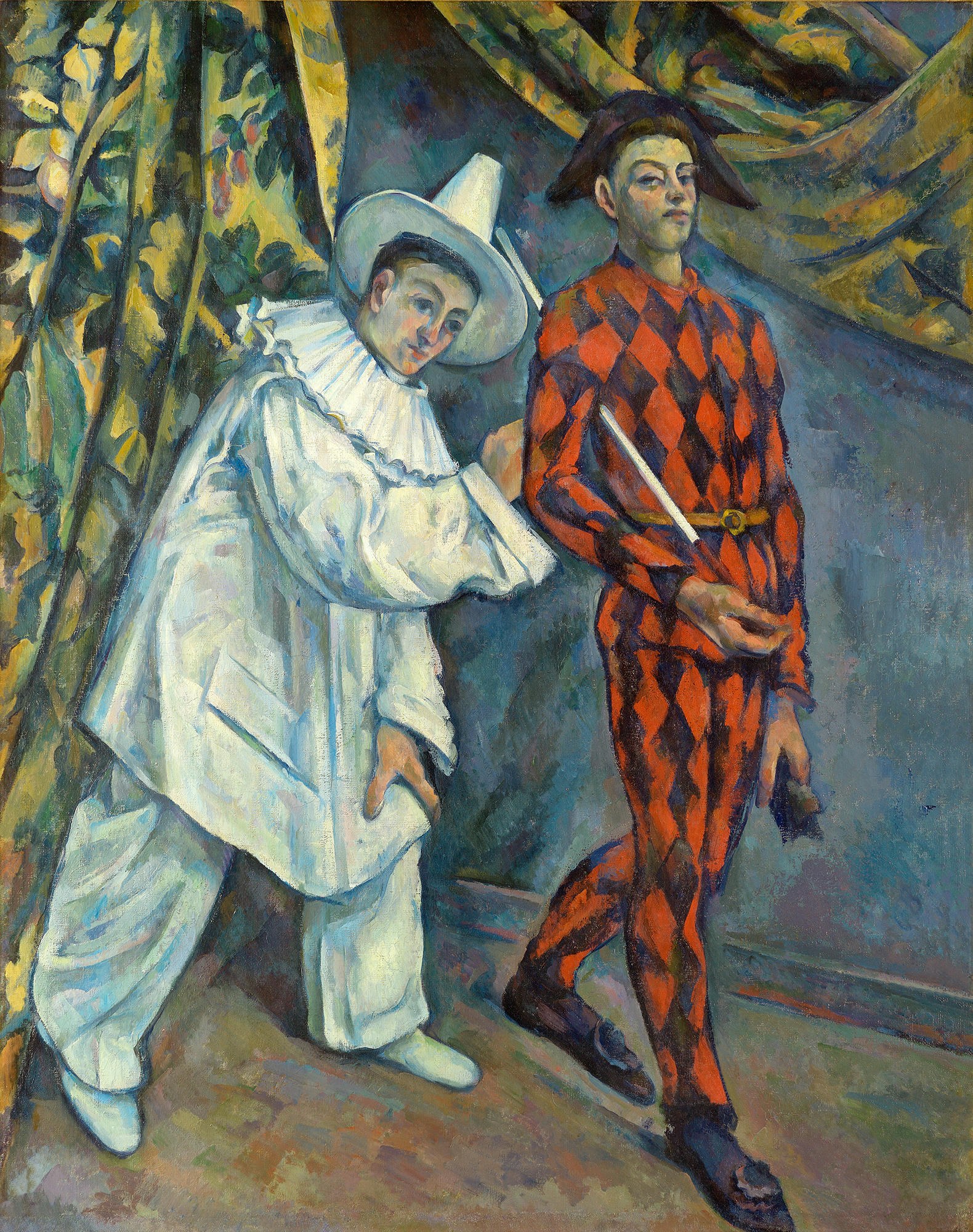
“Mardi Gras” was painted in 1888 in Paris. Paul Cézanne painted two young men in carnival costumes: his son Paul as Harlequin and his friend Louis Guillaume as Pierrot. It is one of his few paintings of people in motion.
In “Mardi Gras” Harlequin wears a red-and-black diamond costume and steps forward with a stick in his hand. Beside him Pierrot in a wide white costume reaches out, as if he wants to take the stick. Behind them hangs a heavy curtain with blue and green.
Paul Cézanne painted the two like statues, not like merry guests at a feast. Their faces are serious, their movements frozen. The white and the red costume are like two different worlds side by side.
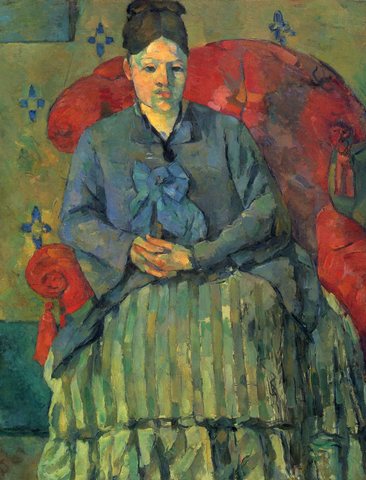
At that time his son Paul was 16 years old. Paul Cézanne painted him many times. The boy's mother, Hortense, posed for paintings such as Madame Cézanne in a Red Armchair.
Today “Mardi Gras” is in the Pushkin Museum in Moscow. The Russian collector Sergei Shchukin bought it at the beginning of the 20th century. Paul Cézanne turned a carnival into a quiet and serious scene in which every gesture weighs.
Ciekawostki
The canvas measures 102 × 81 cm, oil.
Harlequin is the painter's son, and Pierrot is his friend Louis Guillaume.
The painting was in the collection of Sergei Shchukin.