Przesiewacz zboża
Jean-François Millet (1814–1875)
Galeria Narodowa w Londynie
Historia
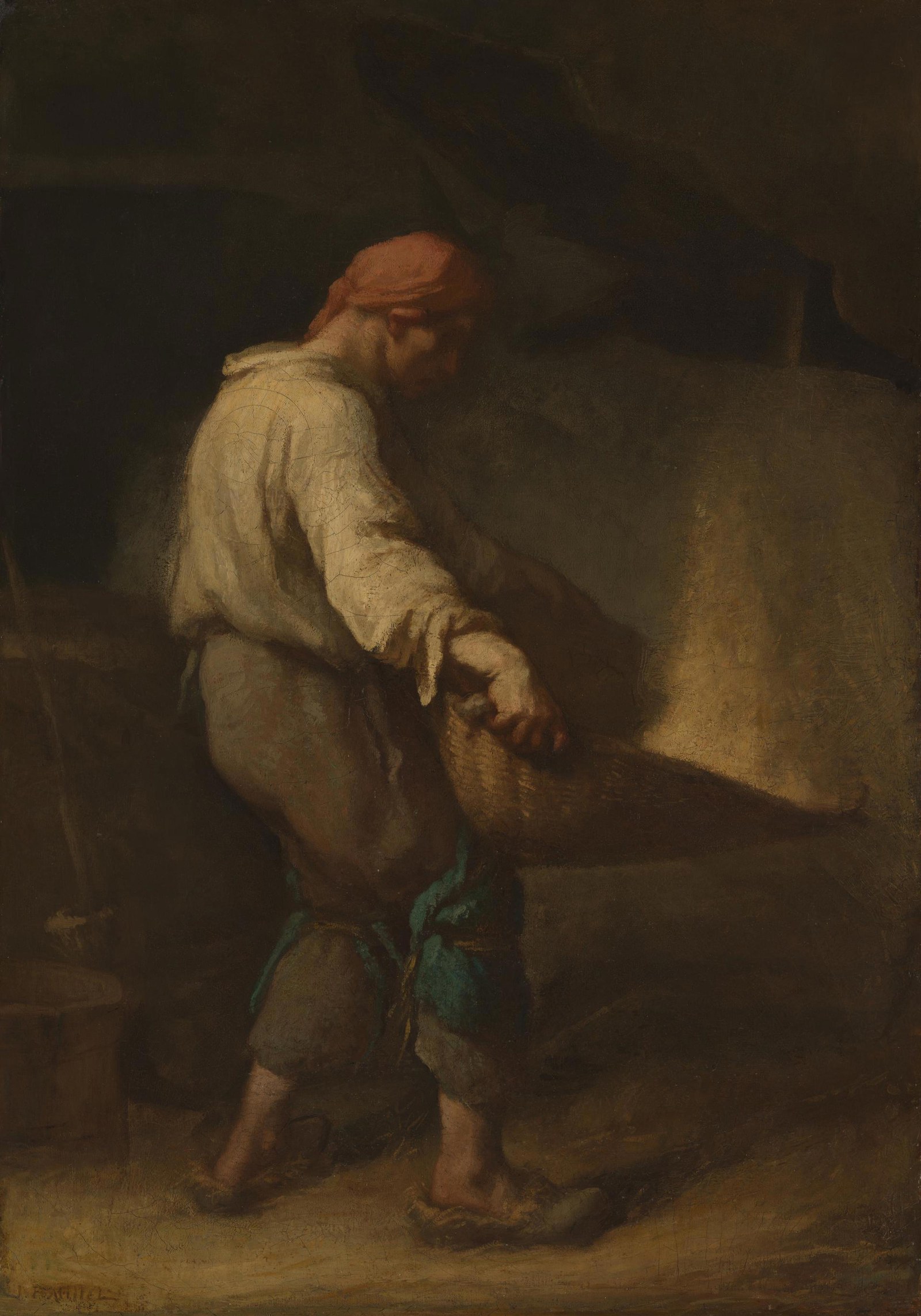
“The Winnower” was painted in 1847–1848 and shown at the Salon in 1848. It is the first large painting by Jean-François Millet about work on the land. It brought him his first real success.
In “The Winnower” a peasant in a dark barn winnows grain in a large wicker basket. The grain falls, and light dust rises into the air. He wears a red cloth on his head and blue clothes. The light comes from above and lights up the cloud of dust.
Jean-François Millet paints with thick, rough layers of paint. The colours – red, white and blue – are the colours of the French flag. At that time there was a revolution in France, and many saw in the worker a symbol of the people.
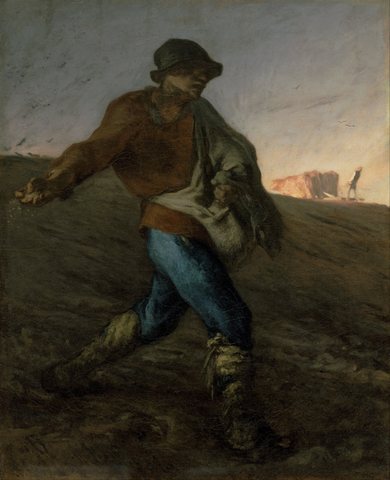
A minister bought the painting. Then it disappeared, and for more than a hundred years no one knew where it was. In 1972 it was found again in an attic in the USA. Millet painted The Sower a little later.
Today “The Winnower” is in the National Gallery in London, which bought it in 1978. Jean-François Millet showed here that the work of a peasant can be a subject for great art.
Ciekawostki
The canvas measures 100.5 × 71 cm, oil.
The painting was lost for more than a hundred years and found in 1972.
The National Gallery in London bought it in 1978.