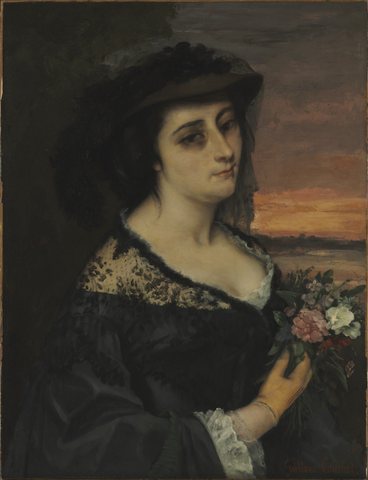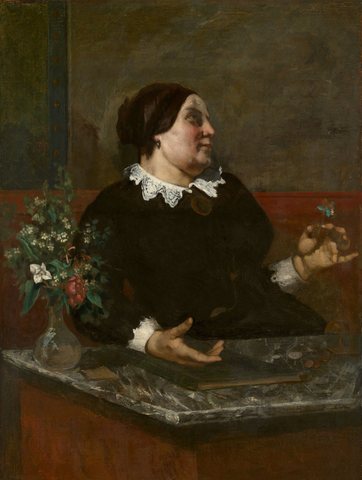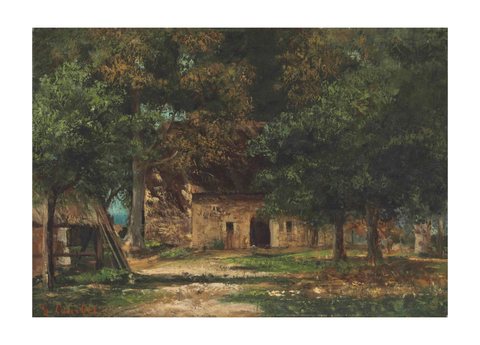
Gustave Courbet
Francuski, 1819–1877, Realizm i naturalizm
Historia życia
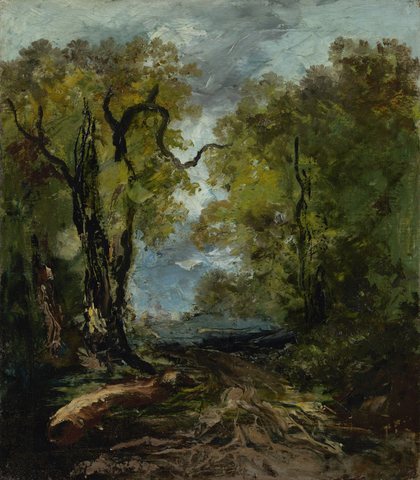
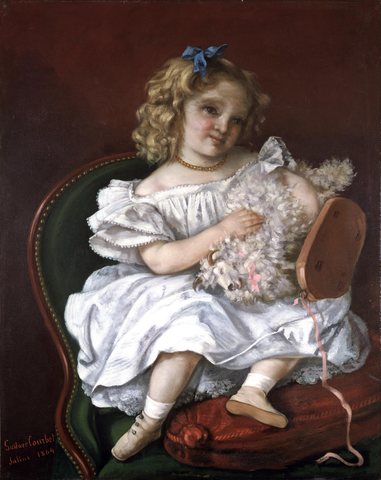
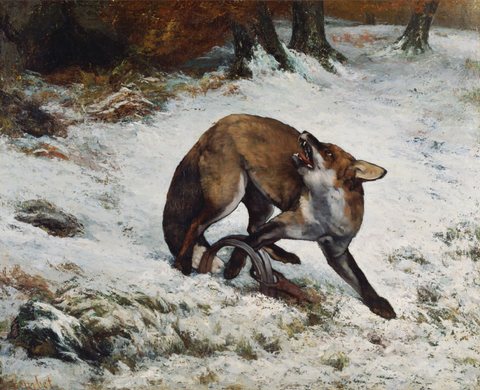
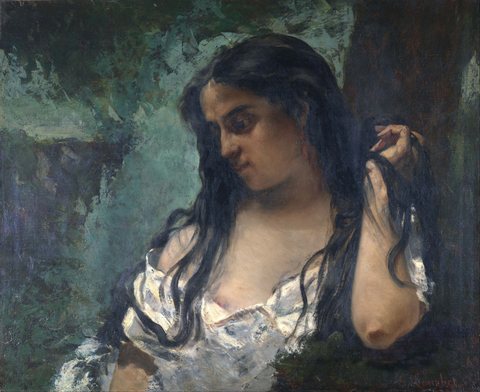
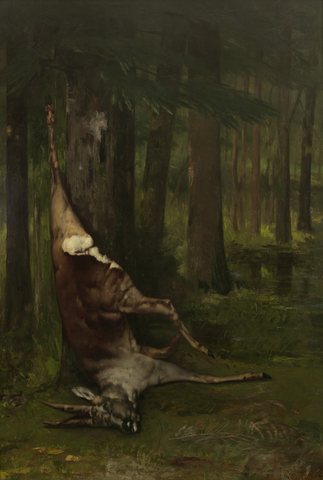
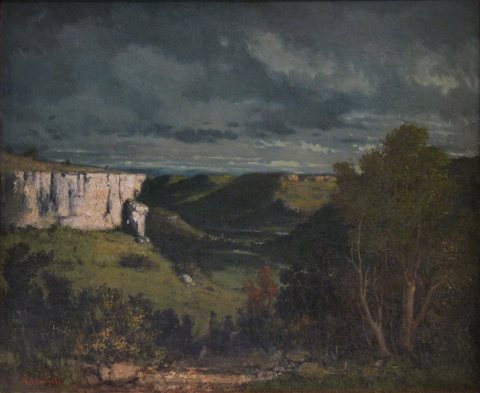
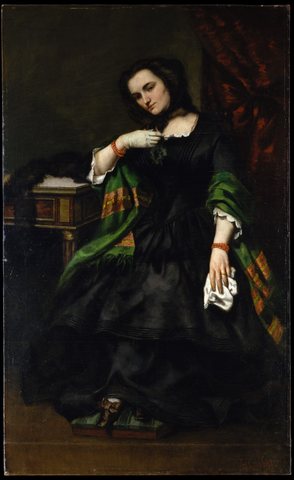
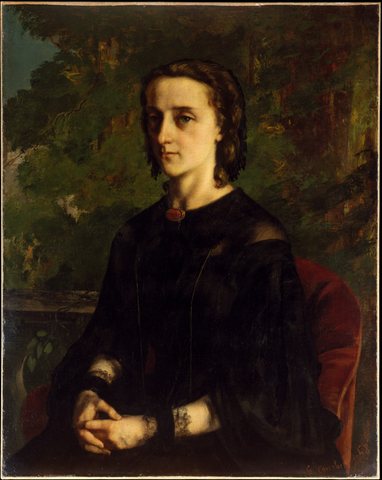
Gustave Courbet is the painter who painted only what he saw. Instead of gods, heroes and angels, he painted peasants, stone breakers, funerals and the stormy sea. He is the father of Realism – the art of real life. Proud, loud and rebellious, Courbet caused scandal after scandal. In the end politics ruined him, and he died in exile. But the young painters who came after him considered him their teacher.
Childhood in Ornans
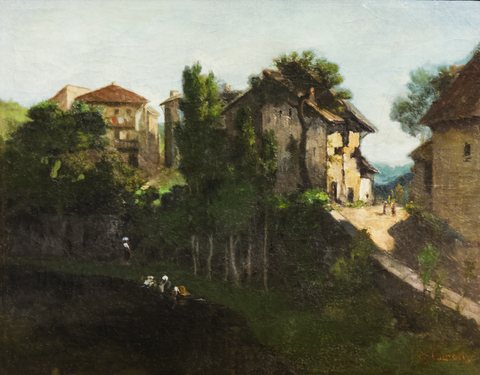
Jean Désiré Gustave Courbet was born on 10 June 1819 in Ornans – a small town in the Jura Mountains, in eastern France. His father Régis was a well-off landowner. His mother was called Sylvie. The family did not like kings, and Gustave's grandfather had fought in the French Revolution.
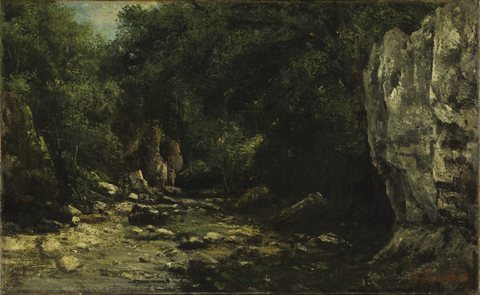
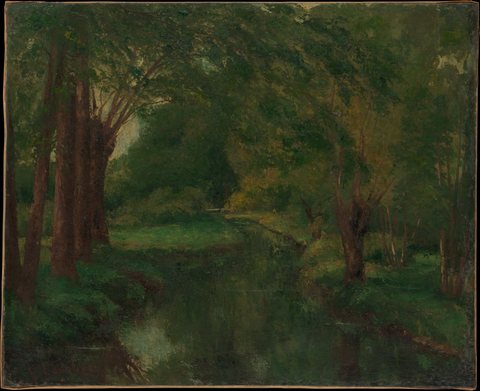
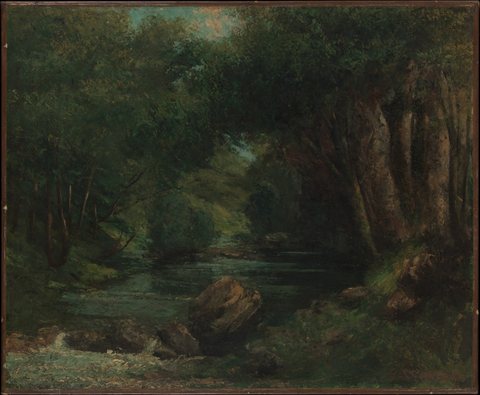
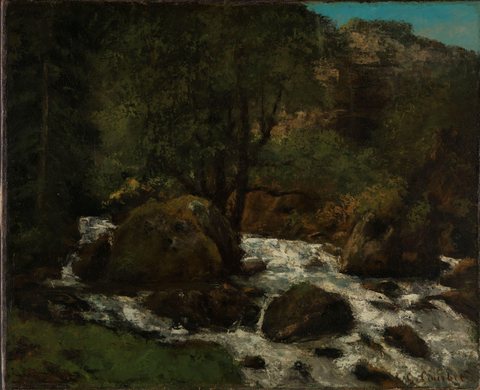
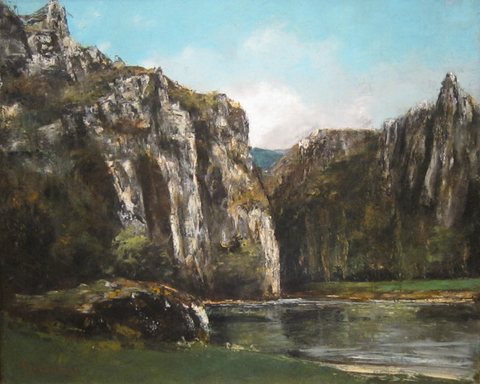
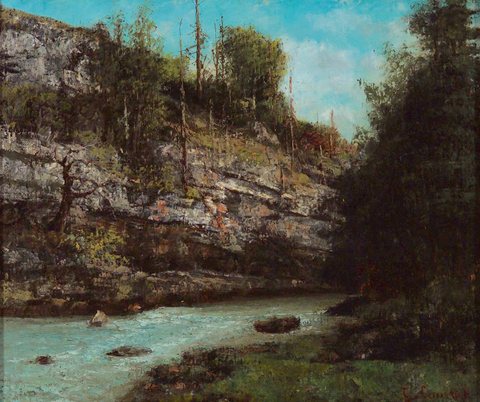
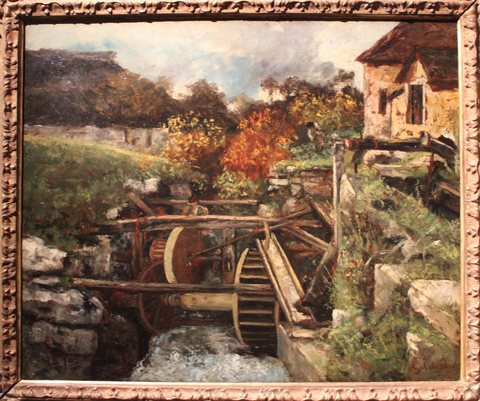
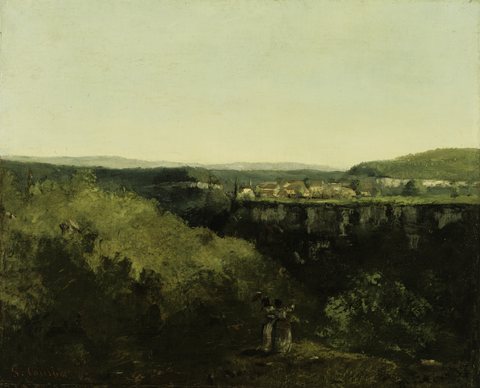
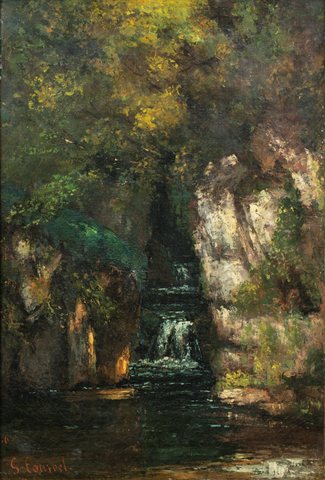
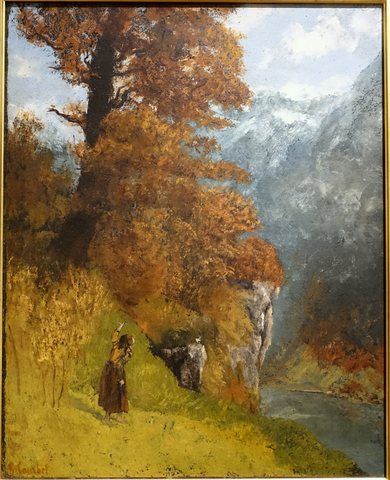
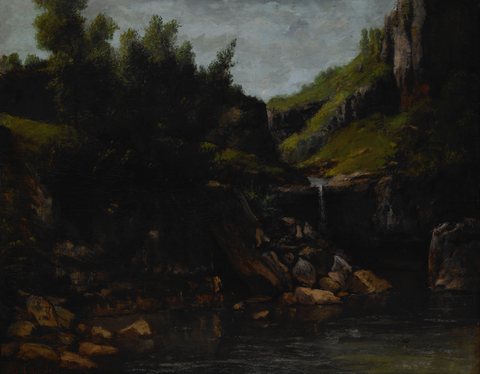
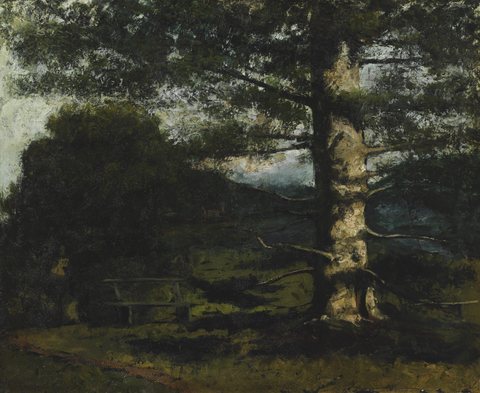
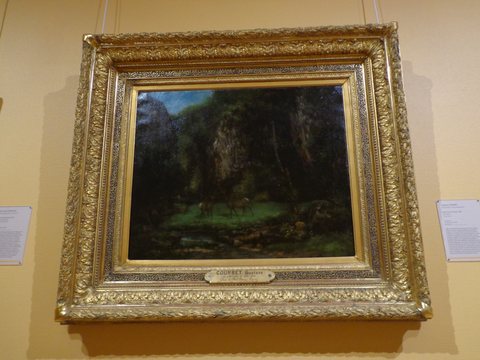
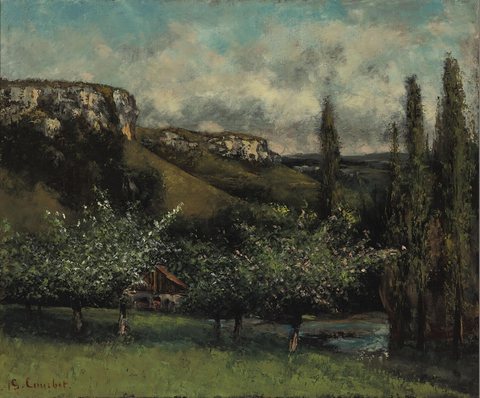
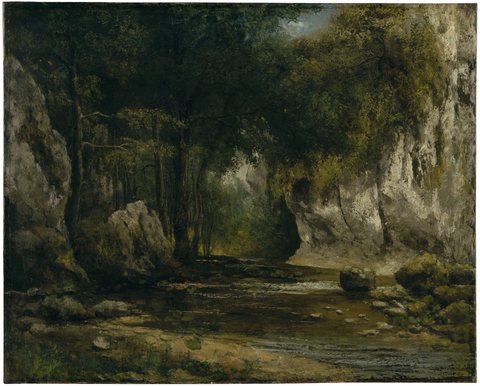
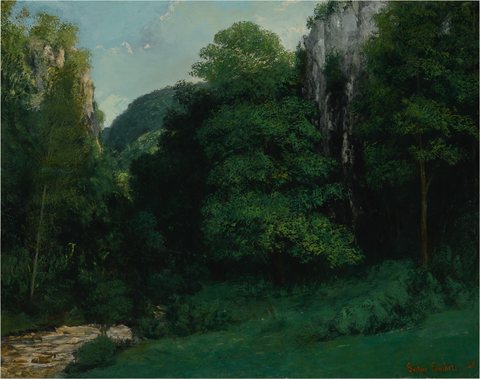
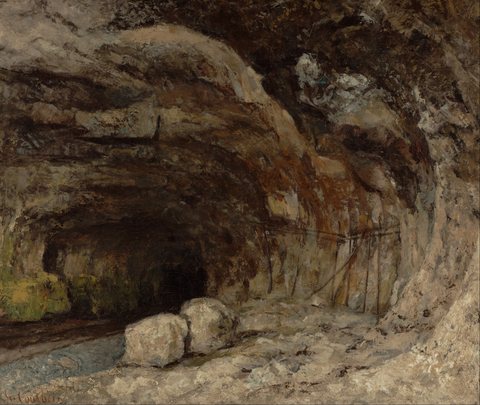
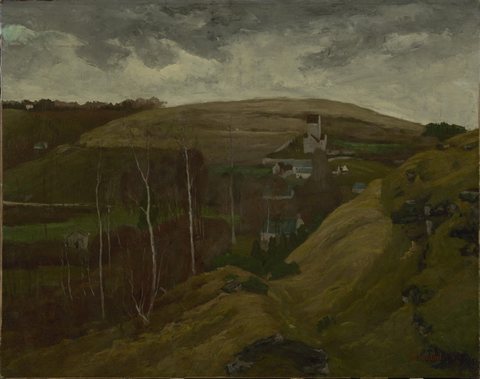
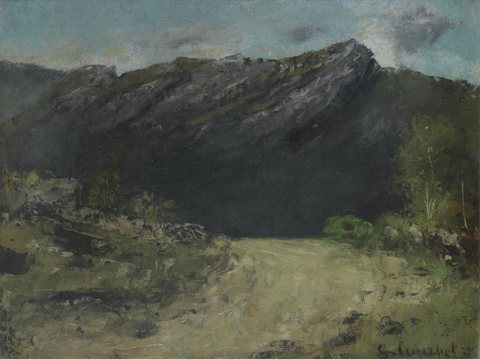
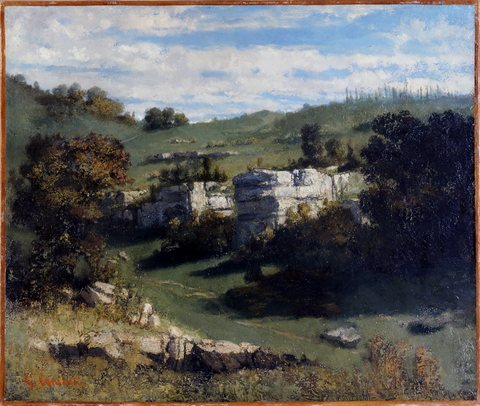
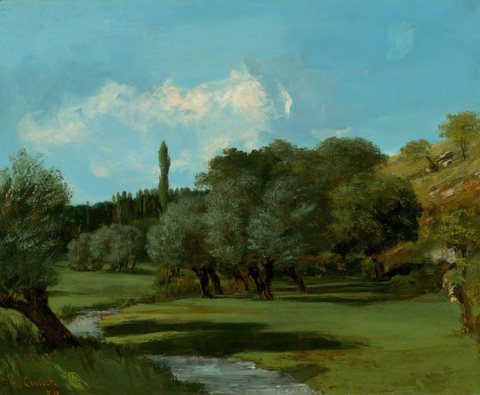
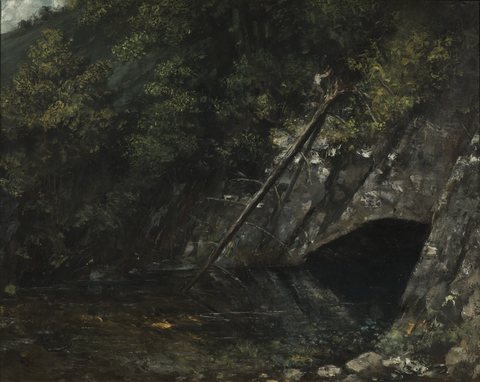
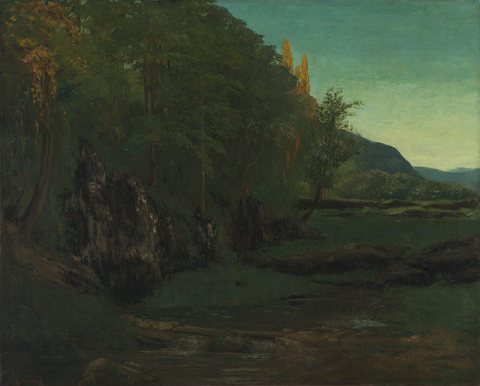
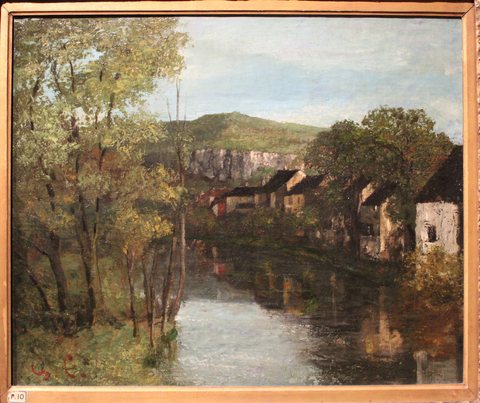
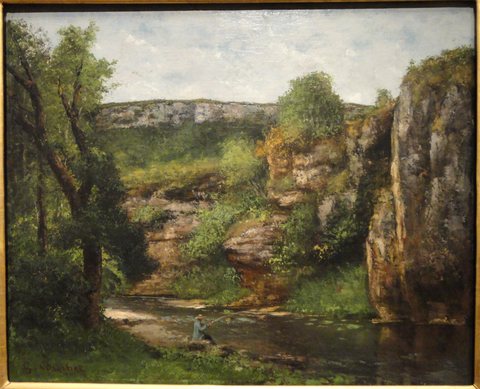
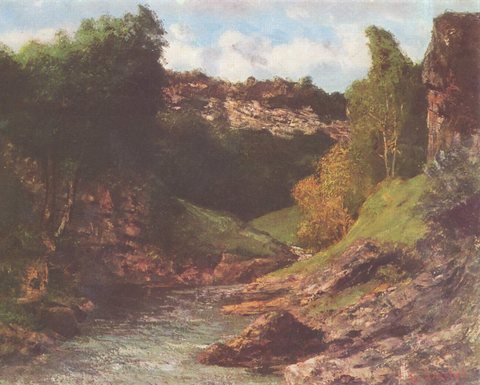
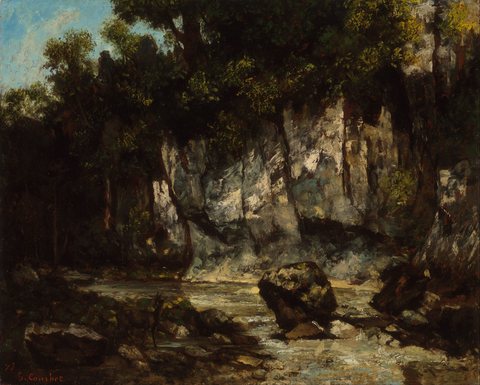
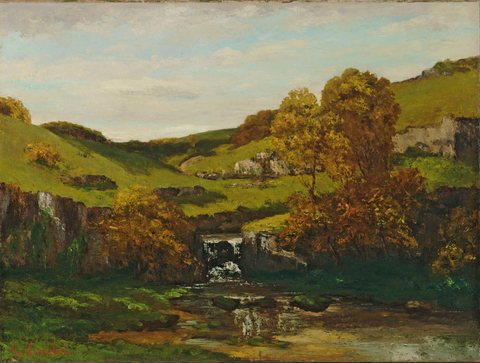
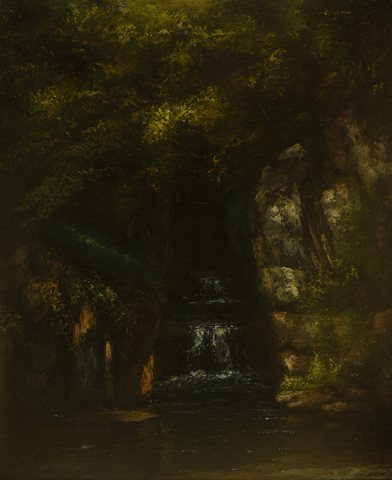
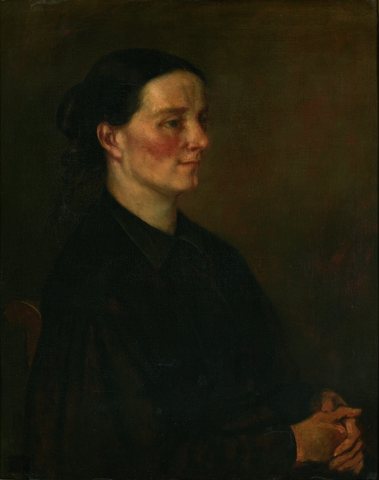
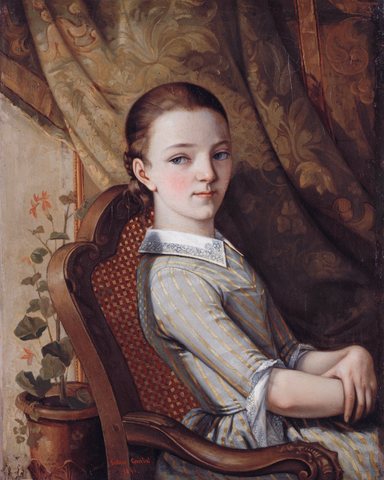
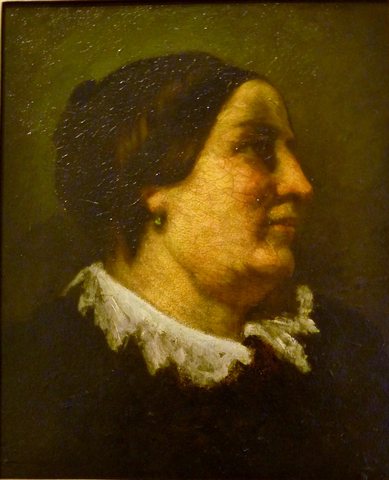
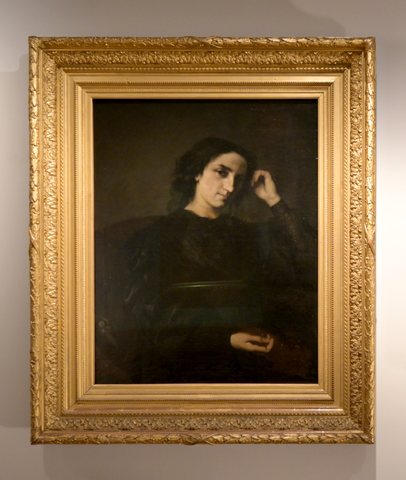
Gustave had three sisters – Zoé, Zélie and Juliette. They became his first models. Later he painted them many times, and his native Ornans, with its rocks, rivers and forests, stayed in his paintings for the rest of his life.
Alone against the schools
In 1839 Courbet went to Paris. For a short time he studied in painters' studios, but he soon left them. He wanted to find his own way. He went to the Louvre and copied the old masters. So Courbet taught himself almost on his own.
In 1844 the Salon accepted his self-portrait with a black dog. In 1846–1847 he travelled to the Netherlands and Belgium. There he saw the paintings of the old Dutch masters, who painted everyday life. This convinced him that he too must paint his own time.
In 1849 his painting “After Dinner at Ornans” won a gold medal at the Salon, and the state bought it. The medal had an important benefit: for years Courbet's paintings could enter the Salon without the jury. He would use this freedom to shock Paris.
The stone breakers and the burial
In November 1849 Courbet was travelling near Ornans when he saw two men breaking stones on the road – an old man and a boy. He invited them to his studio the very next morning. This is how the painting The Stone Breakers was born. In a letter he wrote that one rarely meets such a complete image of poverty. The philosopher Pierre-Joseph Proudhon called it a masterpiece.
Even bigger is A Burial at Ornans. The painting shows the funeral of Courbet's great-uncle in September 1848. The people of the town who had been there posed for the painting. The canvas is more than 3 metres high and more than 6 metres wide – a size that until then had been reserved for history and religious scenes.
The two paintings were shown at the Salon of 1850–1851. Some critics praised them, others hated them. How could ordinary villagers fill such a huge canvas? Courbet replied that this was in fact the burial of Romanticism. Suddenly he became the most famous and the most controversial painter in France.
The fate of “The Stone Breakers” is sad. The painting was in the museum in Dresden. It is thought to have been destroyed in February 1945, during the bombing of the city. Today we know it only from photographs.
The sisters and the village girls
In 1851–1852 Courbet painted Young Ladies of the Village. His three sisters, dressed like city ladies, walk in a valley near Ornans and give alms to a little girl who is herding cows. The critics mocked it – they said the young women were ugly and the cows were too big. But the Duc de Morny, one of the most powerful men in the country, bought the painting at once.
In 1854 he painted The Wheat Sifters. It is thought that the models were again his sisters – Zoé sifts the wheat, and Juliette sits on the left. The boy peering into the wooden box is probably Désiré Binet, Courbet's illegitimate son.
“Bonjour, Monsieur Courbet!”
Courbet had a rich friend and patron – the collector Alfred Bruyas from Montpellier. In 1854 the painter went to visit him. There he painted The Meeting (Bonjour, Monsieur Courbet). On the road Bruyas and his servant greet Courbet, who walks with a pack on his back and his beard proudly raised.
The critics found the painting boastful and gave it the mocking name “Bonjour, Monsieur Courbet!”. The name stuck. Bruyas kept the painting at home for years and finally gave it to the museum in Montpellier.
The Pavilion of Realism
In 1855 Paris held a world exhibition. The jury rejected three of Courbet's paintings, among them the huge “The Painter's Studio”. Then he did something unheard of. Next to the exhibition he built his own pavilion and called it “Realism”. There he showed 40 of his paintings.
“The Painter's Studio” is a huge painting in which Courbet paints himself at the easel, surrounded by the people of his world. On the right are his friends and supporters, among them the collector Bruyas, the writer Champfleury and the poet Charles Baudelaire. On the left are people from society – poor and rich. It is thought that one of them resembles Emperor Napoleon III himself.
For the exhibition he wrote a short manifesto. In it he said that he wanted to convey the customs, the ideas and the look of his era as he himself saw them. Courbet complained that the name “Realist” had been stuck on him by others. But he accepted it with pride. The words “Show me an angel and I will paint one” are also attributed to him.
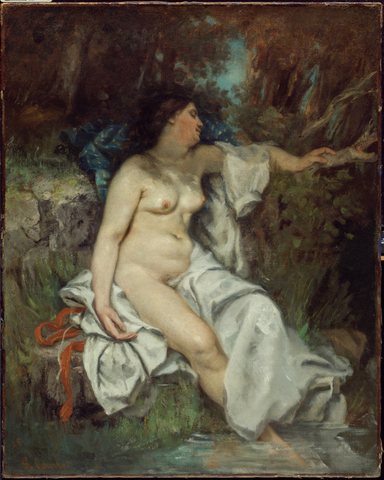
In 1857 he shocked the Salon again with Young Ladies Beside the Seine. Two young Parisian women lie on the grass on a summer day. One of them is drowsy, almost asleep. For the viewers this was too free and too modern. Later his sister Juliette gave the painting to the state.
The sea and friends
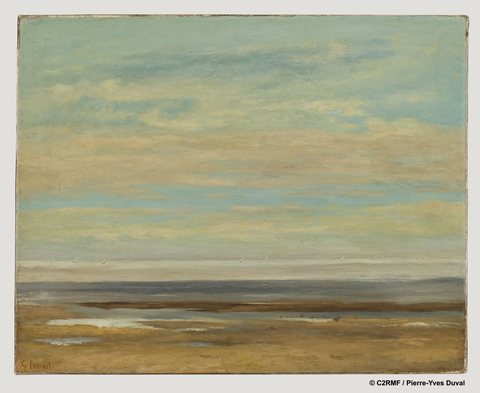
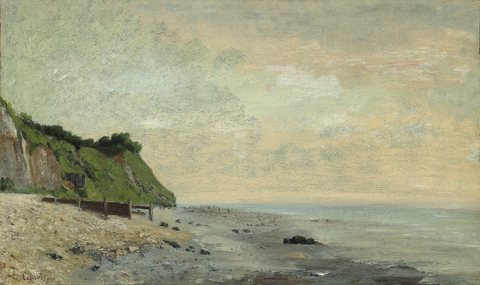
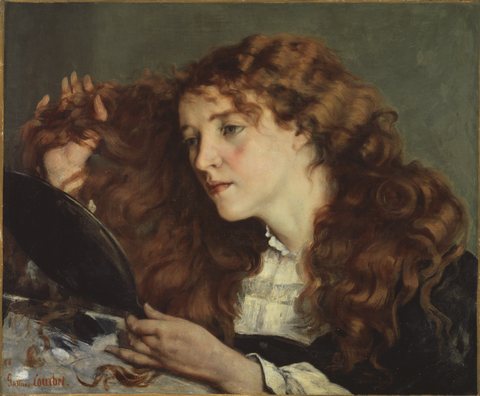
In the 1860s Courbet often went to the coast of Normandy. In 1865 he painted in Trouville together with the young American painter James Whistler. Whistler's companion, the Irishwoman Joanna Hiffernan, posed for Courbet for the painting “Jo, the Beautiful Irishwoman” – a woman with fiery red hair looking at herself in a mirror.
In January 1865 his friend Proudhon died. Courbet painted Proudhon and His Children – the philosopher sitting on the steps of his home with his two daughters. At first the painting also included his wife, but later Courbet removed her.
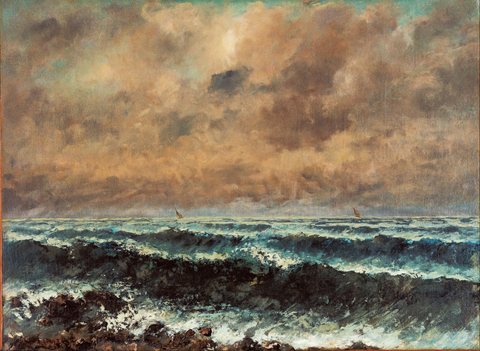
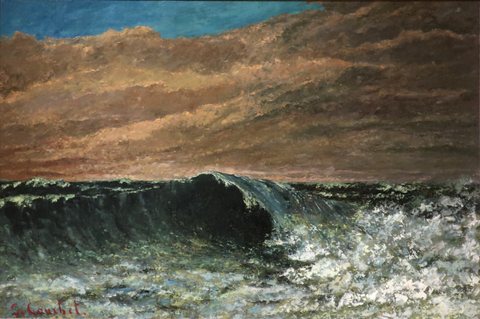
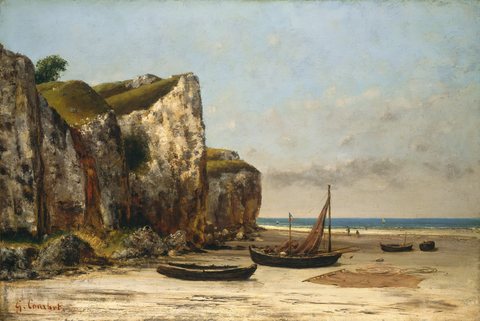
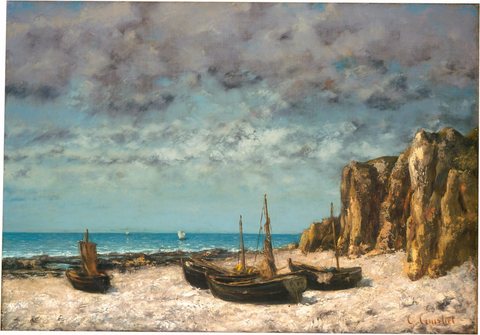
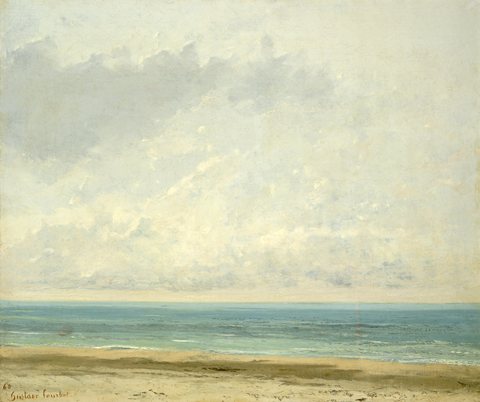
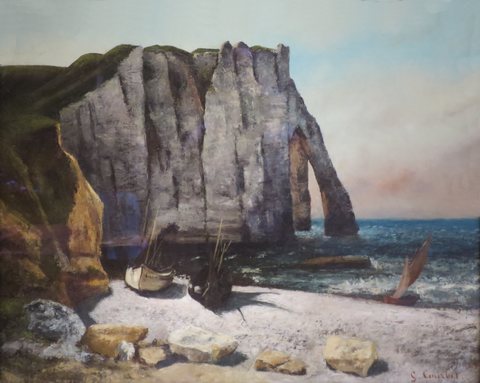
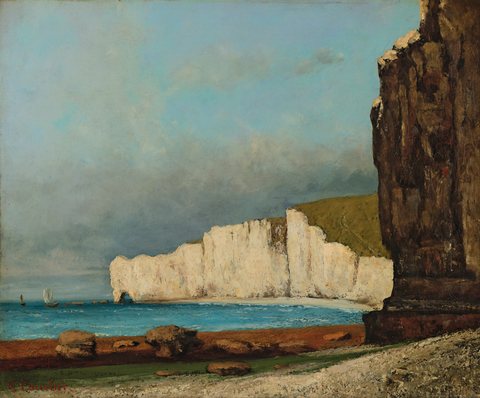
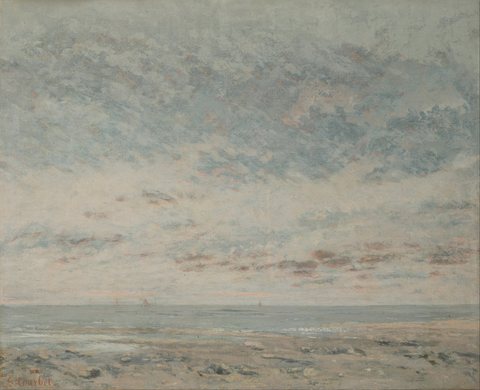
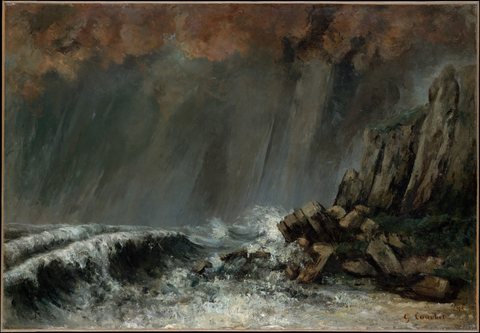
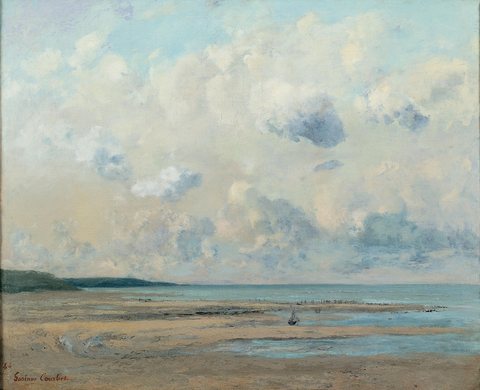
In the summer of 1869 Courbet lived in Étretat, in a house right next to the huge white cliffs. There he painted the sea and the cliffs again and again. At the Salon of 1870 he showed The Cliff at Étretat after a Storm and a painting of a stormy sea. The critics at last praised him almost unanimously.
The young painters looked at him with admiration. Edouard Manet and the future Impressionists learned from his courage to paint everyday life without embellishment.
The Commune and the column
In 1870 Emperor Napoleon III wanted to award Courbet the Legion of Honour. Courbet refused. He wanted nothing from those in power.
Soon came the war with Prussia, and the empire fell. In the spring of 1871 the Paris Commune took power in Paris. Courbet was elected to its council. As early as September 1870 he had proposed taking down the Vendôme Column – a monument to Napoleon's victories. On 16 May 1871 the column was pulled down.
The Commune was crushed. On 7 June 1871 Courbet was arrested. The court sentenced him to six months in prison and a fine of 500 francs. He was held in the Sainte-Pélagie prison in Paris and was released on 2 March 1872.
Exile in Switzerland
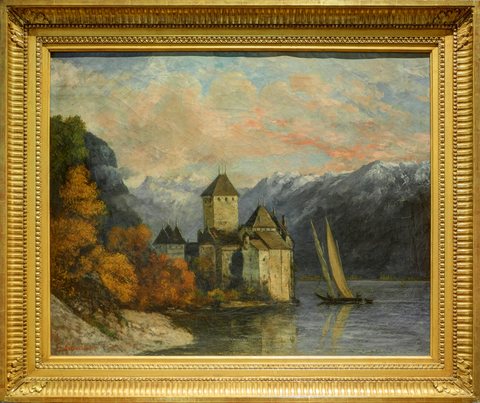
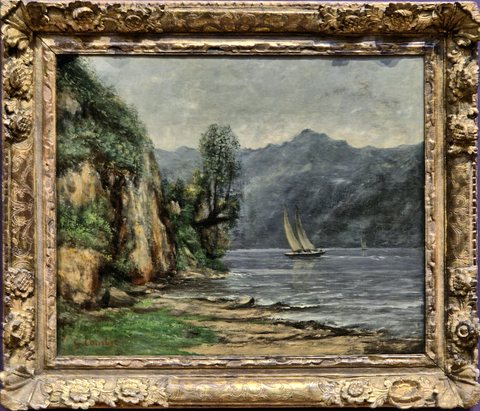
The worst was still to come. The new government decided that Courbet must pay for putting the column back up. To avoid being ruined, in 1873 he fled to Switzerland. In the spring of 1875 he settled in the house Bon-Port in La Tour-de-Peilz, on the shore of Lake Geneva.
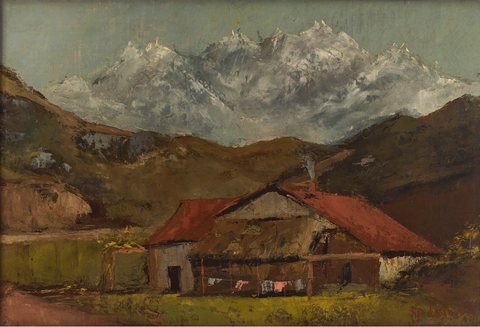
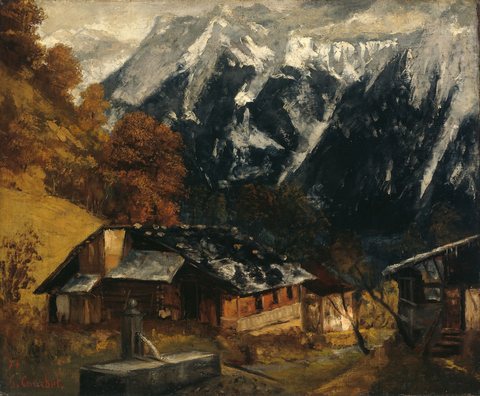
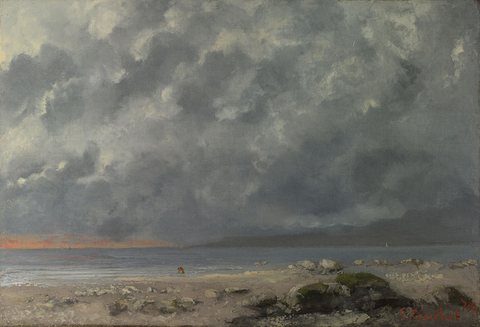
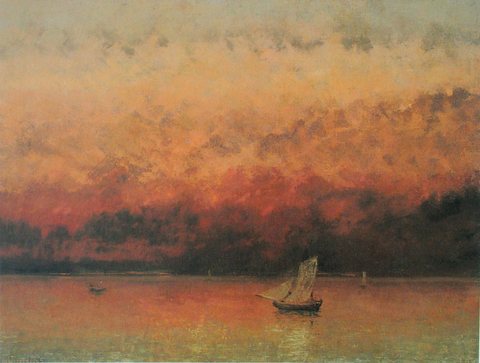
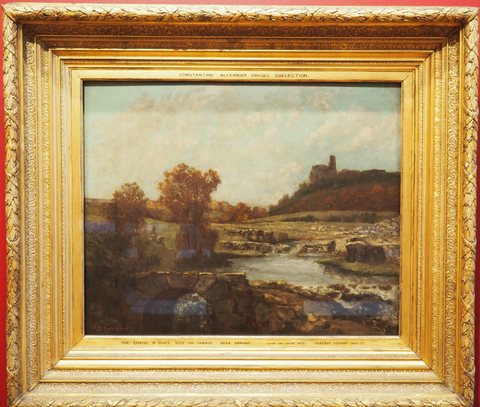
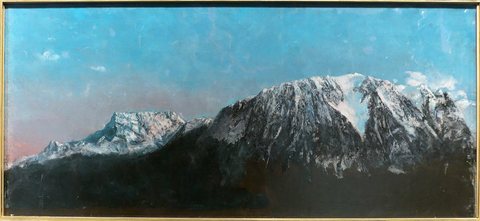
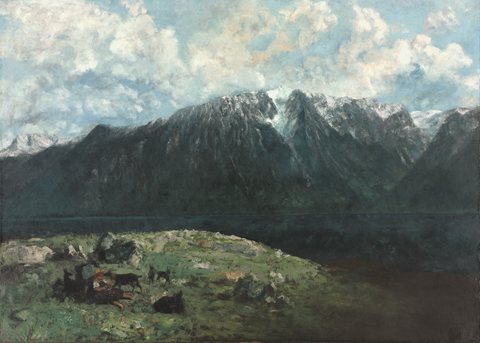
There he spent long hours with a pipe in his mouth, watching the light over the water and the mountains. He painted the lake and the castles around it. But his health grew worse, and he drank a lot.
In May 1877 the state set the sum: 323,000 francs, to be paid at 10,000 francs a year for 33 years. Gustave Courbet died on 31 December 1877 in La Tour-de-Peilz, aged 58, of a liver disease. It was just one day before he had to pay the first instalment.
The father of the new painters
Courbet died in exile, but his art won. The poet Guillaume Apollinaire wrote that Courbet was the father of the new painters. His courage to paint the truth inspired the Impressionists. Together with Paul Cézanne he is seen as one of the painters who prepared the way for Cubism.
Today his most important paintings are in the Musée d'Orsay in Paris. In Ornans, his home town, there is a museum devoted to him. And the rocks, rivers and forests of the Jura that he painted all his life look almost the same as they did then.
Najsłynniejsze dzieła
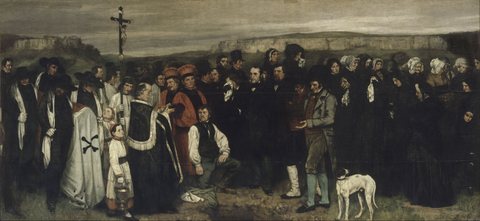 Pogrzeb w OrnansA whole town at one funeral, 1849–1850. Musée d'Orsay, Paris.
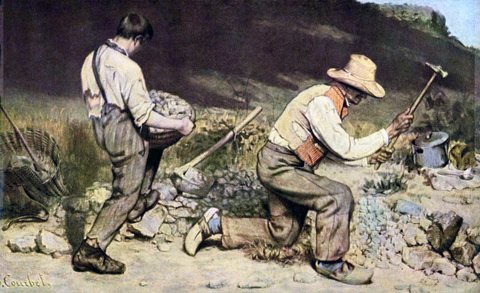 KamieniarzeTwo poor men on the road, 1849. Lost in 1945.
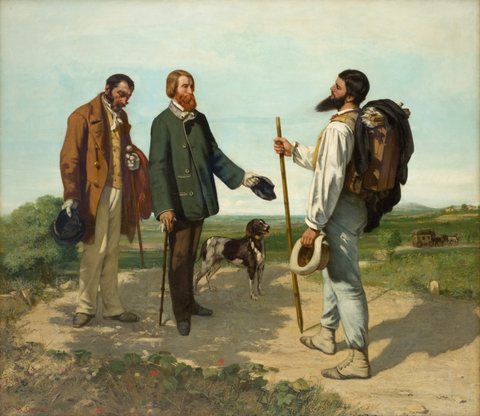 Spotkanie (Dzień dobry, panie Courbet)The painter meets his patron, 1854. Musée Fabre, Montpellier.
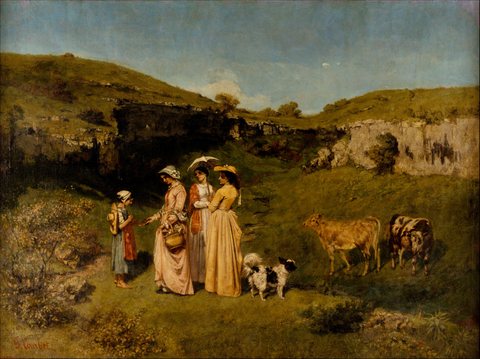 Panny ze wsiCourbet's three sisters in the valley, 1851–1852. Metropolitan Museum of Art, New York.
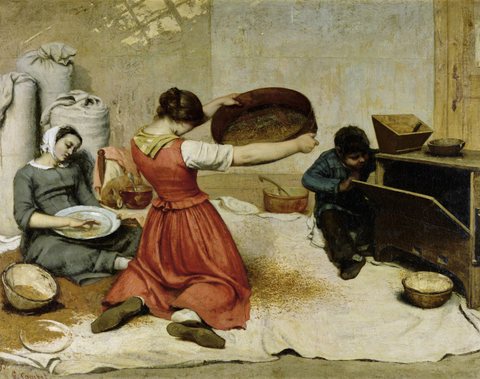 Przesiewaczki zbożaWork and dust in a farmhouse, 1854. Musée d'arts de Nantes.
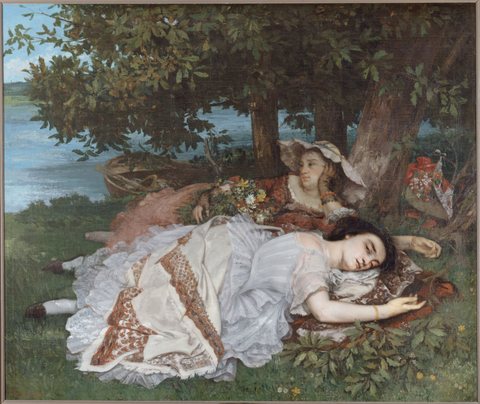 Panny nad SekwanąA summer afternoon by the river, 1856–1857. Petit Palais, Paris.
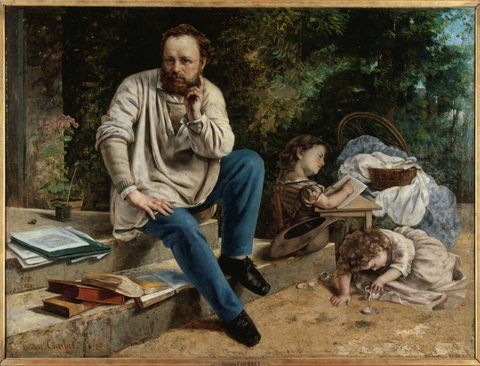 Proudhon i jego dzieciThe philosopher and his daughters, 1865. Petit Palais, Paris.
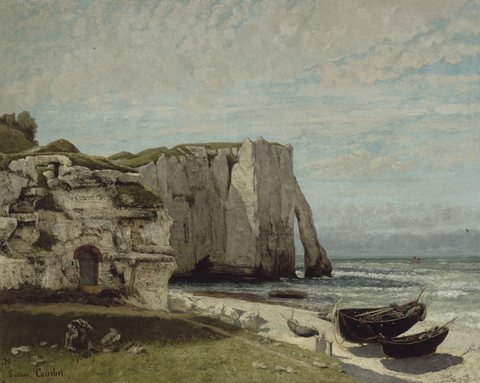 Klif w Étretat po burzyThe air after the storm, 1870. Musée d'Orsay, Paris.
Chronologia
- 1819Born in Ornans on 10 June
- 1839Goes to Paris
- 1844First painting at the Salon: self-portrait with a black dog
- 1846Travels to the Netherlands and Belgium
- 1849Gold medal for “After Dinner at Ornans”; “The Stone Breakers”
- 1850“A Burial at Ornans” at the Salon
- 1852“Young Ladies of the Village”
- 1854“The Meeting (Bonjour, Monsieur Courbet)”; “The Wheat Sifters”
- 1855The “Realism” pavilion
- 1857“Young Ladies Beside the Seine”
- 1865Trouville with Whistler; “Proudhon and His Children”
- 1869Summer in Étretat
- 1870Refuses the Legion of Honour
- 1871The Paris Commune; the Vendôme Column is pulled down; arrest
- 1872Leaves prison on 2 March
- 1873Flees to Switzerland
- 1875Settles in La Tour-de-Peilz
- 1877Dies in La Tour-de-Peilz on 31 December
Gdzie je zobaczyć
Ciekawostki
Gustave Courbet's first models were his three sisters – Zoé, Zélie and Juliette.
Courbet taught himself to paint almost on his own, by copying the old masters in the Louvre.
For “A Burial at Ornans” the people of his home town who had been at the funeral posed.
“A Burial at Ornans” is more than 6 metres wide.
“The Stone Breakers” is thought to have been destroyed in Dresden in 1945.
The mocking name “Bonjour, Monsieur Courbet!” was given to the painting by the critics.
In 1855 Courbet built his own pavilion, “Realism”, and showed 40 paintings in it.
The words “Show me an angel and I will paint one” are attributed to Courbet.
In 1870 Courbet refused the Legion of Honour.
The Vendôme Column in Paris was pulled down on 16 May 1871, during the Paris Commune.
Courbet was sentenced to six months in prison and was held in the Sainte-Pélagie prison.
The state demanded 323,000 francs from Courbet for the column – 10,000 francs a year for 33 years.
Courbet died just one day before he had to pay the first instalment.
Guillaume Apollinaire called Courbet the father of the new painters.